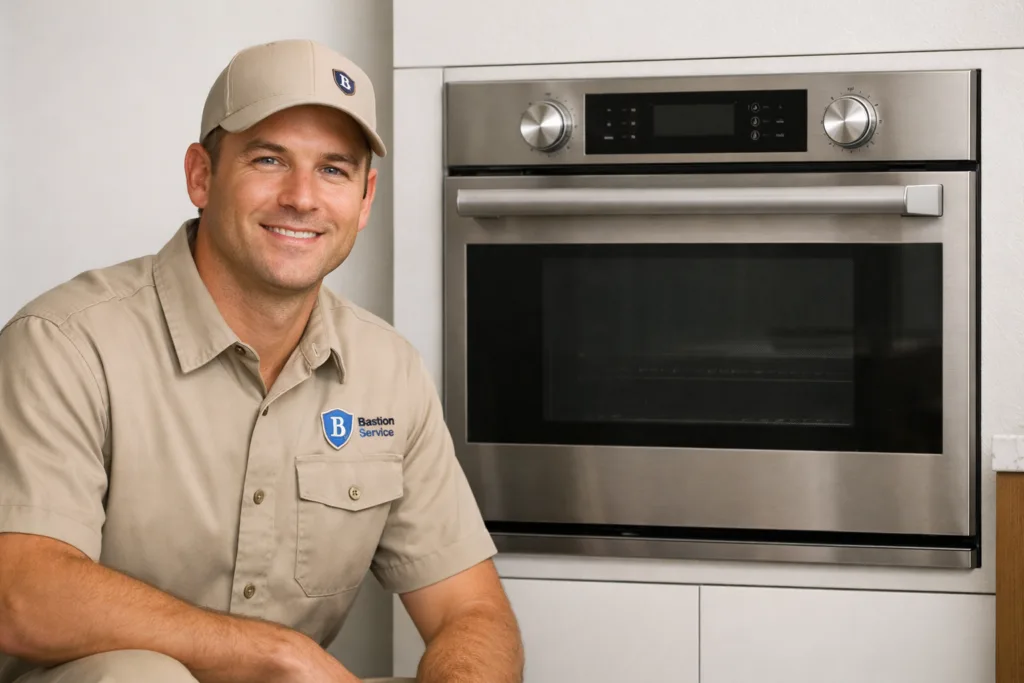
Wall oven problems usually show up in everyday cooking long before the appliance stops completely. You may notice cookies browning unevenly, casseroles taking much longer than expected, or a preheat cycle that seems to run forever. With Monogram units, those changes often point to a specific failure pattern rather than general wear, so the most useful next step is to match the symptom to the likely cause.
What a Monogram Wall Oven Diagnosis Should Confirm
A good diagnosis should do more than identify that the oven is “not heating right.” It should confirm whether the problem is coming from the bake element, broil element, temperature sensor, door seal, control board, wiring, latch system, or power supply. That matters because similar symptoms can come from very different failures.
In Pico-Robertson homes, the most common complaints usually include:
- Oven not heating at all
- Slow preheating or failure to reach the selected temperature
- Uneven baking, roasting, or browning
- Temperature swings during cooking
- Display errors or unresponsive touch controls
- Door not closing properly or heat escaping around the seal
- Problems after using the self-clean cycle
Testing should narrow the issue down to the actual failed part or condition instead of relying on guesswork. That helps homeowners decide whether the repair is straightforward, urgent, or no longer worth pursuing.
Common Symptoms and What They Often Mean
Oven Will Not Heat
If the control panel powers on but the oven never gets hot, the fault may involve a failed heating element, a blown thermal cutoff, a relay problem on the control board, or a wiring issue in the heating circuit. On some installations, an electrical supply problem can also leave the display working while the oven cannot produce heat.
This type of symptom usually needs prompt service because continued attempts to run the appliance will not solve the underlying fault.
Slow Preheat
A Monogram wall oven that takes much longer than normal to preheat may have a weak bake or broil element, a sensor reading incorrectly, or a control issue that is not energizing the heating system properly. Homeowners often first notice this when familiar recipes suddenly need extra time.
If preheat keeps getting slower over several weeks, that gradual decline often points to a component that is failing rather than a one-time glitch.
Uneven Baking or Roasting
When one side of a dish cooks faster than the other, or the top browns while the center stays underdone, the cause may be inaccurate temperature sensing, inconsistent element performance, poor heat circulation, or heat loss at the door. These issues are frustrating because the oven still “works,” but the cooking results become unreliable.
For households that use the wall oven often, this is usually the symptom that pushes repair to the top of the list.
Temperature Too High or Too Low
If the oven overheats, burns food unexpectedly, or struggles to maintain a stable temperature, the sensor and control system are important places to check. Temperature drift can also develop slowly, making it easy to blame cookware or recipes before realizing the oven itself is no longer regulating correctly.
Repeated overheat or underheat behavior is worth addressing early, because poor regulation can put extra strain on heating and control components.
Error Codes or Control Panel Problems
Flashing codes, a frozen display, buttons that do not respond, or a panel that resets during cooking can indicate an electronic control fault, keypad issue, communication problem, or a component failure the system is detecting. Error codes are useful clues, but they are not a complete diagnosis on their own.
When controls become inconsistent, the main concern is not only convenience but also whether the oven can operate safely and predictably.
Door, Latch, and Self-Clean Issues
If the door will not close fully, the lock will not release, or problems begin right after a self-clean cycle, the trouble may involve the latch assembly, hinges, alignment, door switch, or heat-stressed electronics. Even a slight sealing problem can affect cooking performance by allowing heat to escape.
In some cases, a door issue and a heating complaint show up together because both symptoms trace back to poor heat retention.
Signs the Problem Is Getting Worse
Some wall oven issues stay fairly consistent, while others spread into additional failures. It is smart to stop using the appliance and arrange service if you notice any of the following:
- The oven shuts off during cooking
- The breaker trips when the oven heats
- There is a burning smell, sparking, or visible overheating
- The display goes blank or resets repeatedly
- The door does not close securely
- The oven temperature is far from the set point
These signs suggest more than minor inconvenience. They can point to electrical stress, control failure, or heat-related damage that may worsen with continued use.
Repair or Replace: How Homeowners Usually Decide
Many Monogram wall oven problems are repairable when the issue is limited to a sensor, heating element, latch part, wiring repair, or a single control-related failure. In those cases, repair is often the practical choice if the rest of the appliance is in solid condition.
Replacement becomes a more serious consideration when the oven has multiple major faults, recurring electronic problems, heavy wear in the cavity or door system, or repair costs that no longer make sense for the unit’s condition. Age matters, but symptom pattern matters just as much. An older oven with one isolated issue can still be a reasonable repair, while a newer unit with repeated control and heating failures may need a harder look.
What Service Should Help You Understand
Most homeowners in Pico-Robertson want a straightforward answer to three things: what failed, whether the oven is safe to use, and whether the repair is worth it. A useful service visit should explain the symptom in plain terms and show how the diagnosis leads to the repair recommendation.
That means checking actual temperature behavior, confirming whether the elements are cycling correctly, inspecting the sensor and door condition, reviewing any stored error information, and verifying whether the issue is isolated or part of a larger wear pattern.
Why Symptom Patterns Matter With Monogram Wall Ovens
Two ovens can show the same complaint for different reasons. For example, slow preheat might come from a weak element on one unit and from a sensor or control problem on another. Uneven baking could point to heat loss at the door, a calibration issue, or inconsistent element operation. Looking at the full pattern is what keeps the repair process efficient.
That is especially important when the oven still turns on and appears mostly functional. Partial failures are common, and they are often misread as nuisance issues when they are really early warnings of a larger breakdown.
A Practical Next Step for a Monogram Wall Oven That Is Not Performing Right
If your Monogram wall oven is not heating properly, preheats slowly, cooks unevenly, or shows control problems, the best next move is to have the exact fault identified before more parts are affected. A practical repair plan starts with understanding whether the problem is isolated, whether the appliance can be used safely, and whether the fix makes sense for the oven’s condition.
For households in Pico-Robertson, that kind of symptom-based evaluation is what turns a frustrating cooking problem into a clear repair decision.