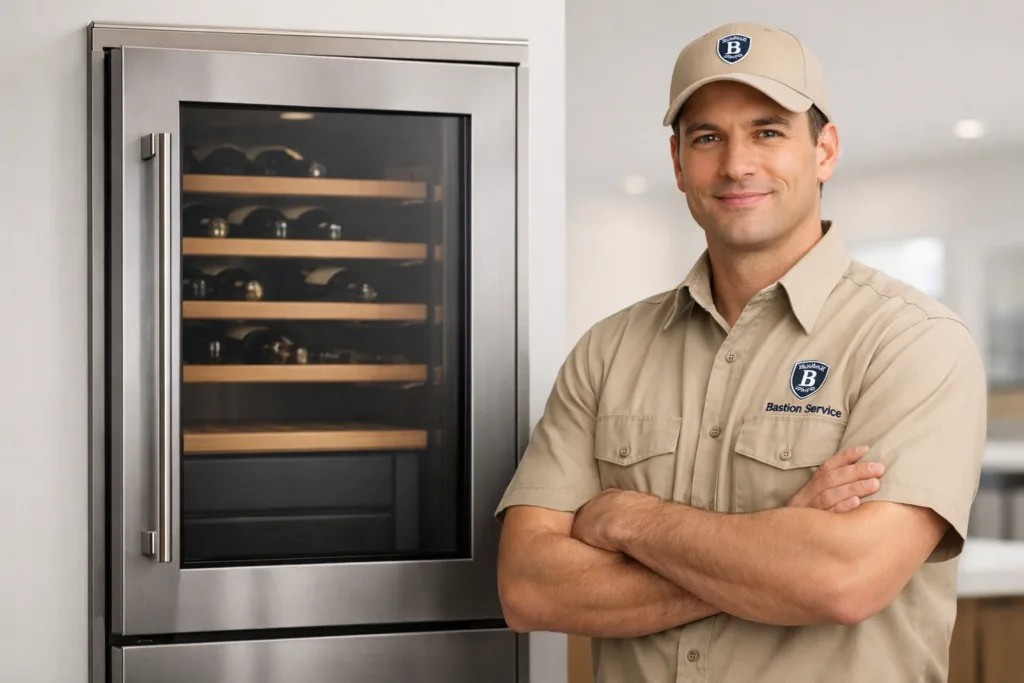
Stable storage matters with a wine cooler because even small temperature shifts can affect both short-term serving conditions and longer-term bottle protection. When a Monogram unit begins running warm, collecting moisture, or sounding different than usual, the symptom pattern often points to a smaller group of likely causes that should be tested before any repair choice is made.
What common wine cooler symptoms usually mean
Not cooling enough
If the cabinet no longer reaches the selected temperature, the problem may involve restricted airflow, a faulty temperature sensor, fan trouble, control failure, or a refrigeration issue. Some units still appear to run normally while the interior slowly drifts warmer, which can make the problem easy to miss until bottles are no longer held at a reliable temperature.
Temperature swings
A Monogram wine cooler that alternates between too warm and too cold may have trouble reading cabinet temperature correctly or responding to that reading. Sensor and control issues are common suspects, but poor door sealing and uneven airflow can also create unstable storage conditions.
Constant running or frequent cycling
When the unit seems to run for long stretches without settling, it may be compensating for warm air entering through the door, frost limiting airflow, or weak cooling performance. Frequent on-and-off cycling can also point to electrical or control-related faults that should be checked before wear increases on major components.
Condensation or water inside
Moisture on shelves, damp bottle labels, or condensation around the door usually suggests a sealing problem, drainage issue, or cooling instability. In a built-in kitchen or bar area, excess moisture can also affect surrounding finishes if it is allowed to continue.
Buzzing, clicking, or fan noise
Some operating sound is normal, but a new or louder noise often helps narrow the diagnosis. A rattling panel, worn fan motor, vibrating component, or compressor-related sound each points in a different direction. That is why noise should be evaluated along with cooling performance instead of by itself.
Component issues often found in Monogram wine coolers
Wine coolers rely on a small set of systems working together consistently. When one part falls out of range, the symptoms can overlap.
- Evaporator fan problems: can reduce circulation and create warm spots or uneven cabinet temperature.
- Thermistors or sensors: may send incorrect readings and cause overcooling, undercooling, or erratic cycling.
- Control board issues: can affect response to temperature changes, fan operation, and compressor timing.
- Door gasket wear: allows warm, humid air to enter and often leads to condensation and longer run times.
- Drain or moisture management issues: may cause water accumulation inside the cabinet.
- Sealed-system or compressor faults: are less routine, but they become more likely when the unit runs and runs without achieving the set temperature.
Why symptom-based diagnosis is so important
Several different failures can create the same outward complaint. For example, a cooler that feels warm inside might have a simple airflow problem, but it could also have a failing fan, inaccurate sensor, or a deeper refrigeration fault. Replacing parts based on guesswork can add cost without solving the actual issue.
A better approach is to compare the complaint with cabinet temperature behavior, fan operation, control response, door sealing, frost pattern, and compressor activity. That process usually reveals whether the repair is likely to be straightforward or whether the unit may be facing a more significant failure.
Signs the problem should not be ignored
Some symptoms are more urgent than they first appear. It is smart to schedule service when you notice any of the following:
- The cooler is no longer holding a consistent set temperature
- The compressor seems to run with little improvement in cooling
- Moisture keeps returning after wiping the interior dry
- Fan or clicking noises are getting louder or more frequent
- The door does not seem to seal tightly all the way around
- Frost buildup is increasing and airflow appears weaker
Even intermittent trouble matters. A wine cooler that works normally one day and struggles the next often has a developing control, sensor, or airflow problem that can become harder on the appliance over time.
When continued use can make repair harder
Letting a struggling wine cooler run for too long can add unnecessary stress to the compressor and cooling system. Repeated attempts to recover temperature may increase wear, especially if the underlying problem is poor airflow or a door leak. Ongoing moisture can also affect labels, cork conditions, and nearby cabinetry.
If the unit has stopped cooling altogether, or if temperatures are drifting well outside the intended storage range, it is usually better to limit use until the cause is identified.
Repair versus replacement for a Monogram wine cooler
Many wine cooler problems are still good repair candidates. Fan motors, sensors, controls, gaskets, and drainage-related issues are often worth addressing when the cabinet and sealed system are otherwise in solid condition. Replacement becomes a more serious consideration when the diagnosis points to major refrigeration-system failure, repeated breakdown history, or a repair cost that no longer makes sense for the appliance’s age and condition.
The important point is not to decide too early. A unit that seems to have a major cooling failure may turn out to have a repairable airflow or control issue. On the other hand, a mild complaint can occasionally uncover a larger internal problem once tested properly.
What homeowners in Mid-Wilshire usually want to know
Most households in Mid-Wilshire want straightforward answers: whether the wine is being stored at risk, whether the unit is likely to worsen if left alone, and whether the repair is worth doing. Those answers come from matching the exact symptom pattern to the likely failed system rather than assuming every warm cabinet needs the same fix.
For Monogram wine cooler repair in Mid-Wilshire, the most useful next step is a clear diagnosis and a repair recommendation based on the actual condition of the appliance, not just the first symptom that showed up.