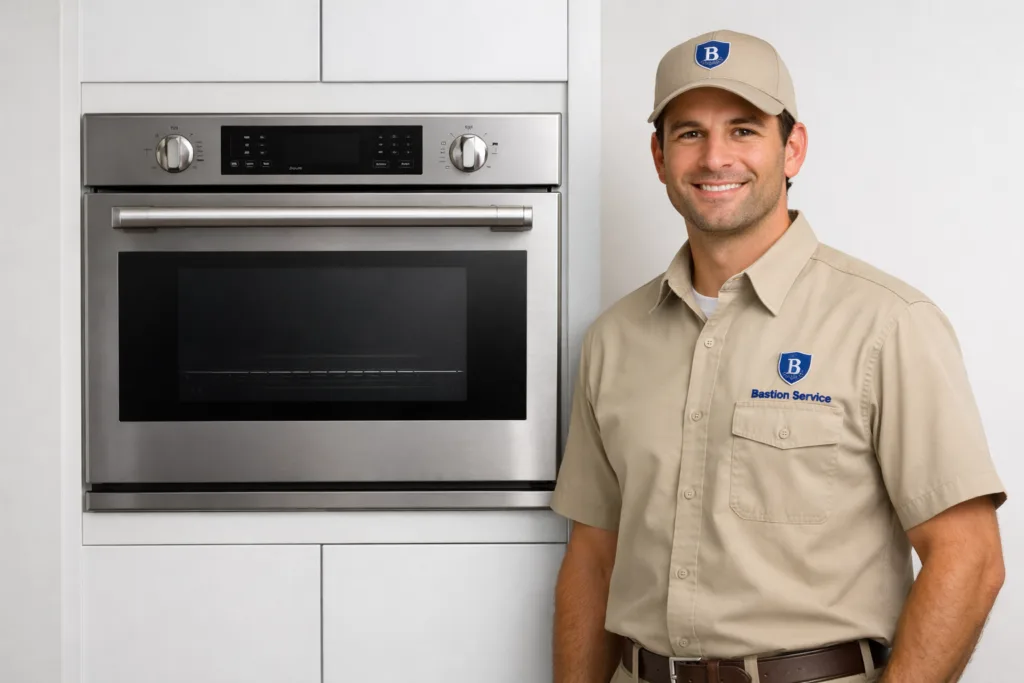
Wall oven problems rarely stay minor for long. A unit that starts with slow preheat or inconsistent temperatures can turn into missed meals, scorched dishes, or a shutdown right when you need it. With Monogram wall ovens, the most useful starting point is the exact way the problem shows up during everyday cooking.
Start with what the oven is doing
Symptom patterns tell you a lot. An oven that never heats at all is different from one that heats, but not accurately. A control panel that flickers after cooking points to a different repair path than a cavity that overheats during bake. Looking at the function that fails first helps narrow down whether the issue is tied to power, heating components, temperature sensing, airflow, door locking, or the control system.
That matters because replacing parts based on guesswork often wastes time and money. Built-in Monogram models are designed around coordinated components, so one failure can look like another until the oven is properly tested.
Not heating or taking too long to preheat
If the display turns on but the cavity stays cool, common causes include a failed bake element, broil element, temperature sensor, relay, or wiring problem. In some cases, the oven does heat eventually, but much slower than normal. That can happen when one heating circuit is not working correctly, so the oven struggles to reach and hold the set temperature.
Homeowners often notice this first when dinner takes longer than expected, frozen foods do not finish on time, or the oven says it is preheated even though the food clearly is not cooking normally.
Uneven baking and temperature inconsistency
When one rack cooks faster than another, the back of the oven browns more aggressively, or baked dishes need extra time every time, the problem may involve sensor drift, poor heat distribution, fan trouble on convection models, or a control issue affecting temperature regulation.
These are frustrating problems because the oven still seems usable. But if recipes stop turning out the way they should, the appliance is already giving you a warning that something is off. A measured temperature check helps determine whether the issue is calibration, airflow, or a part that is no longer responding properly.
Display, keypad, and electronic control problems
Monogram wall ovens can also develop interface and control faults that affect daily use more than expected. You may see:
- Buttons that do not respond every time
- A flashing or blank display
- Random beeping
- Error codes that return after clearing
- Cooking cycles that stop unexpectedly
Sometimes the problem is isolated to the keypad or display board. In other cases, the main control is not sending power where it should, or communication between components is failing. Intermittent control behavior is especially important to address because it can become a complete no-start condition without much warning.
Door lock and self-clean issues
Door-related faults are another common reason a wall oven goes out of service. After a self-clean cycle, some units stay locked, refuse to start, or show a door or latch error. That can point to a failed latch motor, switch problem, control fault, or a mechanism that is no longer reaching the expected position.
If the oven thinks the door is not in the correct state, it may block normal bake and broil functions even when the rest of the appliance appears to be working.
Signs the oven should not keep being used
Some issues are more than just inconvenient. Stop using the oven and arrange service if you notice any of the following:
- The breaker trips during preheat or cooking
- There is a burning smell from wiring, insulation, or the control area
- The oven overheats surrounding cabinetry
- The door does not close securely
- The oven shuts off in the middle of use
- The temperature rises well above the setting
- You hear buzzing, popping, or signs of electrical arcing
Continuing to use a wall oven in that condition can increase damage to boards, harnesses, terminals, and other parts that may still be salvageable if the problem is addressed earlier.
Why built-in wall oven problems feel urgent in Mid-Wilshire homes
In many Mid-Wilshire households, the wall oven is part of the daily routine rather than an occasional appliance. When preheat becomes unreliable or temperature control starts drifting, it affects weekday meals just as much as holiday cooking. Because the unit is built in, problems also tend to create more stress than a freestanding appliance issue. Homeowners want to know not only what failed, but whether the oven can be restored to normal performance without unnecessary trial and error.
Repair or replace?
Repair is often the better choice when the oven cavity, door, racks, and overall structure are still in good shape and the failure is tied to a serviceable part. That includes many problems involving:
- Heating elements
- Temperature sensors
- Cooling or convection fans
- Door latches and switches
- Control boards and user interfaces
- Wiring faults isolated to specific circuits
Replacement becomes more worth discussing when several major systems are failing at once, the repair cost stacks on top of existing wear, or parts availability creates a timeline that does not fit the household. Age by itself is not always the deciding factor. Condition, failure type, and repair scope matter more.
What a service visit should help you understand
A useful diagnosis should answer a few practical questions before any work moves forward:
- Is the oven receiving proper power?
- Which function is actually failing: bake, broil, convection, display, lock, or temperature regulation?
- Is the problem constant or intermittent?
- Is one failed part causing the issue, or is there a broader control problem?
- Is the oven safe to keep using while deciding on repair?
Those answers help homeowners in Mid-Wilshire make a smarter decision about a Monogram wall oven that is no longer performing the way it should. Whether the complaint is no heat, uneven baking, slow preheat, or an erratic control panel, the right next step depends on how the oven behaves under real use, not on assumptions.