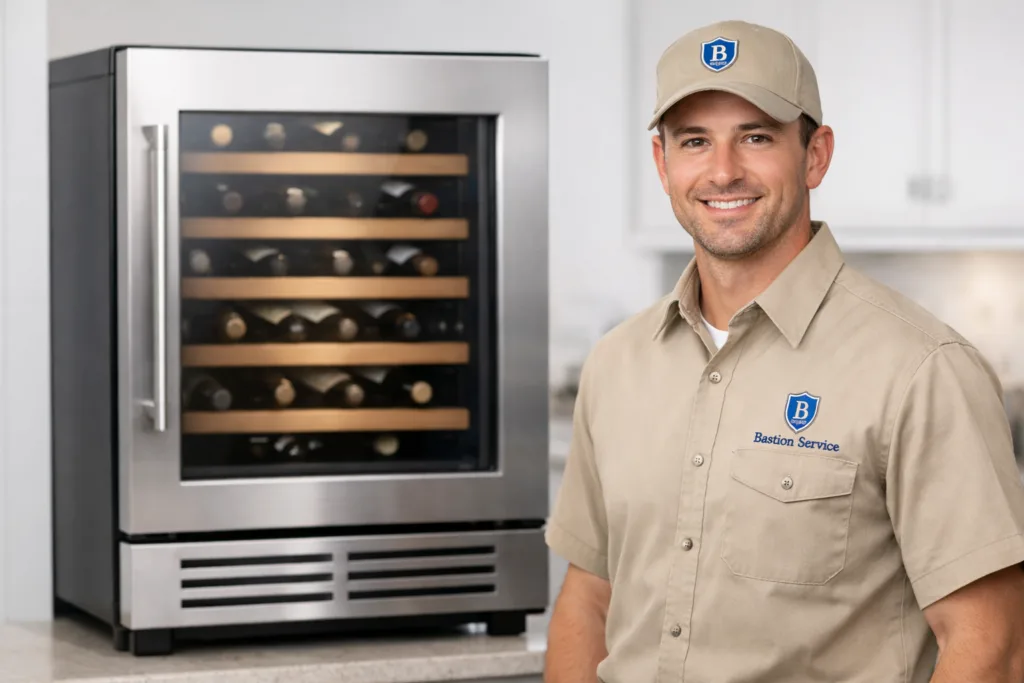
Stable wine storage depends on more than a cabinet that feels cool. If a Perlick wine cooler starts drifting in temperature, building condensation, or making a new noise, the underlying cause can range from a simple airflow restriction to a failing control or refrigeration component. For homeowners in Mid-Wilshire, it helps to evaluate the exact symptom pattern before deciding whether the issue is minor, repairable, or likely to worsen with continued use.
Symptoms that usually point to a repair need
Wine coolers are designed for consistency. When that consistency disappears, the warning signs are often subtle at first. You may notice the display looks normal even though bottles feel warmer, one shelf seems cooler than another, or the unit runs much longer than it used to. Those changes usually mean the appliance is no longer regulating temperature the way it should.
The cooler is running, but the temperature is off
If the cabinet still cools but cannot hold the selected setting, common causes include weak air circulation, a faulty sensor, control problems, dirty condenser conditions, or sealed-system trouble. This often shows up as wine that never reaches the expected serving or storage temperature, even though the unit appears to be operating normally.
Temperature drift is worth addressing early because partial cooling can be misleading. A wine cooler does not need to stop completely to have a real performance problem.
The unit runs constantly or starts and stops too often
A Perlick wine cooler that seems to run all day may be struggling to remove heat efficiently. A unit that short cycles can point to sensor, control, compressor, or airflow issues. Either pattern puts extra strain on components and can make temperature stability worse over time.
In built-in residential installations, poor ventilation around the cabinet can also contribute to long run times. That is one reason the appliance should be evaluated in place rather than treated as if every cooling issue has the same cause.
Water inside, heavy condensation, or frost buildup
Moisture problems usually mean warm air is entering where it should not, or the unit is not managing humidity and drainage properly. A worn door gasket, a misaligned door, a blocked drain, or uneven cooling can all lead to water droplets, damp shelves, or frost on interior surfaces.
If condensation keeps returning after the door is fully closed and the cooler is not overpacked, service is usually the next step. Repeated moisture can affect labels, shelving, cabinet surfaces, and overall cooling efficiency.
Buzzing, rattling, clicking, or fan noise
Some low operating sound is normal, but a noticeable change in sound should not be ignored. Rattling can come from vibration or mounting issues. Buzzing may reflect fan or compressor strain. Clicking that repeats without steady cooling can suggest a starting or control problem.
When unusual noise appears together with warm temperatures or frost, it often means the unit is working harder than it should and needs inspection.
Why symptom-based diagnosis matters
Different failures can create almost identical symptoms. A warm cabinet might come from restricted airflow, a bad thermistor, a failing evaporator fan, dirty condenser conditions, or a deeper sealed-system issue. Water inside the cooler could be caused by a gasket problem, drain blockage, leveling issue, or temperature imbalance.
That is why replacing parts based on guesswork often leads to extra cost without solving the problem. On a Perlick wine cooler, the more useful approach is to test the appliance based on how it is actually behaving: how long it runs, whether temperature recovery is slow, whether cold air is circulating evenly, and whether controls and sensors are responding accurately.
Common repair paths on Perlick wine coolers
Once the source of the problem is identified, the repair path is often more specific than homeowners expect. Many wine cooler issues are not complete system failures, even when storage conditions have become unreliable.
- Fan motor replacement: Needed when air is not moving properly through the cabinet or across cooling components.
- Sensor or control repair: Important when the displayed setting does not match actual cabinet temperature or the unit cycles unpredictably.
- Door gasket correction: Helps when outside air is leaking in and causing condensation, frost, or excessive runtime.
- Drain service: Useful when water pools inside or moisture repeatedly collects under shelves.
- Condenser and airflow correction: Necessary when restricted ventilation or dirty cooling surfaces are reducing performance.
- Compressor or sealed-system evaluation: Considered when the cooler cannot reach temperature despite proper controls and airflow.
Because wine storage depends on stable conditions rather than simply “cold enough,” a unit that is partially cooling may still need repair. Inconsistent storage can be just as frustrating as a complete loss of cooling.
When waiting is reasonable, and when it is not
There are a few basic checks a homeowner can make before scheduling service. Make sure the door is fully closing, bottles are not blocking interior airflow, and the cooler is not packed so tightly that circulation is restricted. If the appliance was recently loaded with many room-temperature bottles, temporary longer run times may be expected.
Outside of those situations, waiting usually does not help. Schedule service when you notice any of the following:
- The cabinet is warmer than the set temperature
- The unit runs nonstop or short cycles repeatedly
- Condensation, frost, or water returns after being wiped away
- The display behaves erratically or does not reflect actual cooling
- The fan or compressor starts making new or louder noise
- Different shelves or zones feel noticeably uneven
Signs continued use may cause more damage
If the compressor never seems to shut off, heavy frost continues to build, or water keeps pooling inside the cabinet, ongoing use can create additional wear. A poor door seal can also force the appliance to run harder every day. Catching those problems early often prevents a smaller repair from turning into a larger one.
Built-in installation issues can affect performance
Many residential wine coolers are installed under counters or within finished cabinetry. In Mid-Wilshire homes, that kind of placement can make access tighter and can magnify ventilation problems if clearances are limited. A unit may appear to have a major cooling failure when the real issue involves airflow around the cabinet, heat buildup, or installation conditions that keep the system from shedding heat properly.
That does not mean every built-in problem is an installation problem, but it does mean the surrounding space should be considered during diagnosis. Temperature performance, door movement, leveling, and ventilation all matter on this type of appliance.
Repair or replacement?
That decision usually comes down to the type of failure, the age of the unit, the condition of the cabinet, and the expected repair path. Problems involving fans, controls, sensors, drainage, or gaskets are often more manageable than they first appear. On the other hand, a major sealed-system issue or repeated breakdown history may push the decision toward replacement.
The right question is not just whether the wine cooler still turns on. It is whether it can maintain stable storage conditions without excessive runtime, moisture, or noise. A dependable diagnosis gives homeowners a better basis for deciding what makes sense next.
What to expect from residential service in Mid-Wilshire
A useful service visit should focus on the way the appliance is actually failing, not on assumptions. That includes checking temperature behavior, airflow, door sealing, moisture patterns, control response, and signs of deeper refrigeration trouble. For a household wine cooler, the goal is to protect storage conditions while avoiding unnecessary part replacement.
For homeowners in Mid-Wilshire, that means understanding whether the problem is relatively straightforward, whether continued operation is risky, and whether repair is practical based on the current condition of the Perlick unit.