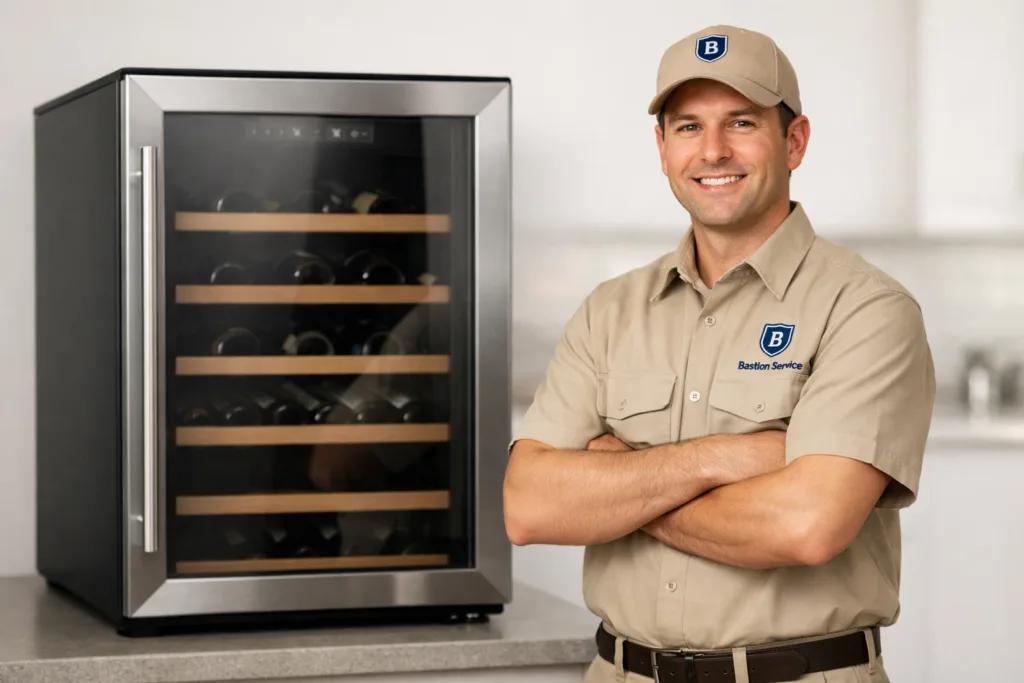
Wine coolers often show subtle warning signs before they stop cooling altogether. A cabinet that feels only slightly warm, a display that seems accurate while bottle temperature drifts, or a new vibration during each cycle can all point to an underlying fault. With EdgeStar units, the most useful next step is identifying whether the problem is tied to airflow, controls, door sealing, fan operation, or the cooling system itself.
Common EdgeStar Wine Cooler Problems
Not reaching or holding the set temperature
If your wine cooler is running but the interior is warmer than expected, several issues may be in play. Dirty condenser areas, restricted airflow, a weak fan motor, sensor errors, or control problems can all prevent proper cooling. In some cases, the compressor starts and runs, but the cabinet never gets down to the selected temperature. In others, the unit cycles off too soon and allows temperatures to climb between runs.
This kind of symptom matters even when the cooler is only a few degrees off. Wine storage depends on stability, not just whether the unit feels cool at a glance.
Temperature swings throughout the day
Intermittent warming and cooling usually suggests a component that is working inconsistently rather than failing all at once. A thermostat issue, thermistor drift, fan interruptions, loose wiring connection, or door gasket leak can all create uneven temperature behavior. Homeowners sometimes notice this first when bottles feel different depending on shelf position or when the unit seems to run harder at certain times without an obvious reason.
Buzzing, clicking, rattling, or louder humming
Some operating sound is normal, especially during startup and shutdown, but a clear change in noise pattern should not be ignored. Clicking may indicate startup trouble. Rattling can come from loose panels, fan interference, or vibration against surrounding cabinetry. A louder hum than usual may point to strain in the compressor circuit or reduced airflow causing the system to work harder than it should.
Condensation, moisture, or frost
Water on shelves, fogging on the glass, sweating around the door, or frost buildup inside the cabinet can all indicate that warm air is getting in or moisture is not being managed correctly. Common causes include a worn gasket, a door that is not sealing evenly, airflow imbalance, or a defrost-related issue. Left unchecked, moisture problems can reduce efficiency and create additional stress on the unit.
Display and control issues
If the control panel becomes unresponsive, the readout flashes or behaves erratically, or the selected settings do not seem to hold, the problem may involve the interface, sensor circuit, wiring, or main control board. These faults can look cosmetic at first, but they often affect how the cooler cycles and whether it can maintain a stable internal temperature.
Why Similar Symptoms Can Mean Different Repairs
One reason wine cooler problems are easy to misjudge is that the same symptom can come from very different failures. A warm cabinet could be caused by poor condenser airflow, a failing evaporator fan, a sensor giving inaccurate readings, or a deeper sealed-system issue. Replacing parts based only on guesswork often leads to extra cost without solving the actual problem.
That is especially true when the unit is still partially functioning. A cooler that “almost works” can make the issue seem minor, even when important components are under strain. For households in Mid-Wilshire, this is often the point where proper testing makes the biggest difference between a straightforward fix and a more expensive outcome later.
What to Check Before Scheduling Repair
There are a few basic things a homeowner can look at before service is arranged:
- Confirm the door is closing fully and not being blocked by bottle placement or shelf alignment.
- Check for visible gasket gaps, tears, or areas where the seal looks flattened.
- Make sure ventilation areas are not blocked by dust, stored items, or tight enclosure conditions.
- Listen for whether the fan and compressor sounds are normal, intermittent, or unusually loud.
- Notice whether the display temperature matches the way the cabinet actually feels over time.
These observations do not replace diagnosis, but they can help narrow down whether the issue looks like airflow restriction, sealing trouble, control behavior, or cooling loss.
When the Problem Should Not Be Ignored
It is a good time to schedule service when the wine cooler runs constantly, stops cooling reliably, starts making a new noise, develops condensation, or begins showing control errors. Even if the cabinet still cools somewhat, worsening inconsistency usually means a part is failing rather than a temporary fluctuation.
If the unit is repeatedly clicking without starting, tripping power, or shutting down and restarting abnormally, continued use is not recommended. Repeated startup attempts can increase stress on electrical components and may worsen the original fault.
Repair Versus Replacement
Not every EdgeStar wine cooler problem leads to the same recommendation. Repairs are often worthwhile when the issue involves accessible components such as fans, sensors, thermostatic controls, switches, seals, or certain board-related faults. Replacement becomes a more realistic consideration when a unit is older, major cooling-system failure is involved, or the overall repair path no longer makes sense for the condition of the appliance.
The key is understanding what failed and what result the repair is expected to deliver. A useful service call should help you weigh cost, appliance condition, and likely outcome rather than treating every issue as an automatic repair.
What a Service Visit Typically Focuses On
For an EdgeStar wine cooler, diagnosis usually starts with the symptom pattern: how the temperature is behaving, whether the unit is cycling normally, what sounds are present, and whether moisture or frost is developing. From there, inspection may include fan operation, door seal condition, sensor and control behavior, airflow through the cabinet, and electrical checks related to startup and cooling performance.
That process helps determine whether the problem is in a serviceable component or points to a larger cooling-system issue. For homeowners in Mid-Wilshire, that kind of evaluation is what turns a vague symptom into a practical repair plan based on the actual condition of the unit.