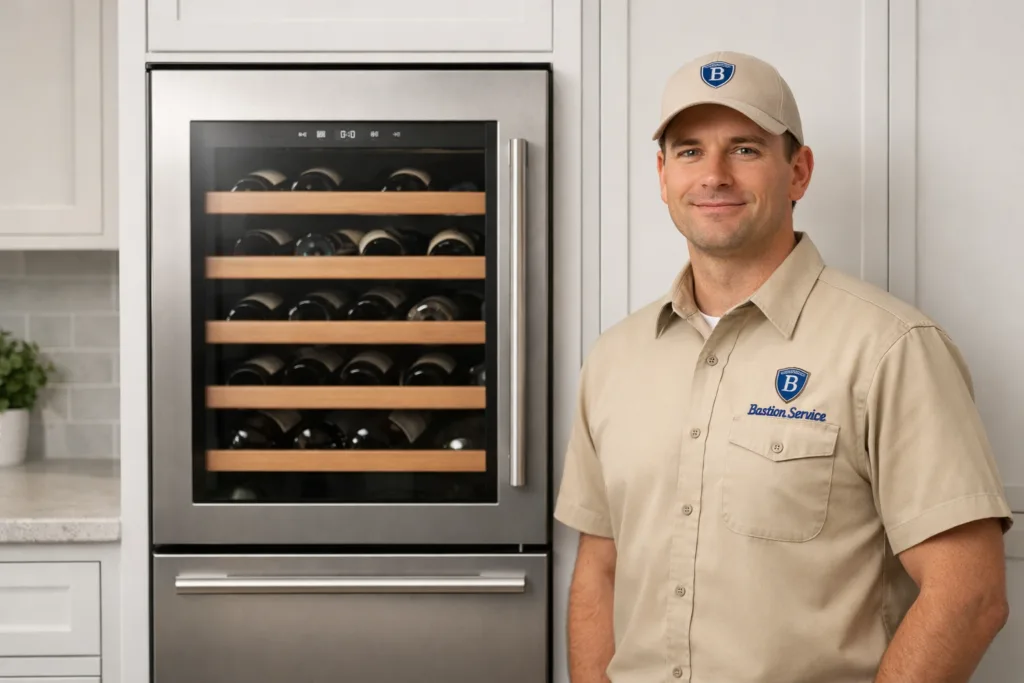
Wine coolers are designed for stable, moderate storage, so even small temperature shifts can matter. When a unit starts running longer than usual, feels warm inside, or develops moisture on shelves or glass, the cause is not always obvious from the outside. The same symptom can come from restricted airflow, a worn door gasket, a faulty sensor, a control problem, or a more serious cooling-system issue.
Common wine cooler problems and what they can mean
A cabinet that will not stay cool is one of the most common complaints in Mid-Wilshire homes. In many cases, the issue starts with dirty condenser coils, weak fan movement, poor ventilation around the cabinet, or a thermostat or thermistor that is no longer reading correctly. If the display looks normal but bottles feel warmer than expected, the problem may be with sensing or control rather than the setting itself.
Overcooling can be just as damaging. If bottles are getting too cold or certain sections of the cabinet are beginning to freeze, the unit may be misreading internal temperature and running past the target range. Some dual-zone models also develop uneven cooling when one fan slows down or a damper is not opening and closing properly.
Noise complaints are also worth paying attention to. A brief hum during normal cycling is expected, but louder buzzing, clicking, rattling, or constant fan noise can suggest compressor strain, a loose panel, fan motor wear, or vibration caused by an uneven installation. In a quiet kitchen or bar area, these changes are often the first sign that something in the cooling system is no longer working normally.
Moisture, condensation, and door-seal issues
Water droplets on the glass, damp shelving, or pooling near the base often point to warm air entering the cabinet or trouble with condensation management. A torn gasket, a door that no longer closes flush, a blocked drain path, or frequent door openings can all contribute. Excess humidity inside the cooler forces longer run times and makes temperature recovery slower after the door is opened.
If frost is building in a section that should stay dry and cold, or if low-temperature performance problems are centered more in a freezer-style compartment than a wine cabinet, Freezer Repair in Mid-Wilshire may be the better service path.
Signs the problem may be getting worse
Some symptoms suggest the unit is moving beyond a minor nuisance and into a more urgent repair issue. Repeated short cycling, error codes, a cabinet that struggles in warmer parts of the day, or a cooler that never seems to reach its set temperature can all point to a failing component. A wine cooler that runs nearly nonstop without steady cooling may be dealing with airflow trouble, sensor failure, or sealed-system weakness.
Another warning sign is poor temperature recovery. If the cabinet warms noticeably every time the door opens and takes far too long to return to normal, the unit may have a weak fan, poor coil performance, or a compressor that is losing efficiency. That pattern can slowly increase wear on other parts if it is ignored.
Why diagnosis matters before replacing parts
Wine coolers often fail in ways that look similar to the homeowner. A warm cabinet can be caused by something relatively straightforward, such as clogged coils or a bad gasket, but it can also come from a control board fault, a failing evaporator fan, or refrigerant-related trouble. Replacing parts based on guesswork can lead to unnecessary expense and still leave the original problem unresolved.
A useful service visit should focus on actual cabinet temperature, sensor response, fan operation, compressor behavior, coil condition, and whether the unit has enough clearance to ventilate properly. That process helps separate a manageable repair from a larger cooling failure.
When the issue may not be the wine cooler itself
In some Mid-Wilshire homes, the wine cooler is installed near other refrigeration appliances, and symptoms can overlap. If cooling problems are affecting the main kitchen unit too, Refrigerator Repair in Mid-Wilshire may be more relevant for that appliance while the wine cooler is evaluated separately.
Likewise, some homeowners first notice water, weak cooling, or ice-production trouble around a beverage area and assume the wine cooler is responsible. If the problem is tied to fill issues, leaking around an ice system, or inconsistent ice production, Ice Maker Repair in Mid-Wilshire may be the more useful match.
Repair or replacement: how to think it through
Many wine cooler repairs are reasonable when the fault is limited to a fan motor, thermostat, thermistor, control, light assembly, hinge, gasket, or drainage problem. Those issues are usually easier to isolate and compare against the age and condition of the appliance. A unit with a single identifiable fault is very different from one with repeated cooling complaints and multiple failing components.
Replacement becomes more worth considering when the cooler has chronic temperature instability, sealed-system trouble, difficult-to-source parts, or a repair estimate that approaches the value of the appliance. Age is part of the equation, but condition and repair history usually matter more. A well-maintained unit can still make sense to repair if the problem is specific and the cabinet itself is in good shape.
What to do while waiting for service
Try to limit door openings and avoid overloading the shelves, especially if airflow already seems weak. If the displayed temperature is questionable, use a reliable thermometer to check the actual interior condition rather than relying on the panel alone. Make sure the unit has breathing room around any vents and that dust has not built up heavily around accessible coil areas.
It also helps to note exactly what changed first. Whether the initial symptom was fan noise, condensation, a flashing display, or a cabinet that never quite gets cool enough, that timeline can make diagnosis faster and more accurate.
Service expectations for homeowners in Mid-Wilshire
For household wine coolers, the most helpful approach is to start with the symptom you can see at home and work backward to the cause. Warm storage, uneven cooling, noise, leaking, icing, or intermittent shutdowns all call for slightly different testing. Once the fault is identified, it becomes much easier to judge whether repair is straightforward, whether parts are practical to replace, and whether continued use is putting the unit under added strain.
That kind of focused evaluation helps protect both the appliance and the bottles inside it, while giving homeowners in Mid-Wilshire a realistic basis for the next decision.