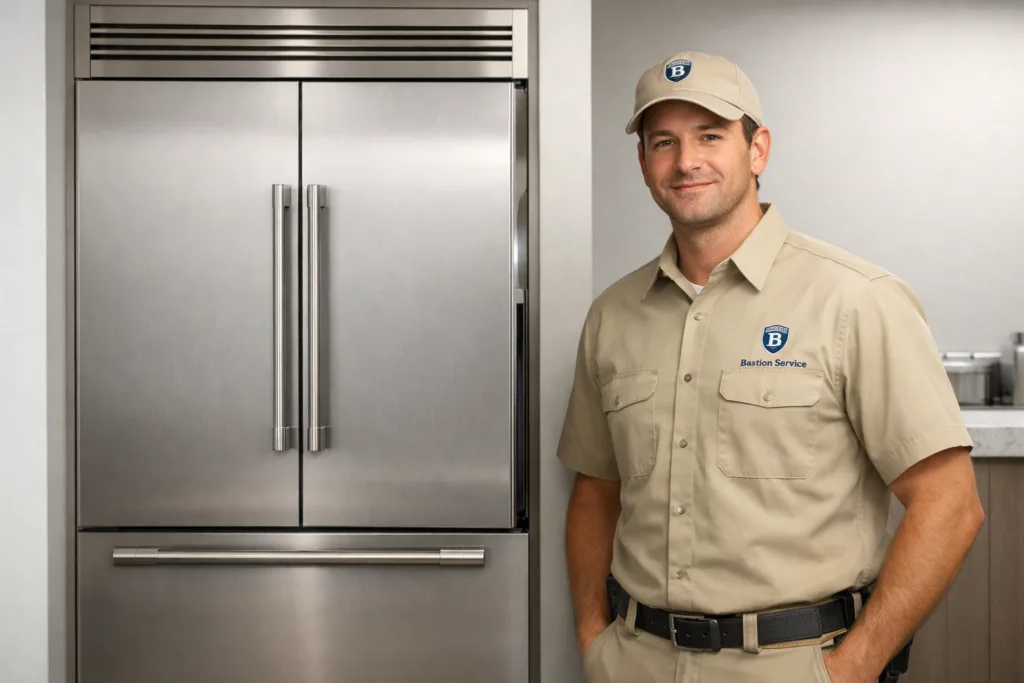
A Monogram refrigerator that starts warming, leaking, icing over, or running nonstop can affect food storage, kitchen routines, and nearby cabinetry fast. The most useful next step is to match the symptom pattern to the system that is likely failing, because the same visible issue can come from airflow trouble, a defrost problem, a control fault, or a more serious sealed system concern.
How Monogram refrigerator problems are usually diagnosed
Good refrigerator repair starts with what the appliance is actually doing, not just the fact that it feels warm. Temperature behavior, fan sounds, frost location, compressor run time, and signs of moisture all help narrow the cause. On Monogram units, built-in designs and more advanced controls can make symptom-based testing especially important.
For example, a refrigerator section that is too warm while the freezer still seems cold often points to air movement or defrost trouble, not necessarily a failed compressor. A leak near the front of the unit may come from condensation or a blocked drain, while a leak at the supply connection suggests a different repair path. Looking at the full pattern helps avoid unnecessary parts replacement and gives homeowners a more realistic idea of what comes next.
Common symptoms and what they may mean
Refrigerator section is not cold enough
If drinks are not staying cold, leftovers spoil early, or temperatures seem to drift throughout the day, the issue may involve restricted airflow, dirty condenser conditions, fan motor failure, thermistor or sensor problems, or an electronic control fault. In some cases, a sealed system issue is responsible, especially when cooling loss continues to worsen.
When the fresh food section is warm but not completely dead, many homeowners assume a setting change will fix it. Usually, that is not the cause. Uneven cooling tends to mean the refrigerator is struggling to move or manage cold air properly.
Freezer is colder than the refrigerator compartment
This is a common symptom in bottom-freezer and side-by-side configurations. It often indicates frost buildup behind a panel, blocked vents, or an evaporator fan problem. The freezer may seem “mostly fine” while the refrigerator side slowly gets worse, but that does not mean the unit is healthy. If cold air cannot circulate correctly, temperatures in the main food compartment will keep rising.
Water leaking inside or onto the floor
A recurring leak may come from a clogged defrost drain, a frozen drain path, a supply line issue, a valve problem, or moisture entering through a poor seal. Even small leaks should not be ignored. Water can damage flooring, soften surrounding materials, and create persistent odor or mildew problems if it keeps collecting under or inside the appliance.
Frost buildup or ice where it should not be
Heavy frost along interior walls, around vents, or behind drawers usually points to a defrost system issue or repeated warm-air intrusion. Damaged door gaskets, misaligned doors, or doors that are not closing fully can also create icing problems. Frost is not just cosmetic. As it builds, it can block airflow, interfere with fans, and turn a minor issue into a larger cooling failure.
Loud buzzing, clicking, rattling, or fan noise
Not every refrigerator sound is abnormal, but changes matter. A new rattling noise may be vibration from a loose component or panel. A loud fan sound can mean ice is contacting the fan blade or the motor is beginning to fail. Repeated clicking may point to a start problem, relay issue, or a compressor struggling to run. When the sound is different from the refrigerator’s normal operating pattern, it is worth having checked before performance declines further.
Ice maker or water dispenser problems
Slow ice production, no ice, weak water flow, or intermittent dispenser operation can come from a clogged filter, frozen water line, faulty inlet valve, temperature problem, or control issue. On a Monogram refrigerator, these symptoms sometimes show up along with broader cooling or airflow trouble, so it helps to look at the appliance as a whole rather than treating the ice maker as a separate issue.
Signs the problem may be getting more serious
Some refrigerator issues stay inconvenient for a while. Others tend to escalate quickly. If the appliance is running almost constantly, temperatures keep rising, frost returns soon after being cleared, or the cabinet never seems to stabilize, the system may be under significant strain.
- Food temperatures are inconsistent from shelf to shelf
- The compressor seems to run for very long periods
- The refrigerator cools intermittently, then warms again
- Moisture keeps appearing under drawers or on the floor
- Ice buildup returns soon after manual cleanup
- Doors no longer seal tightly or close smoothly
These signs often mean waiting can make the final repair more involved. Continued operation may increase wear on fans, controls, or the compressor, depending on the underlying cause.
What homeowners can check before scheduling service
There are a few simple observations that can help narrow the issue without taking the refrigerator apart.
- Confirm the doors are fully closing and not being blocked by bins, containers, or shelving.
- Check for visible gasket gaps, tears, or areas where the seal is not sitting flush.
- Notice whether the freezer seems normal while the refrigerator section warms.
- Look for frost patterns on interior panels rather than only on stored food.
- Pay attention to whether the unit is unusually noisy or running nonstop.
- Note exactly where water is collecting if leaking is present.
These checks do not replace a repair visit, but they can make it easier to describe the problem accurately and spot situations where service should not be delayed.
When to stop using the refrigerator normally
If temperatures are clearly unsafe, food protection should come first. A refrigerator that is only cooling intermittently, has obvious thawing in the freezer, or cannot keep perishables cold enough should be treated as a food safety issue, not just an appliance inconvenience.
It also makes sense to limit use if there is active leaking, major frost buildup, or signs that a fan is obstructed by ice. Frequent door opening adds heat and moisture, which can worsen an airflow or defrost problem. In households in Mid-Wilshire, these situations are often the point where a small annoyance becomes an urgent repair call.
Repair or replacement: what usually makes sense
Many Monogram refrigerator problems are worth repairing when the failure is tied to components such as fan motors, sensors, valves, defrost parts, door seals, or controls. Those issues can often be addressed without replacing the appliance, especially if the cabinet and overall condition are still good.
Replacement becomes a more serious consideration when the refrigerator has a major sealed system failure, repeated expensive breakdowns, extensive internal wear, or a repair estimate that no longer fits the age and condition of the unit. The right choice depends on the specific fault, not just the presence of cooling trouble.
For homeowners in Mid-Wilshire, the best repair decisions usually come from comparing three things: the exact cause of the problem, the expected reliability after repair, and the overall condition of the refrigerator today.
What a useful service visit should accomplish
Most people do not need a long technical explanation. They need to know what is failing, whether the food inside can be protected, and whether the refrigerator is a good candidate for repair. A productive visit should identify the affected system, explain the likely next step in plain language, and outline whether continued use risks further damage.
That kind of symptom-based evaluation is especially helpful with Monogram refrigeration, where temperature swings, airflow issues, frost buildup, leaks, and noise can overlap. Once the actual fault is identified, the repair path becomes much easier to judge.