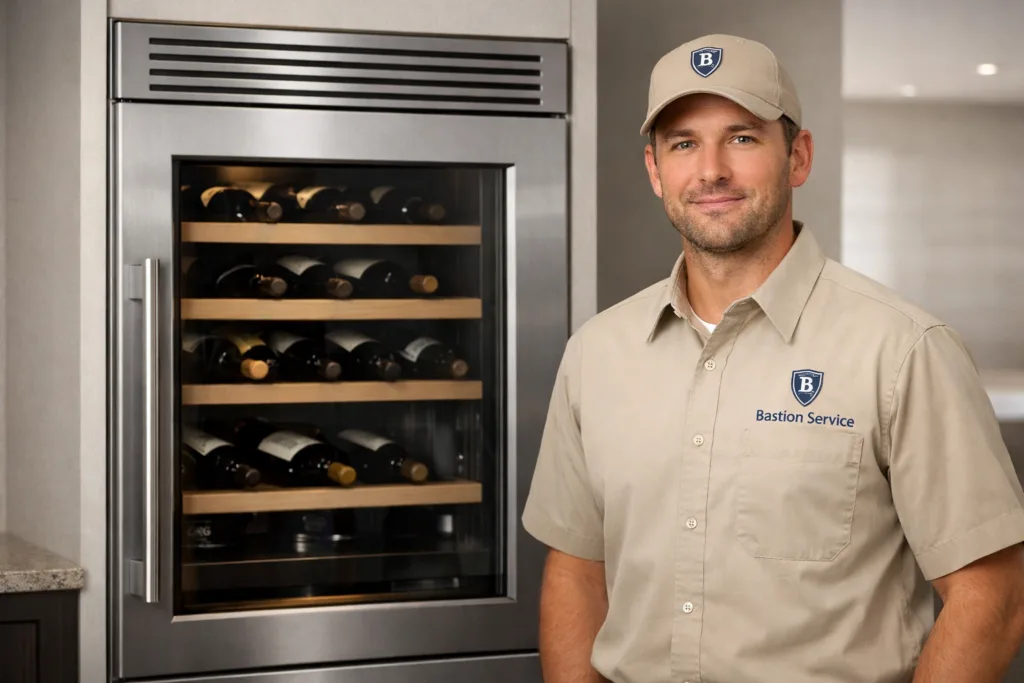
A Sub-Zero wine cooler that begins running warm, collecting moisture, or cycling in an unusual way can affect both the appliance and the bottles inside it. Because wine storage depends on steady conditions, small changes in temperature or humidity are worth taking seriously instead of waiting for a full cooling failure.
Common Sub-Zero wine cooler issues homeowners notice
Most service calls start with a few recognizable symptoms rather than one obvious breakdown. In Mid-Wilshire homes, the most common concerns include temperature drift, uneven cooling, fan noise, condensation, control panel problems, and a unit that seems to run longer than it should.
Temperature swings or a cabinet that feels too warm
If bottles are not staying at the selected setting, the cause may involve airflow restrictions, a weak evaporator fan, inaccurate temperature sensing, electronic control trouble, or a refrigeration performance issue. Some coolers still appear to be running normally even while the internal temperature has moved outside the ideal storage range.
Uneven cooling can also matter. If one area seems colder than another, that may point to circulation problems inside the cabinet rather than a complete loss of cooling. This is especially important when a collection includes bottles that need more stable storage over time.
Condensation on the glass, shelves, or door area
Moisture is often tied to air leaks, gasket wear, drainage problems, or a cooler that is struggling to control temperature correctly. In a built-in installation, long run cycles and ventilation-related stress can also make condensation worse. What starts as light moisture can eventually affect shelving, labels, nearby finishes, or flooring around the unit.
Buzzing, rattling, clicking, or fan-like scraping
Not every sound means something is wrong, but a change in normal operating noise should be checked. A rattling panel, obstructed fan blade, failing motor, or compressor-related strain can all produce sounds that were not there before. If the cooler becomes noticeably louder while also losing temperature stability, that combination usually points to a developing mechanical issue.
Display or control problems
When the display stops responding, shows inconsistent readings, or does not match actual cabinet conditions, the problem may be electronic rather than purely mechanical. Controls, sensors, and user interface components all affect how the unit cycles and maintains storage conditions. A cooler can have lights and a working display while still cooling poorly.
Why symptom patterns matter
Two wine coolers can seem to have the same complaint while needing very different repairs. For example, “not cooling” could come from a fan issue, a control fault, a door seal problem, or a sealed-system failure. “Water under the unit” might be drainage-related in one case and caused by excess condensation in another.
That is why a useful service approach looks at the full pattern:
- Whether the unit is warm all the time or only at certain points in the cycle
- Whether the display matches actual temperature
- Whether moisture appears inside the cabinet, around the door, or below the appliance
- Whether noise happens continuously or only during startup
- Whether the door closes and seals evenly
Those details often help separate a manageable component repair from a deeper refrigeration problem.
Built-in installation issues that can affect performance
Many Sub-Zero wine coolers are installed into finished cabinetry, where airflow and heat transfer matter more than homeowners realize. If the unit cannot shed heat effectively, it may run too long, lose efficiency, or show gradual temperature drift. Dust buildup, blocked vents, or strain from extended run times can add to the problem.
In Mid-Wilshire homes, these issues are often noticed first as subtle changes: bottles not feeling as cool as expected, the cabinet exterior feeling warmer than usual, or the appliance running for long stretches without fully recovering. Catching that pattern early can help prevent added wear on major components.
When service should be scheduled
It is a good time to schedule service when you notice any of the following:
- The cabinet no longer holds a steady temperature
- The display setting and actual storage conditions do not seem to match
- Condensation keeps returning on the glass or interior surfaces
- The door does not seal tightly or opens with less resistance than before
- The cooler runs almost constantly
- New buzzing, clicking, or fan noise has appeared
- Water is appearing under or around the unit
If the appliance is repeatedly restarting, tripping power, or fully dead, it is best to stop normal use until it has been inspected. If it is still running but not holding temperature, moving more sensitive bottles to a stable location can help protect the collection while the issue is being diagnosed.
Repair or replacement depends on the actual fault
Many Sub-Zero wine cooler problems are repairable, especially when the issue involves fans, sensors, controls, gaskets, drainage, or other accessible components. Those repairs are often more straightforward when the unit is serviced before constant operation causes additional strain.
Replacement becomes a more serious consideration when the cooler has major sealed-system trouble, repeated expensive failures, or overall condition that no longer supports reliable operation. The deciding factors are usually:
- The confirmed cause of the problem
- The age and condition of the appliance
- The expected reliability after repair
- Whether moisture or heat has already affected surrounding cabinetry
For a premium built-in unit, a practical repair plan is usually based on diagnosis first, not on the symptom alone.
What to check before the technician arrives
There are a few helpful observations homeowners can make without taking the appliance apart:
- Check whether the door is closing fully and evenly
- Look for visible condensation around the gasket or glass
- Listen for fan noise, clicking, or rattling during operation
- Notice whether the cabinet is always warm or only occasionally warming up
- Make sure bottles or shelves are not blocking interior airflow
These details can make the appointment more productive and help narrow down whether the issue is related to circulation, controls, sealing, drainage, or refrigeration performance.
Protecting the appliance and the collection
Wine coolers are not just convenience appliances; they are meant to maintain a stable environment over time. When that stability changes, the concern is not only whether the unit still turns on, but whether it is preserving the bottles the way it should. Prompt attention to moisture, temperature drift, or unusual noise can help avoid spoilage, prevent unnecessary wear, and reduce the chance of more extensive repairs later.
For homeowners dealing with Sub-Zero wine cooler problems in Mid-Wilshire, the most useful next step is identifying the exact cause and whether the repair path makes sense for the unit’s condition.