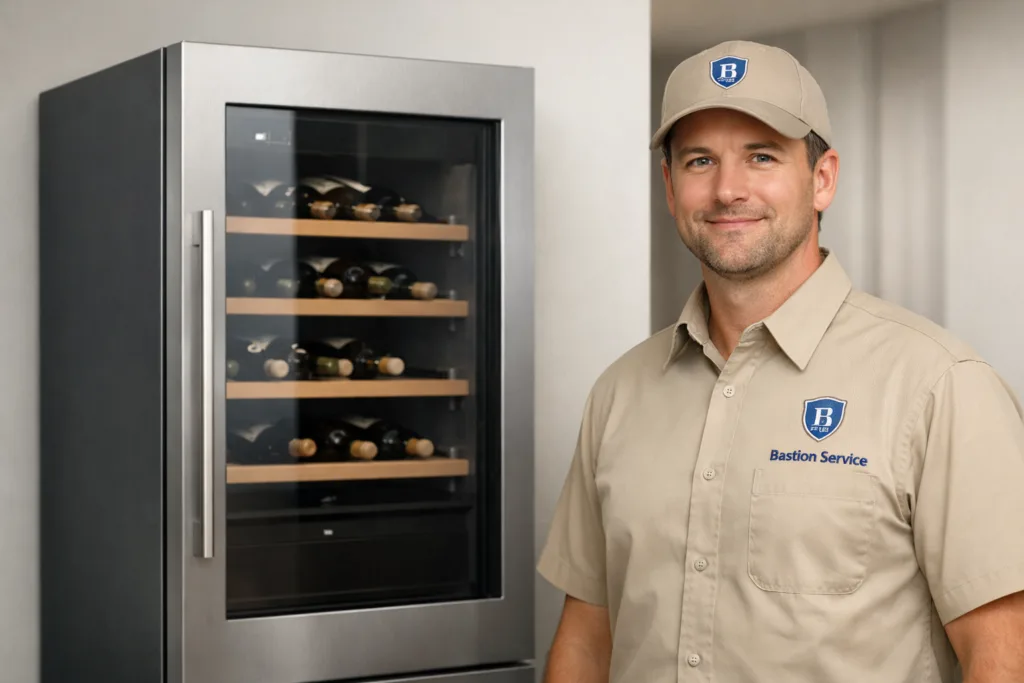
Wine coolers often fail gradually rather than all at once. A slight temperature drift, a new fan noise, or a little moisture around the door can seem minor at first, but those small changes usually point to a specific fault that should be identified before it spreads into a larger cooling problem. In a Mid-Wilshire home, that matters because built-in placement, room temperature, loading patterns, and door use can all affect how a Miele wine cooler behaves when something starts to go wrong.
How wine cooler problems usually show up
Most homeowners first notice a change in temperature, but that is only one clue. A Miele wine cooler may also start running longer than usual, become louder during cooling cycles, develop interior moisture, or show inconsistent control behavior. Because several different components can create similar symptoms, the most useful approach is to match the symptom pattern to the likely system involved.
For example, a cabinet that feels slightly warm is not always dealing with a compressor issue. Airflow restrictions, sensor errors, fan failure, door sealing problems, and control faults can all lead to poor temperature stability. Looking at the full pattern helps separate a targeted repair from a more serious refrigeration problem.
Common Miele wine cooler symptoms and what they can mean
Cabinet not cooling properly
If bottles no longer feel evenly chilled or the displayed temperature does not match actual conditions inside the cabinet, the cause may be weak air circulation, a faulty thermistor, a control problem, or heat exchange issues. On some units, the system may still run but lose the ability to pull temperatures down efficiently, especially after the door has been opened or the cooler has been restocked.
Symptoms that often appear with poor cooling include long run times, warm spots near upper shelves, and a cabinet that struggles to recover after normal use.
Temperature swings or uneven zones
Dual-zone and multi-shelf storage depends on steady internal airflow and accurate sensing. If one section runs warmer than the other, or if the temperature rises and falls more than it should, possible causes include an evaporator fan issue, a bad sensor reading, an air channel obstruction, or a control board problem. Uneven performance does not automatically mean a major sealed-system failure, which is why symptom-based testing matters.
Condensation on the door or inside the cabinet
Moisture is often linked to warm air entering the cabinet or cold air not circulating correctly. A worn door gasket, a misaligned door, frequent short cycling, or internal airflow trouble can all allow condensation to build up. In residential settings, this is worth addressing early because moisture can affect labels, wood shelving, and surrounding finishes if it continues.
Buzzing, rattling, clicking, or fan noise
Some operating sound is normal, especially during startup and cooling cycles. What is not normal is a sudden rattling panel, repeated clicking without steady cooling, scraping from a fan blade, or vibration that has become noticeably louder. These sounds can point to leveling problems, fan motor wear, relay trouble, or a compressor working under strain.
Noise changes are especially useful when they happen together with warm temperatures or excessive run time, since that combination often narrows the diagnosis.
Display, lighting, or control issues
If the display flickers, settings fail to save, lights behave unpredictably, or the controls stop responding consistently, the problem may involve the interface, power delivery, or main electronic control. These issues can appear on their own, but they also sometimes overlap with cooling complaints when the system is not receiving or interpreting signals correctly.
What can make the issue worse
Continued use is not always harmless. A wine cooler that runs nearly nonstop, overheats around the compressor area, or keeps restarting may put additional stress on components that are still functioning. A minor fan problem can become a larger cooling failure if airflow remains restricted. A weak gasket can force the system to run longer and longer until temperature control becomes unreliable.
Moisture problems can also spread beyond the appliance itself. Water around the frame or under the unit may affect nearby flooring or cabinetry if the source is left unresolved.
Signs it is time to schedule repair
- The cabinet no longer holds the set temperature.
- Cooling recovers slowly after the door is opened.
- The unit runs almost constantly or cycles too frequently.
- Condensation keeps returning on the glass, liner, or shelves.
- You hear new clicking, scraping, buzzing, or rattling sounds.
- The display shows irregular behavior or the controls stop responding normally.
- One zone or shelf area stays warmer than the rest.
In many Mid-Wilshire homes, these issues become more obvious during warmer indoor conditions or when a built-in wine cooler has reduced ventilation around the cabinet. Even if the unit seems to recover for a while, repeated symptoms usually mean the underlying fault is still present.
Repair or replace?
Many Miele wine cooler problems are repairable when the failure is limited to a fan motor, sensor, gasket, drain-related issue, or certain control components. If the cabinet structure is in good shape and the refrigeration system remains sound, repair can restore stable storage conditions without replacing the entire appliance.
Replacement becomes more likely when there are multiple failures at once, severe cabinet wear, recurring cooling breakdowns, or a major refrigeration issue combined with age-related deterioration. The right decision usually depends on the condition of the unit as a whole, not just the single symptom that prompted the service call.
Helpful checks before service
Before scheduling service, it can help to note a few details:
- Whether the temperature problem affects the whole cabinet or only one section
- If noise happens constantly or only during certain cycles
- Whether moisture appears near the door, shelves, or base of the unit
- If the door closes firmly or seems slightly misaligned
- Whether recent loading, cleaning, or movement changed the behavior
These observations can make diagnosis faster and more accurate, especially on built-in models where installation conditions may contribute to the symptom pattern.
What homeowners should expect from service
Useful service should identify the failed component or system, explain how that fault connects to the visible symptoms, and clarify whether the cooler can be used safely until repair is completed. It should also help you understand whether the repair is likely to restore normal temperature control or whether the unit is showing broader reliability concerns.
For households storing sensitive bottles, quick attention is important. If your Miele wine cooler in Mid-Wilshire is no longer maintaining stable conditions, addressing the issue early can help reduce bottle risk, prevent added wear on other components, and keep a manageable problem from turning into a more expensive one.