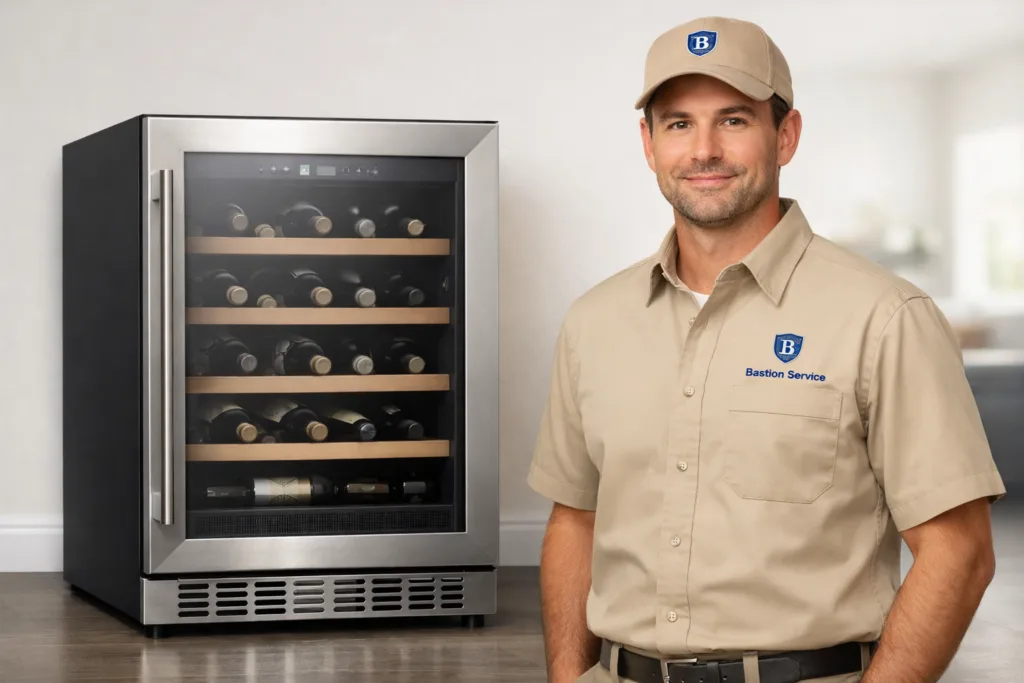
Small changes in wine cooler performance can affect storage conditions sooner than many homeowners expect. If a Summit unit starts drifting in temperature, collecting moisture, or making new noises, the most useful next step is to match the symptom to the likely system involved. Problems that seem similar on the surface can come from very different causes, including airflow restrictions, sensor errors, door seal wear, fan failure, or a developing sealed-system issue.
What common Summit wine cooler symptoms usually mean
Wine coolers are built for stable, controlled storage rather than aggressive cooling, so even modest changes in behavior matter. A cabinet that feels slightly warm, cools unevenly, or runs longer than normal is often signaling that one part of the system is no longer working as intended.
Running warm or not cooling enough
If bottles are warmer than the setting or the cabinet no longer recovers temperature after the door is opened, several issues may be in play. Restricted airflow, dust around the condenser area, a weak door seal, a faulty temperature sensor, control trouble, or evaporator fan problems can all reduce cooling performance. In some cases, startup components or the compressor itself may also be involved.
When the unit is consistently warm rather than occasionally fluctuating, it is usually best not to wait. Ongoing operation under that condition can place extra strain on cooling components and make the final repair more involved.
Too cold, freezing, or uneven shelf temperatures
A Summit wine cooler that overcools can be just as concerning as one that runs warm. Freezing near the back wall, bottles that feel much colder than expected, or noticeable differences between upper and lower shelves may point to a sensor problem, control board issue, airflow blockage, or frost interfering with circulation. This kind of pattern often worsens gradually, so early attention can help prevent secondary damage.
Condensation, water, or fogging
Moisture inside the cabinet or on the glass usually means the cooler is having trouble managing humidity or maintaining a proper seal. Common causes include a worn gasket, a door that is slightly misaligned, a blocked drain path, or cooling issues that leave the cabinet cycling inefficiently. If water begins collecting at the bottom, the problem is no longer just cosmetic. It can lead to odors, damaged labels, and unnecessary wear on nearby components.
Buzzing, clicking, rattling, or nonstop running
Some sound is normal, but a change in sound profile usually deserves attention. Clicking during startup, louder humming, rattling from the rear, or a compressor that seems to run almost constantly can indicate fan motor wear, relay trouble, loose mounting, or a refrigeration system that is struggling to maintain the set temperature. A cooler that cycles too often or barely cycles off at all is usually compensating for a fault rather than operating normally.
Why symptom timing matters
The pattern of the problem often says as much as the symptom itself. A unit that runs warm all day points in a different direction than one that cools correctly for hours and then drifts. The same is true for noises that happen only at startup, moisture that appears only after the door is opened, or cooling problems limited to one section of the cabinet.
Before scheduling service, it helps to note:
- Whether the issue is constant or intermittent
- The current set temperature
- Any flashing display or control irregularity
- Whether the whole cabinet is affected or only certain shelves
- When unusual sounds occur during operation
Those details can make troubleshooting faster and reduce guesswork.
Problems homeowners should avoid ignoring
Many wine coolers keep operating in a limited way even when something is wrong, which can make the issue seem less urgent than it is. Partial cooling, heavy condensation, repeated short cycling, or intermittent warming can all indicate a system under stress. Continuing to run the appliance without addressing the cause may increase wear on the compressor, fans, or controls.
It is also smart to avoid repeatedly changing the temperature setting in an attempt to force colder operation. Frequent adjustments can mask the original symptom pattern and do little to fix the underlying issue.
Repair or replacement for a Summit wine cooler
Many Summit wine cooler problems are repairable, especially when the issue involves fans, sensors, controls, drainage, startup parts, or door sealing. Repair becomes less attractive when the unit has a major sealed-system failure, repeated compressor-related trouble, or multiple age-related failures occurring at the same time.
For homeowners in Mid-Wilshire, the decision usually comes down to a few practical factors:
- The age of the wine cooler
- How stable cooling has been over the last several months
- Whether the cabinet, door, and shelving are still in good condition
- The scope of the current repair compared with the overall condition of the unit
If the problem is isolated and the appliance is otherwise sound, repair is often the sensible path. If cooling has been declining for a while and several symptoms are showing up together, replacement may deserve consideration.
What to do before a service visit
A few simple steps can make an appointment more productive. Keep the unit plugged in unless there is a strong electrical smell, active leaking near wiring, or another safety concern. Try not to overcrowd the shelves right before service, and make note of anything unusual you have observed over the past few days. If the wine cooler is built in, clearing access around the front and surrounding cabinetry can also help with inspection.
When a Summit wine cooler in Mid-Wilshire begins showing temperature swings, moisture, control issues, or unusual noise, symptom-based evaluation is usually the fastest way to identify whether the problem is minor, repairable, or a sign that the unit is nearing the end of its useful life.