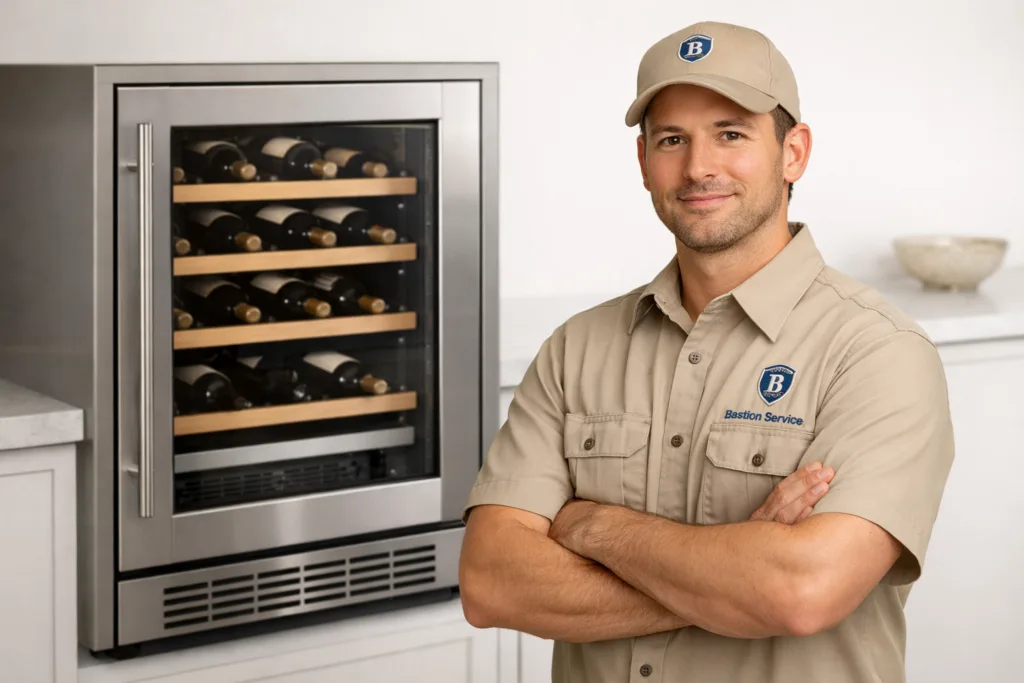
Temperature instability, moisture, or nonstop operation can quickly affect both the appliance and the bottles inside it. With a Marvel wine cooler, the same outward symptom can come from very different causes, so the most useful next step is to match what you are seeing and hearing to the likely repair path.
Start with the symptom, not the part
Wine coolers are built to maintain a narrow, steady range. When that consistency disappears, replacing a thermostat or fan based on guesswork may not solve the problem. A warmer-than-normal cabinet could come from dirty coils, weak airflow, a door seal leak, control problems, or a sealed-system fault. A noisy unit could be something minor like vibration against cabinetry, or it could be a fan motor or compressor under stress.
For homeowners in Mid-Wilshire, symptom-based troubleshooting helps separate manageable repairs from issues that need closer evaluation before the unit keeps running and wearing itself down.
Common Marvel wine cooler problems and what they often mean
Not cooling enough
If the interior stays above the set temperature, common causes include restricted condenser airflow, dust buildup, a failing evaporator or condenser fan, sensor trouble, control board issues, or compressor-related problems. If the cooler runs for long periods without recovering temperature, the issue should be checked sooner rather than later.
Too cold in one area
When bottles near the back or on one shelf start getting excessively cold, the problem may involve airflow imbalance, a misreading sensor, or a control fault. Uneven cooling is often a sign that the unit is no longer regulating the cabinet correctly, even if part of the interior still feels cool.
Water inside or under the unit
Puddling or repeated interior moisture can come from condensation, a blocked drain path, leveling problems, or frost melting after airflow disruption. In built-in installations, even a small leak can become more important if moisture reaches surrounding woodwork or flooring.
Buzzing, rattling, or fan noise
Not every sound means a major failure, but a new sound usually means something has changed. Rattling may be as simple as contact with nearby panels or trim. Buzzing and clicking can point to fan issues, electrical control problems, or a compressor trying unsuccessfully to start or cycle normally.
Running constantly
A Marvel wine cooler that rarely shuts off may be compensating for warm air entering the cabinet, poor ventilation, dirty coils, fan failure, control errors, or a cooling-system problem. Continuous operation raises energy use and can increase wear on key components without actually restoring proper storage conditions.
Display, lights, or controls acting strangely
A blank display, unresponsive buttons, erratic temperature readout, or lighting that stops working can indicate a power issue, failed interface, damaged wiring, or an electronic control problem. These symptoms are worth addressing before the unit is relied on for stable storage.
When waiting is likely to make the problem worse
Some issues can be monitored briefly, but others are better scheduled for service right away. It is smart to stop putting off repair when:
- the temperature stays unstable for more than a short period
- the unit runs almost nonstop
- water keeps appearing inside or underneath
- new fan, buzzing, or clicking noises start
- frost keeps returning after the door is fully closed and basic cleaning is done
- the cooler is on, but the cabinet is not reaching the selected setting
If there is a burning smell or repeated breaker tripping, normal use should stop until the cause is identified.
What you can check before scheduling repair
A few simple checks may help rule out basic causes before service:
- Confirm the outlet has power and the controls are turned on.
- Check that the door closes fully and the gasket is not twisted, torn, or loose.
- Make sure bottles and shelves are not blocking interior airflow.
- Look for visible dust on accessible condenser areas if your model allows safe inspection.
- Verify the cabinet is level and not vibrating against surrounding surfaces.
- Give the cooler adequate ventilation if it is installed in cabinetry.
If those steps do not change the behavior, further disassembly is usually not the best next move. Premium built-in refrigeration often hides the real fault behind a symptom that looks simpler than it is.
Repair or replace?
That decision usually comes down to the age of the wine cooler, the condition of the cabinet, the type of failure, and whether the unit has otherwise been reliable. Repairs often make sense when the problem is limited to a fan motor, sensor, thermostat, door gasket, drain issue, lighting problem, or control component.
Replacement becomes more worth considering when there are repeated cooling failures, major sealed-system issues, multiple failing parts at once, or repair costs that approach the value of the appliance. In Mid-Wilshire homes with built-in installations, fit and finish also matter, so preserving the existing unit may still be the better choice if the fault is contained and repairable.
Why model-specific behavior matters with Marvel units
Marvel wine coolers can differ in layout, airflow design, venting needs, control style, and built-in configuration. Two units may show the same symptom but require different repairs. That is why effective diagnosis depends on the exact model behavior, not just the brand name on the door.
For homeowners, the goal is simple: protect the collection, avoid unnecessary parts replacement, and make an informed decision before excess heat, moisture, or constant cycling leads to more damage.
Choosing the next step for your cooler
If your appliance is still cooling somewhat but showing early warning signs, timely service can prevent a smaller issue from becoming a larger one. If it has already stopped holding temperature, is leaking, or is making persistent new noise, it is usually time to treat the problem as active rather than temporary.
Marvel Wine Cooler Repair in Mid-Wilshire is most useful when it focuses on the exact symptom pattern, the condition of the appliance, and whether the repair path makes sense for your home and installation.