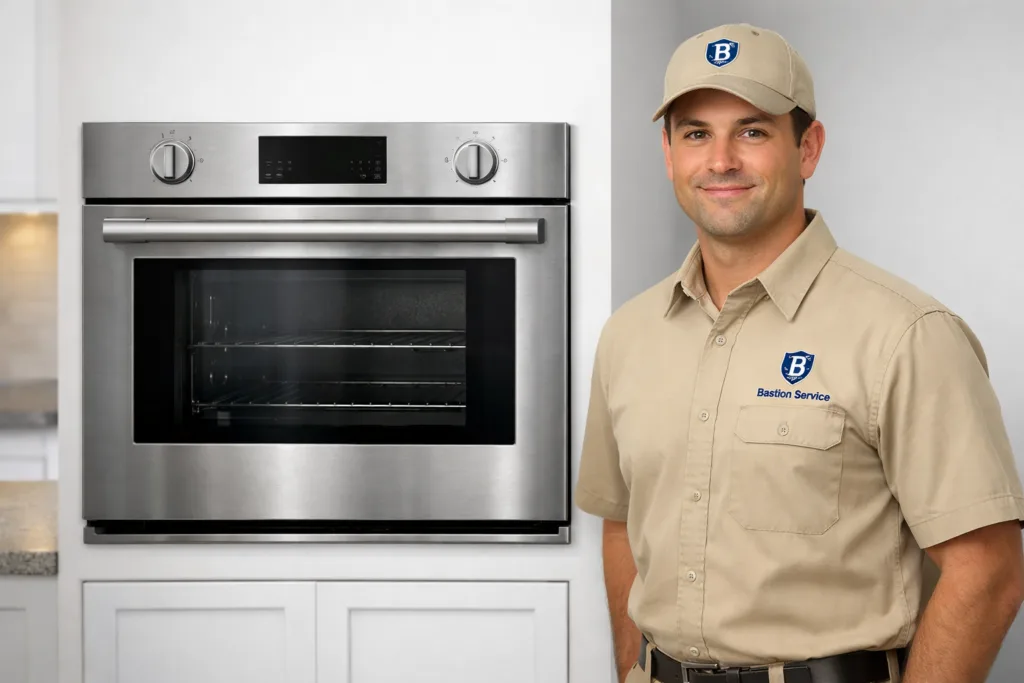
Built-in wall ovens can fail in ways that are easy to notice but hard to interpret. A Thermador unit may seem to have one simple problem, yet the real cause can involve the heating circuit, temperature sensing, airflow, door sealing, or the electronic control. Looking at the exact pattern matters. An oven that never reaches temperature is different from one that overshoots, cycles too widely, or shuts down halfway through baking.
How Thermador wall oven problems usually show up
Most homeowners first notice a performance change in everyday cooking. Cookies brown unevenly, casseroles take much longer than expected, or preheat drags on long enough that dinner timing becomes unreliable. In other cases, the display flashes a fault, the keypad stops responding, or the oven appears to start and then never builds proper heat.
Symptom-based testing is important because similar complaints can come from different failures. A weak or incomplete heat pattern may point to an element issue, but it can also come from a sensor reading problem, a relay on the control, or a door that is not sealing tightly enough to hold heat.
Common symptoms and what they can indicate
Not heating at all
If the oven powers on but stays cold, the issue may involve the bake element, broil circuit, thermal cutoff, wiring, or control board. On some models, the display and lights still work normally even though the heating system is not activating. That can make the problem appear smaller than it is.
Slow preheat
Long preheat times often suggest weakened heating performance or a temperature feedback problem. If the oven eventually gets hot but needs far more time than usual, it may be operating on only part of the heating system or misreading internal temperature. Slow preheat can also show up before total heat loss, which makes it a useful early warning sign.
Uneven baking or roasting
When one rack cooks faster than another, one side of a dish browns harder, or results vary from week to week, the cause may be inconsistent heat distribution. That can involve the convection fan, sensor accuracy, door gasket wear, or a heating component that still works but no longer performs at full strength. These are the kinds of issues that frustrate households because the oven seems usable, yet food quality keeps slipping.
Temperature swings
Some cycling is normal, but large swings are not. If food burns on the outside before the center is done, or recipes suddenly need major time adjustments, the oven may be running too hot, too cool, or fluctuating outside a normal range. A drifting sensor, control fault, or calibration-related issue can all create that pattern.
Error codes and display faults
Recurring fault codes usually mean the oven is detecting a problem it cannot ignore. Depending on the code and model, that may relate to sensor circuits, door latch operation, communication errors, or overheating protection. A blank display, flickering panel, or keypad that responds intermittently can also point to control or power-related trouble rather than a simple reset issue.
Door problems and self-clean issues
A wall oven door that does not close evenly can affect both safety and cooking results. Heat loss from a poor seal can lead to longer preheat times and uneven baking. If problems begin after a self-clean cycle, the latch assembly, thermal protection, or control system may need inspection before the oven is used again for regular cooking.
Breaker trips, shutdowns, or electrical odor
If the oven trips power, shuts off under load, or gives off a burning smell, it is best to stop using it until it has been checked. These symptoms can indicate a failing element, damaged wiring, terminal problems, or control failure. Continued use may turn a repairable problem into a larger electrical repair.
What to pay attention to before scheduling repair
A few details can make diagnosis faster and more accurate. Try to notice whether the oven fails in the same way every time or only during certain modes. For example:
- Does the problem happen during bake, broil, convection, or all cooking modes?
- Is preheat slow every time, or only at higher temperatures?
- Does the display show a code immediately, or only after the oven has been running?
- Does the unit shut off completely, or does it stay on without heating properly?
- Did the issue begin after a self-clean cycle or a power interruption?
Those clues help separate a heating fault from a sensor, latch, or control issue.
When the oven should not keep being used
Some problems are inconvenient but manageable for a short time, while others are signs to stop. Repeated breaker trips, visible sparking, an electrical burning smell, a door that will not latch or close properly, or an oven that overheats should not be brushed aside. Even when the appliance still runs, those conditions can put more strain on wiring and controls.
If the oven is merely underperforming, such as baking unevenly or preheating slowly, the risk may be lower, but the repair is still worth addressing before the failure becomes more expensive.
Repair or replacement for a built-in Thermador wall oven
Many wall oven problems are still good repair candidates, especially when the issue is limited to a sensor, heating element, fan motor, latch assembly, or a specific control-related fault. Built-in appliances are different from freestanding units because replacement involves cabinet fit, trim compatibility, delivery timing, and installation disruption inside the kitchen.
For that reason, many Pico-Robertson homeowners want to know not just what failed, but whether the repair cost makes sense for the oven’s age and overall condition. A single failed component in an otherwise solid unit often points toward repair. Multiple major faults, recurring electronic issues, or substantial structural wear may push the decision toward replacement instead.
Why built-in oven diagnosis needs to be precise
Wall ovens concentrate heat, electronics, and airflow components in a tight enclosed installation. That means one failing part can affect several symptoms at once. A temperature complaint may really be an airflow issue. A heating complaint may start with a relay or sensor fault. A door problem may look cosmetic at first but lead directly to poor cooking performance.
That is why homeowners in Pico-Robertson usually benefit most from service that identifies the actual failed component, checks whether continued operation is safe, and explains the likely repair path in plain terms.
Signs it is time to schedule service
- The oven no longer reaches the set temperature
- Preheat has become noticeably slower
- Food cooks unevenly or inconsistently
- The display shows recurring error codes
- The controls are unresponsive or erratic
- The door will not close, seal, or latch correctly
- The oven trips power or shuts off during use
When those symptoms keep returning, waiting rarely improves the situation. The most useful next step is to identify whether the problem is isolated and repairable or part of a broader decline in the appliance. For a Thermador wall oven in Pico-Robertson, that gives the household a clear way to decide whether to repair now, stop using the unit until the issue is corrected, or begin planning for replacement.