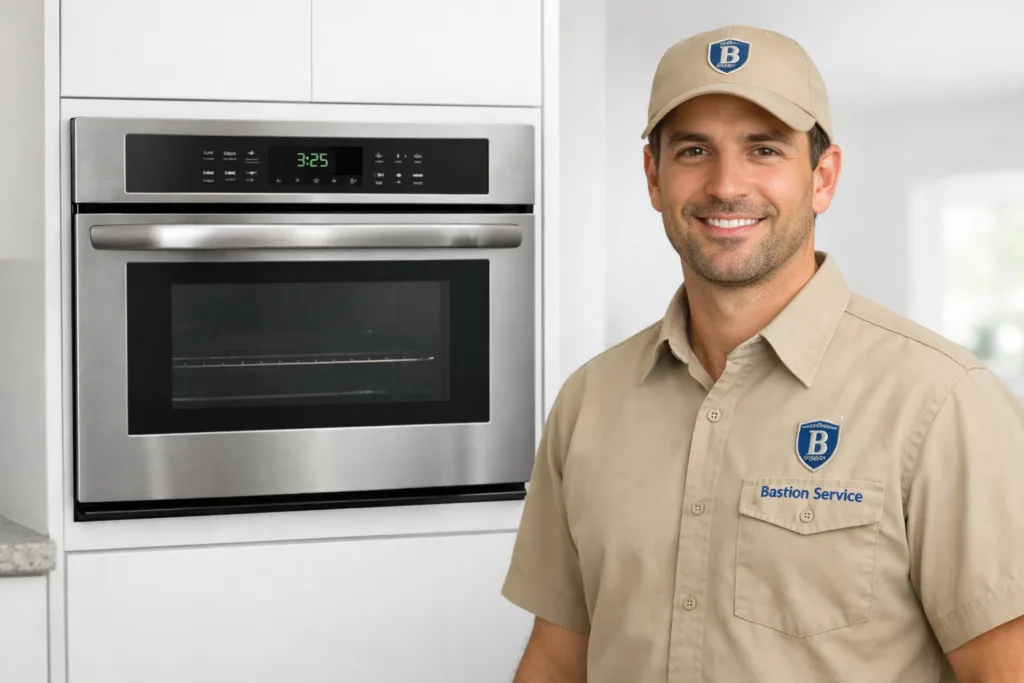
Wall ovens usually give warning signs before they fail completely. A Frigidaire unit may start taking much longer to preheat, bake unevenly from rack to rack, or shut off mid-cycle even though the display still appears normal. Those patterns matter because the same kitchen complaint can come from very different causes, including a weakened bake element, a drifting temperature sensor, a failing relay, damaged wiring, or a door-related heat loss problem.
For homeowners in Pico-Robertson, the most useful approach is to look at how the oven behaves over several uses instead of focusing on one bad meal. If the problem happens only on bake, only after the oven gets fully hot, or only after self-clean, that symptom pattern often points the repair in a more accurate direction.
Common Frigidaire wall oven symptoms and what they may mean
Oven will not heat at all
If the control panel turns on but the cavity stays cold, the failure may involve the bake circuit, broil circuit, sensor, thermal protection component, control board, or incoming power. In some cases, the oven appears to have power while still lacking the voltage needed for proper heating. That is one reason a wall oven that looks functional can still be unable to cook.
Slow preheat
A Frigidaire wall oven that suddenly takes much longer to reach temperature may have a weakened element, inaccurate sensor feedback, or a control issue that is not energizing the heat circuit correctly. Slow preheat can also show up before a complete heating failure, so it is worth checking before the oven stops working altogether.
Uneven baking
Cookies that brown too fast on one side, casseroles that stay cool in the center, or dishes that require extra time often suggest unstable heat rather than user error. A bad sensor, inconsistent element output, poor door sealing, or control cycling problem can all create uneven results. Built-in ovens depend on steady feedback and retained heat, so even a small fault can affect cooking performance.
Temperature runs too high or too low
If food repeatedly burns at the set temperature or stays undercooked despite long bake times, the oven may not be regulating heat correctly. Overheating often points toward a sensor problem or relay that is sticking on too long. Underheating can be caused by an element that still glows but no longer produces proper output, or by a control that is misreading oven temperature.
Display errors, beeping, or random shutdowns
Intermittent faults are often the most frustrating because the oven may work one day and fail the next. Flashing codes, constant beeping, or a unit that cancels the cycle on its own can indicate electronic control trouble, touchpad failure, loose connections, or sensor communication issues. These problems usually require testing rather than guesswork because replacing the wrong electronic part can quickly become expensive.
Door latch or self-clean problems
When the door will not lock, will not unlock, or no longer closes tightly, oven operation can be affected in more than one way. Heat may escape during baking, safety functions may not complete properly, and self-clean can trigger additional stress on switches, fuses, and controls. If problems began right after a self-clean cycle, that detail is especially helpful during diagnosis.
Why the exact symptom pattern matters
Two ovens can both be described as “not heating,” yet one may have a failed element while the other has a power supply or control issue. The same goes for uneven baking, overheating, or delayed preheat. A symptom-based inspection helps separate what the oven is doing from what part is actually causing it.
That matters even more with a built-in appliance because access can take time, and repeated removal is not ideal. A smart repair plan starts by confirming whether the fault is isolated to one part or whether several components have been affected. This is often the difference between a straightforward fix and a repair that no longer makes financial sense.
Signs you should stop using the oven
Some problems are inconvenient. Others can lead to more damage if the oven keeps running. It is best to stop using the appliance if you notice:
- burning or hot electrical smells
- visible sparking
- breaker trips during operation
- severe overheating
- a door that will not close securely
- controls that turn on and off unpredictably
Continuing to cook through these symptoms can damage additional components and may turn a limited repair into a much larger one.
When an intermittent problem should still be checked
A wall oven does not need to fail every day to need service. If it works normally for a week and then suddenly struggles to preheat, shows an error, or shuts down while baking, that inconsistency is still a real warning sign. Electrical faults, sensor drift, and control problems often begin as occasional symptoms before becoming constant failures.
Homeowners in Pico-Robertson often wait because the oven “came back on,” but temporary recovery does not mean the problem resolved itself. In many cases, it means the failing component has not quit completely yet.
Repair or replace?
Many Frigidaire wall oven problems are repairable, especially when the issue is limited to an element, temperature sensor, fuse, latch component, switch, or a specific electronic fault. Repair becomes less attractive when the appliance has repeated major failures, significant interior or door damage, or multiple costly problems at the same time.
The better question is not just whether the oven can be repaired, but whether the repair is likely to restore stable daily use. That depends on the age of the unit, the condition of surrounding components, and whether the failed part appears to be the only issue or part of a larger pattern.
What to note before scheduling service
A few details can make diagnosis faster and more accurate. Before service, it helps to note:
- whether the problem happens during bake, broil, or both
- whether preheat is slow or never completes
- any error code shown on the display
- whether the issue started suddenly or developed over time
- whether the trouble began after self-clean or a power interruption
- if the oven overheats, underheats, or shuts off during cooking
Those observations often reveal whether the fault is heat-production related, control related, or tied to the door or safety system.
What a useful wall oven repair visit should accomplish
A productive service visit should do more than confirm that the oven is acting up. It should narrow the problem to the failed component or circuit, check for related damage, and determine whether repair is practical based on the condition of the appliance. For a built-in Frigidaire wall oven, that kind of direct testing is especially valuable because it reduces unnecessary parts replacement and helps homeowners make an informed decision with less trial and error.
When your oven is heating inconsistently, preheating too slowly, or showing control problems, the goal is simple: identify the cause, protect the appliance from further damage, and restore predictable cooking performance in your Pico-Robertson home.