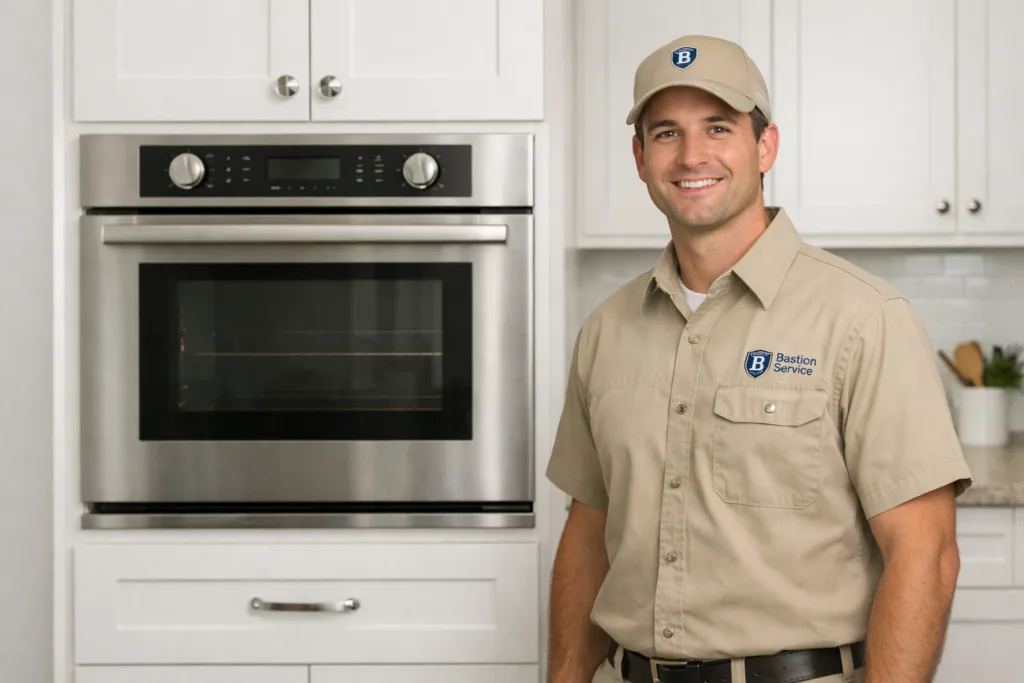
Many wall oven problems look similar from the outside, but they do not point to the same repair. An oven that will not heat at all may have a failed bake element, a bad igniter, a tripped thermal safety device, a relay problem, or a power issue. Slow preheat, uneven baking, and temperature swings often involve the sensor, control board, convection system, or door seal rather than a single obvious part.
Common wall oven symptoms and what they may mean
If the oven turns on but never reaches the selected temperature, the cause may be a weak heating element, failing igniter, inaccurate temperature sensor, or a control that is not sending power consistently. In homes where roasting takes too long or baked goods finish unevenly, the problem can also come from poor heat circulation or a door that is not sealing tightly enough to hold temperature.
When a unit heats sometimes but not others, intermittent electrical faults are often involved. Loose connections, heat-stressed wiring, failing relays, and control board issues can create unpredictable performance that gets worse over time. Homeowners in Pico-Robertson also sometimes notice the display works normally while the cavity does not heat, which usually means the problem is deeper than a simple settings issue.
Error codes, random shutoffs, or a door that stays locked after a cycle can point to sensor faults, latch problems, cooling fan issues, or electronic control trouble. If the symptom is isolated to the surface burners while the wall oven itself is working normally, Cooktop Repair in Pico-Robertson may be the better service path.
Signs the oven should not keep being used
Stop using the appliance if it is overheating, sparking, tripping breakers, producing an electrical burning smell, or shutting off in the middle of cooking. Continued use can damage additional components and, in some cases, create a larger wiring or control failure. A wall oven installed inside cabinetry should also be checked promptly if exterior surfaces around the unit seem hotter than usual during operation.
For gas models, a persistent gas smell is a separate safety issue. If that happens, stop using the oven, leave the area if needed, and contact the gas utility or emergency service before arranging appliance repair. Once the immediate safety concern is addressed, the oven itself can be evaluated for igniter, valve, or control problems.
Slow preheat and uneven baking are often diagnosable
One of the most common complaints is an oven that technically works but no longer cooks reliably. Cookies brown too fast on one side, casseroles need extra time, and recipes that used to be routine start coming out inconsistent. In many cases, this traces back to a drifting temperature sensor, weak element output, poor convection fan performance, or heat loss from a worn gasket.
Slow preheat is especially important to check early because homeowners often adapt to it without realizing how far performance has slipped. A unit that needs significantly more time to reach temperature may still appear usable, but the underlying issue can continue to worsen. If the concern is with a standard kitchen oven rather than a built-in wall unit, Oven Repair in Pico-Robertson may be more relevant.
When the problem may involve another cooking appliance
Some households describe the issue as “the oven and burners are both acting up,” which can change the service direction. If heat problems affect the oven below and the cooktop above in the same appliance, the diagnosis may belong with a combined cooking unit rather than a standalone wall oven. In that case, Range Repair in Pico-Robertson may be the better fit.
Likewise, if the household uses the word stove to describe the main cooking appliance and the trouble includes burner ignition, top-surface heat, and oven performance together, Stove Repair in Pico-Robertson may be the more accurate option. Getting the appliance type right helps shorten the repair process and avoids ordering attention for the wrong unit.
Repair versus replacement
Repair is often worthwhile when the problem is limited to a serviceable part and the appliance is otherwise in solid condition. Igniters, elements, sensors, fans, door gaskets, latch components, and many control-related failures can often be addressed without replacing the entire unit. Built-in installation also matters, since replacing a wall oven can involve cabinet fit, trim compatibility, and electrical considerations beyond the appliance itself.
Replacement becomes more reasonable when there is repeated electronic failure, extensive internal wiring damage, severe door or hinge wear, or parts are no longer available. Age matters, but overall condition matters more. A well-kept oven with one failed component is very different from an older unit with recurring temperature complaints and multiple unresolved issues.
What homeowners in Pico-Robertson should expect from a service visit
A useful appointment should answer more than whether the oven gets hot. The evaluation should narrow the issue to a likely cause by checking heating response, temperature behavior, control functions, sensor readings, door seal condition, and any stored error history the unit provides. That makes it easier to understand whether the fault is isolated or part of a broader electrical or control problem.
For homeowners in Pico-Robertson, the main goal is usually straightforward: find out why cooking performance changed, whether continued use is safe, and whether the repair makes sense. Bastion Service helps with wall oven repair focused on identifying the actual cause of the problem so the next step is based on the appliance’s condition rather than guesswork.