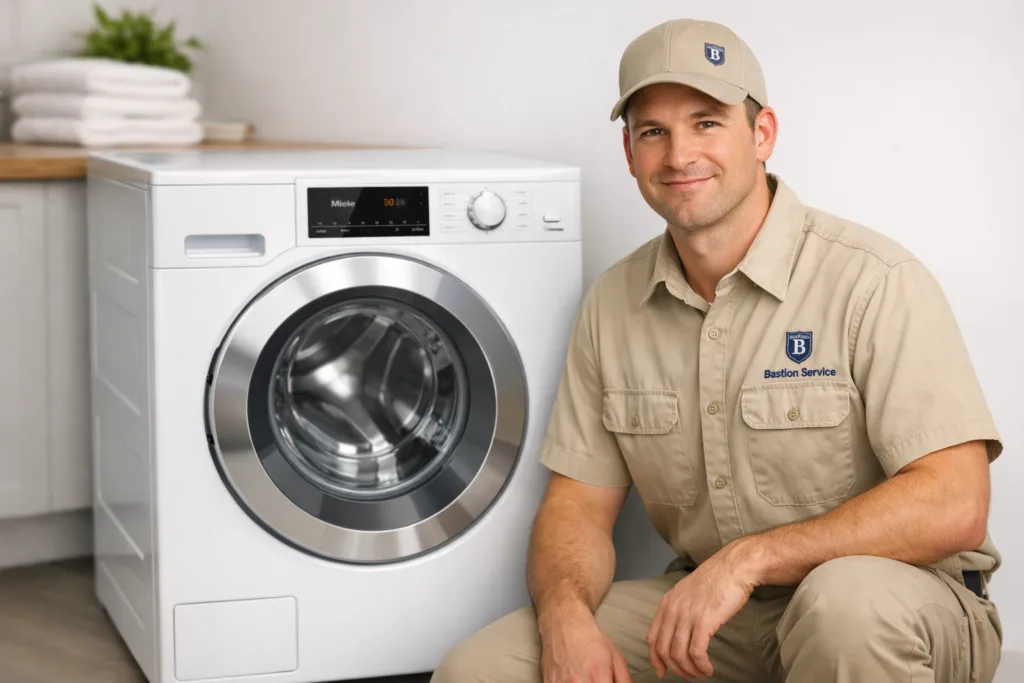
Washer problems rarely stay small for long. A drain issue can leave clothing sour by the next day, a leak can spread under nearby flooring, and a spin problem can put extra stress on the drum and suspension. With Miele units, the most useful approach is to match the repair plan to the exact symptom instead of assuming every wet-load or mid-cycle stop has the same cause.
How Miele washer problems usually show up
Most service calls begin with one noticeable change in behavior. The washer may stop with water still inside, shake harder than usual during spin, refuse to lock the door, or finish a cycle with poor wash results. What matters is when the symptom happens and whether it is repeatable.
For example, a machine that leaks only during draining points in a different direction than one that leaks during fill. A washer that starts normally but never reaches full spin suggests a different fault path than one that will not begin at all. Paying attention to these differences helps narrow down whether the problem is related to drainage, filling, door locking, controls, suspension, or internal wear.
Common Miele washer symptoms and what they may mean
Washer not draining
If the drum is still full of water at the end of the cycle, the problem may involve the drain pump, a restriction in the drain path, a clogged filter area, or a control issue that prevents the machine from completing the drain command. In some cases, the washer may pause before spin because it cannot confirm proper draining.
Typical signs include:
- standing water in the drum
- clothes that come out much wetter than normal
- a cycle that stalls near the end
- humming without effective draining
It is usually best not to keep rerunning the same cycle if water remains inside after repeated attempts.
Washer not spinning properly
A Miele washer that tumbles but does not finish with a full spin can be dealing with more than one issue. Poor draining is one possibility, but so are imbalance detection, worn suspension parts, motor-related faults, or problems with the control system. If the drum starts to accelerate and then backs off repeatedly, the washer may be detecting a condition that makes high-speed spin unsafe or ineffective.
When spin performance drops off, households often notice longer drying times, heavier laundry, and recurring cycle interruptions.
Leaks from the front, underneath, or behind the unit
Leaks need to be taken seriously even when they seem minor. Water near the front can point to the door boot, door closure issues, or oversudsing. Water collecting underneath may come from hoses, pump-area components, internal connections, or other failed seals. If leaking happens only during specific parts of the cycle, that pattern can help isolate the source.
Warning signs include:
- puddles after drain or spin
- drips that appear during fill
- water streaking from the door area
- repeat moisture under the washer after every load
Loud noise, banging, or heavy vibration
Not all washer noise means the same thing. A rhythmic thumping can suggest load-balance or suspension trouble, while grinding or scraping may indicate internal contact, foreign objects, or component wear. If the unit suddenly becomes much louder than usual, that change matters more than the exact sound description alone.
Strong shaking during spin should not be ignored. Repeated use while the washer is unstable can turn a manageable repair into a larger one involving additional parts.
Door lock or startup failure
If the washer will not start, unlock, or move beyond the first stage of the cycle, the fault may involve the latch assembly, door sensing, control communication, or another condition that prevents the machine from confirming it is safe to proceed. Some homeowners hear a click but see no real progress, while others find the controls respond but the cycle never actually begins.
This symptom is especially frustrating because the machine can appear partly functional while still being unable to run a complete load.
Poor wash results, residue, or musty odor
When clothing does not come out clean, detergent remains in the dispenser, or the washer develops a persistent odor, the issue may be tied to incomplete draining, weak fill performance, interrupted rinse action, or buildup in areas that should be flushing properly. These concerns are not always signs of major failure, but they often show that the machine is no longer operating as intended.
Signs the washer should be checked soon
Some issues can wait a short time. Others should be addressed before the next load. In Santa Monica homes, it is usually wise to stop regular use and schedule service when the washer:
- leaks onto the floor
- stops repeatedly with water inside
- makes sharp, grinding, or violent spin noise
- fails to lock or unlock the door properly
- shows recurring errors instead of a one-time interruption
- leaves laundry consistently soaked after the cycle ends
These patterns usually mean the problem is no longer incidental. Continued operation can increase wear, create water damage, or make the final repair more involved.
What helps speed up diagnosis
Before a service visit, it helps to note exactly what the washer is doing. Small details often matter. Was the load normal in size? Did the problem happen during fill, wash, drain, or spin? Did the machine make a new sound? Was there an error display, and did the door remain locked?
Useful information to have ready includes:
- whether the symptom happens every cycle or only sometimes
- where any water appears around the machine
- how long the problem has been going on
- whether performance changed gradually or all at once
- what happens if you try a different cycle
This kind of symptom history often makes the repair path more direct and reduces guesswork.
Repair or replace?
Many Miele washer problems are sensible to repair when the unit is otherwise in good condition and the issue is tied to a specific failed part or subsystem. Pumps, valves, latches, hoses, certain seals, and some control-related faults can often make repair worthwhile when the rest of the machine is holding up well.
Replacement becomes a more serious consideration when the washer has multiple major issues at once, shows broader structural wear, or would require extensive work compared with its overall condition. The real question is not just whether the machine can be fixed, but whether the repair meaningfully restores reliable use.
What homeowners in Santa Monica can expect from washer service
A solid service process starts with symptom-based testing. The washer may need to be checked for drain performance, pump function, door lock response, water intake behavior, suspension stability, error history, and visible signs of leakage or wear. From there, the next step should be easy to understand: what appears to have failed, whether the washer should remain off, and whether repair is practical.
For households in Santa Monica, the goal is simple: get the machine back to normal use without chasing the wrong part or overlooking a problem that could come back on the next load. When the diagnosis is tied to the washer’s real behavior, the repair decision is usually much clearer.