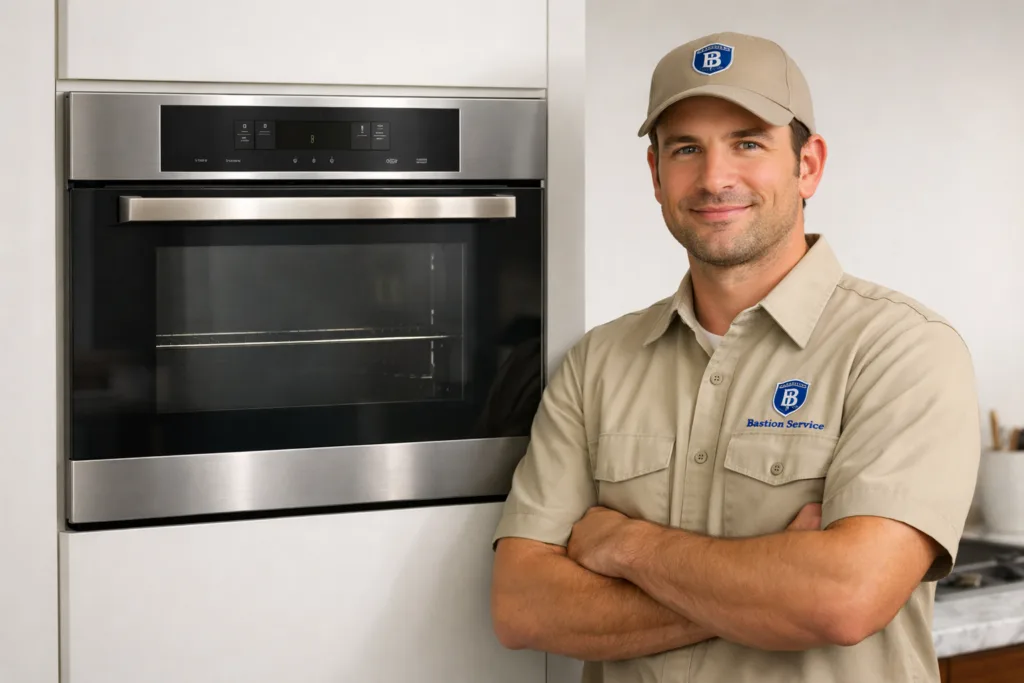
Miele ovens are built for precise cooking, so small performance changes tend to show up quickly in everyday use. If baking times suddenly stretch out, roasted foods brown unevenly, or the oven feels unpredictable from one meal to the next, the issue is usually more specific than “it’s just getting old.” In Mid-Wilshire homes, the most efficient repair path starts by matching the symptom pattern to the heating, airflow, sensor, door, or control system most likely involved.
How Miele oven problems usually show up at home
Many oven faults begin gradually. A unit may still power on and appear normal, but cooking results tell a different story. Paying attention to the exact behavior can help narrow the likely cause before service is scheduled.
Not heating at all
If the display responds and the oven starts a cycle but the cavity stays cold, common suspects include a failed bake element, broil element, thermal cutoff, sensor problem, wiring fault, or electronic control issue. On some models, the oven may look active while little or no heat is being produced. Homeowners often notice this when preheat never completes or food remains undercooked even after extra time.
Slow preheat
Preheat delays can point to a weak heating circuit, a sensor reading problem, or a control issue that is not driving the elements correctly. A slow preheat complaint sometimes starts subtly, with the oven still reaching temperature eventually, but only after much longer than normal. That delay matters because it usually affects overall cooking consistency too.
Uneven baking or temperature swings
When cookies brown more on one side, casseroles need rotation to finish evenly, or one rack cooks much faster than another, the problem may involve convection airflow, sensor drift, insulation loss at the door, or inconsistent cycling of the heating system. If several recipes show the same pattern, it is less likely to be cookware or placement and more likely to be a service issue.
Shutting off during cooking
An oven that turns off mid-cycle, resets, or loses heat after it has been running for a while may be overheating internally or experiencing a control or fan-related failure. This is especially important if the problem happens during high-temperature use, longer baking cycles, or self-clean functions.
Error codes or control issues
Recurring fault codes, touch controls that stop responding, or settings that do not register correctly can indicate problems in the user interface, main control, temperature feedback system, or door-lock circuit. If resetting the oven only helps temporarily, the fault usually needs proper testing rather than repeated restarts.
Symptom-based clues that help identify the fault
Specific symptoms often reveal more than a general complaint like “not working.” These household clues are useful because they help separate a heating problem from a sensing problem or an airflow issue.
- Food is pale on top but overdone underneath: possible broil weakness or uneven heat circulation.
- Preheat tone sounds normal, but food still cooks too slowly: possible inaccurate temperature sensing or partial heating failure.
- Only convection modes seem off: possible fan motor, fan blade, or convection control issue.
- Steam or excess heat escapes around the door: possible gasket wear, hinge alignment problem, or door closing issue.
- The oven works at lower temperatures but struggles at high heat: possible element, relay, safety component, or control failure under load.
- The door stays locked or will not lock properly: possible latch assembly, switch, or control interpretation problem.
Why uneven baking is not always a simple calibration issue
Homeowners sometimes assume inaccurate cooking means the oven only needs a temperature adjustment. In reality, calibration only helps when the oven is otherwise heating and cycling correctly. If the sensor is drifting, the convection fan is weak, the door seal is leaking heat, or the control is misreading cavity temperature, a manual adjustment will not solve the underlying problem.
That is why repeated workarounds, like adding extra cook time to every dish or constantly changing rack positions, rarely fix the experience for long. When the same inconsistency appears across multiple recipes, pans, and temperatures, the oven usually needs inspection rather than further guesswork.
Door, latch, and self-clean issues that should not be ignored
Door-related faults can affect more than convenience. A door that does not close firmly can reduce heat retention and disrupt temperature stability. A latch that fails during cleaning or remains stuck afterward can leave the oven unusable. In some cases, the control will prevent normal operation if it cannot confirm the correct lock position.
Common signs include:
- Door not sealing tightly
- Visible gap or misalignment when closed
- Locked door after a completed cycle
- Self-clean function that will not start or will not end normally
- Grinding, resistance, or looseness in the hinge area
Because these problems can overlap with heating and control behavior, replacing one visible part without testing the full system can miss the actual cause.
When continued use can lead to a more expensive repair
Some oven issues stay relatively contained for a while, but others can spread stress to surrounding parts. An oven that overheats, trips power, emits an electrical burning smell, or fails repeatedly during use should be taken seriously. Running repeated cycles through an unstable control, relay, fan, or sensor condition can increase wear on components that were not the original point of failure.
It is usually best to stop using the unit and arrange service if you notice any of the following:
- Breaker trips tied to oven operation
- Intermittent shutdowns during baking
- Strong electrical or hot-plastic odor
- Recurring error messages after reset attempts
- Door lock problems that affect safe operation
Repair or replace: what makes sense for a built-in Miele oven
For many households in Mid-Wilshire, repair is often worth considering because built-in cooking appliances are a significant part of the kitchen layout. Problems involving a sensor, fan motor, latch assembly, element, thermostat-related component, or isolated electronic fault are often more reasonable to address than replacing the entire unit.
Replacement becomes a more serious consideration when there are multiple major failures at once, severe cavity or structural damage, repeated control board problems, or part availability issues that make the repair path impractical. The decision is usually clearest after the failed system has been identified and the overall condition of the oven has been assessed.
What a useful service visit should clarify
Most homeowners are not looking for technical theory. They want to know whether the oven is safe to use, why it is misbehaving, and whether repair is sensible. A good service process should narrow the issue based on real operating behavior, not just the first visible symptom.
For Miele oven repair in Mid-Wilshire, that often means confirming:
- Whether the oven is producing and regulating heat correctly
- Whether temperature feedback is accurate
- Whether airflow and convection functions are operating as intended
- Whether the door and latch system are affecting performance
- Whether the control system is responding consistently
Signs it is time to schedule service
If the oven still turns on but no longer performs the way it should, waiting usually does not improve the situation. Service is typically warranted when preheat becomes unusually slow, baking results are no longer consistent, the oven shuts off unexpectedly, the door or lock behaves abnormally, or faults keep returning after resets.
Early diagnosis helps keep a focused repair from becoming a larger one. When the symptom pattern is addressed promptly, homeowners in Mid-Wilshire are in a better position to restore normal cooking performance without unnecessary trial-and-error part replacement.