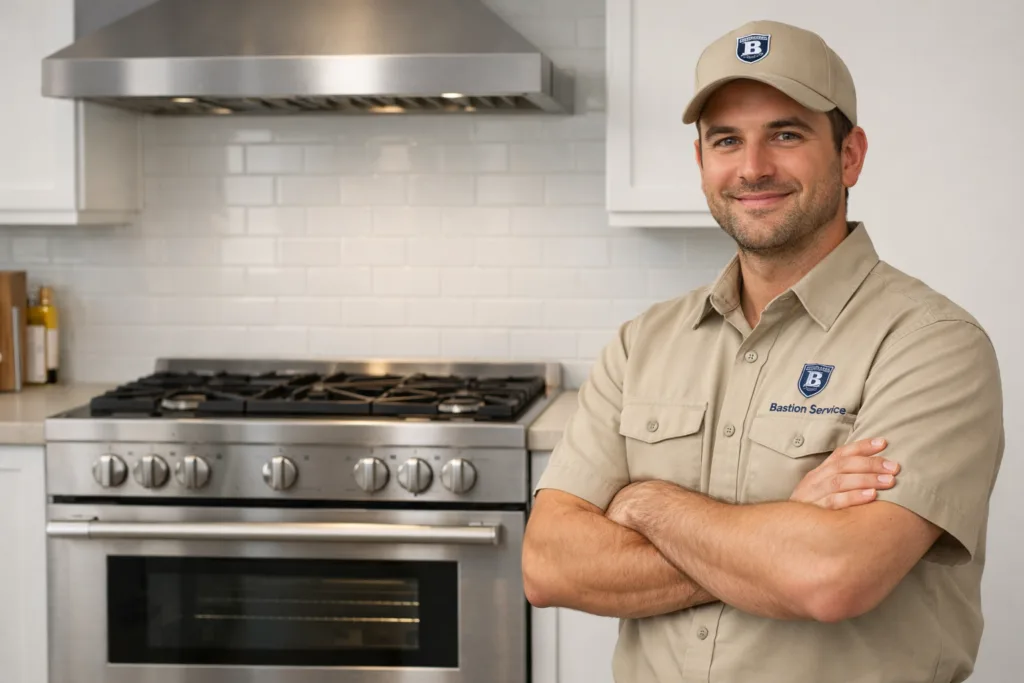
Range problems rarely stay limited to one inconvenience. A burner that clicks but does not light can interrupt everyday cooking, while an oven that runs too cool or too hot can ruin meals and make the appliance feel unreliable. With Miele models, the same symptom can come from several different components, so the most useful approach is to match the repair plan to the way the range is actually failing.
Signs your Miele range needs attention
Some issues are obvious right away, while others build gradually over time. Homeowners in Mid-Wilshire often schedule service after noticing one of these patterns:
- Burners click repeatedly or ignite only after several tries
- One burner does not heat properly or heats unevenly
- The oven takes too long to preheat
- Food comes out undercooked, overbrowned, or uneven from side to side
- The temperature display does not seem to match actual cooking results
- The control panel is unresponsive or works intermittently
- The oven shuts off unexpectedly during use
- Error codes appear or functions stop mid-cycle
When the same problem repeats, it usually points to a part or control issue that will not correct itself.
Oven heating problems and what they can mean
If the oven is not reaching the selected temperature, the cause may involve a heating element, sensor, relay, wiring issue, or electronic control problem. In some cases, the oven still produces heat but cannot regulate it correctly, which leads to long preheat times, uneven baking, or noticeable temperature swings during cooking.
Homeowners often notice this first through everyday results rather than a visible failure. Cookies may brown too quickly on one side, casseroles may need extra time, or familiar recipes may suddenly stop coming out the same way. Those symptom patterns matter because they help narrow whether the problem is related to heat production, temperature reading, or control response.
When the oven overheats
An oven that runs hotter than expected should not be ignored. Overheating can point to a sensor fault, stuck relay, calibration issue, or control failure. Continued use may put extra stress on interior parts and can make cooking results even less predictable. If racks, pans, or food are coming out much hotter than normal despite standard settings, service is worth arranging sooner rather than later.
Burner ignition and cooktop performance issues
On gas ranges, ignition complaints are especially common. Repeated clicking, delayed ignition, or a burner that lights only occasionally may involve the igniter, switch, burner cap positioning, moisture intrusion, or a gas-flow-related issue. Because several small faults can create similar behavior, replacing the first part that seems likely is not always the best answer.
On electric configurations, a surface element that stays too cool, gets excessively hot, or cycles erratically may be dealing with an element problem, switch failure, wiring damage, or control trouble. If the burner performance changes from day to day, that inconsistency itself is an important clue.
Why repeated clicking matters
Clicking that continues after ignition or clicking without flame is more than an annoyance. It may indicate an ignition system fault that can worsen with continued use. If a burner smells of gas without lighting normally, stop using that burner until the cause is identified.
Control panel, display, and door problems
Modern Miele ranges rely on coordinated electronic controls, so display and keypad issues can affect more than one cooking function. A dim screen, buttons that do not respond consistently, or settings that change unexpectedly can all point to an interface or control-board problem.
Door issues also matter more than many homeowners expect. If the oven door does not close correctly or the seal is not seating well, heat can escape and lead to poor temperature stability, longer cooking times, and uneven results. What looks like a heating complaint may partly be a door or seal problem instead.
When the range becomes unsafe to keep using
Some symptoms move beyond inconvenience and should be treated as urgent:
- Burners release gas but do not ignite properly
- The appliance trips power repeatedly
- The oven overheats or will not regulate temperature
- Controls act erratically during active cooking
- Visible sparking, burning odors, or sudden shutdowns occur
In those situations, reducing use until the unit can be evaluated is the safer choice.
Repair or replacement for a household range
For many Mid-Wilshire households, the decision comes down to condition, not just age. A single failed component on an otherwise solid range often makes repair reasonable. If the appliance has had several recent issues, major control trouble, or multiple systems failing at once, replacement may deserve a closer look.
The most accurate way to make that decision is through testing based on the exact symptom pattern. That helps separate an isolated repair from a broader decline in the appliance.
What to do before service
A few simple observations can make the visit more productive. Note whether the problem happens on every cycle or only sometimes, whether one burner is affected or several, and whether the issue appears after preheating, during longer cooking, or right at startup. If an error code shows up, write it down exactly as displayed.
It also helps not to force the appliance through repeated failed starts. If a burner keeps clicking without normal ignition or the oven temperature is clearly unstable, continued use can make diagnosis harder and may add wear to related components.
Symptom-based service for Mid-Wilshire homeowners
Household cooking routines depend on consistency. When a Miele range stops heating evenly, igniting reliably, or responding normally, the right next step is to identify which part of the system is actually failing instead of guessing from the surface symptom alone. That gives Mid-Wilshire homeowners a clearer path forward, whether the answer is a targeted repair or a realistic replacement decision.