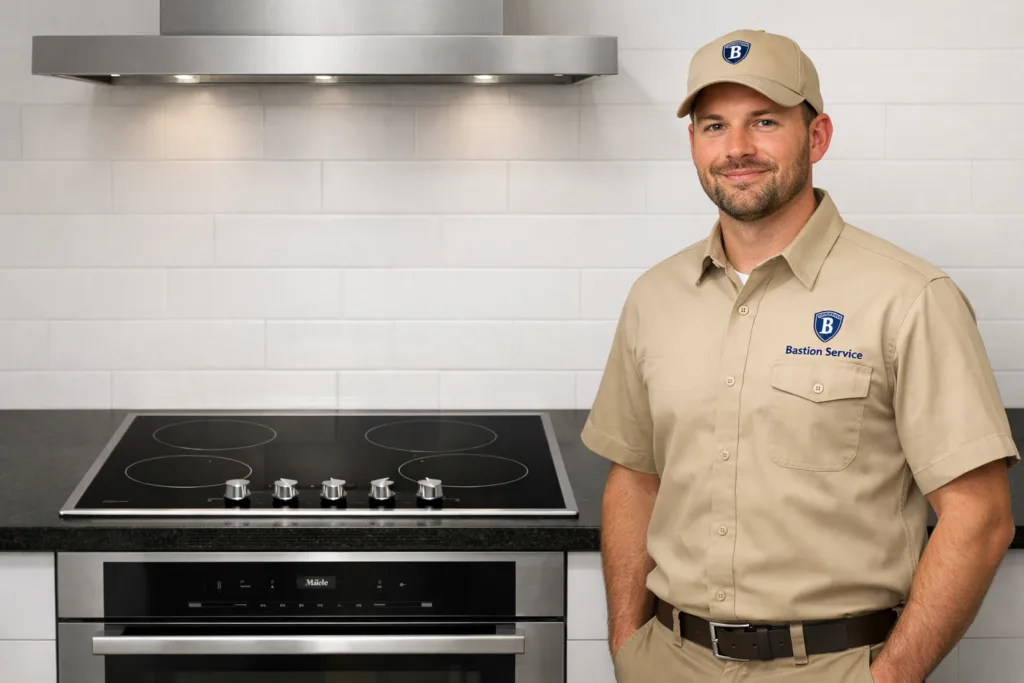
Cooktop problems rarely stay confined to one small annoyance. A burner that hesitates to ignite, a zone that runs cooler than expected, or controls that respond inconsistently can disrupt daily cooking and make the appliance feel unreliable. With Miele models, the next step is usually to match the exact symptom pattern to the parts and systems most likely involved, rather than assuming every heating or ignition issue has the same cause.
Symptoms that point to a repair need
Many cooktop issues start subtly. You may notice longer boil times, repeated clicking, uneven flame, or a control panel that needs multiple presses before it responds. These problems often indicate wear in a specific component, but they can also reflect a shared electrical, ignition, or control problem affecting more than one function.
In Mid-Wilshire homes, it often makes sense to arrange service when the problem is recurring, getting worse, or affecting normal meal preparation. Intermittent faults are especially important to check because they can be harder to live with and may gradually become complete failures.
Common Miele cooktop problems and what they may mean
Burner clicks but does not light
On gas cooktops, repeated clicking without ignition can be related to burner cap alignment, moisture around the igniter, clogged burner ports, or a fault in the spark ignition system. If the burner has already been cleaned and dried and the clicking continues, the issue may require component testing rather than more trial and error.
If you notice a strong or persistent gas smell, stop using the cooktop until the issue is properly evaluated. Safety concerns take priority over convenience.
Flame is weak, uneven, or unstable
A flame that looks irregular or seems too low at normal settings can lead to slow cooking and inconsistent results. Common causes include debris in the burner openings, improper burner assembly after cleaning, regulator-related issues, or wear affecting gas delivery. Even when the burner still lights, uneven flame can be an early sign that performance is slipping.
Electric or induction zone does not heat correctly
For electric and induction Miele cooktops, a zone that stays cold, overheats, cycles unpredictably, or loses power during use may involve a heating element, sensor, control board, or wiring issue. On induction units, cookware detection problems can also create symptoms that feel random to the user. If only one zone is affected, the fault may be isolated. If several zones behave the same way, the problem may be tied to shared controls or incoming power.
Touch controls lag, lock, or show errors
When the cooktop powers on but does not reliably accept commands, the problem may be in the interface, control module, or communication between internal components. Moisture intrusion and electronic faults can both produce confusing behavior, including error displays, delayed responses, or settings that change unexpectedly. Continued resetting is not always helpful and can make the pattern harder to track.
Cooktop shuts off or trips power
A Miele cooktop that shuts down mid-use or trips a breaker should be checked before regular use continues. This symptom can point to overheating protection, wiring faults, internal shorts, or failing electronic parts. Because power-related issues can affect more than one component, early inspection can help limit additional damage.
Signs the issue is getting worse
Some cooktop problems remain minor for a while, but others gradually spread from one function to another. You may be seeing a worsening issue if:
- The same burner fails more often than it did a few weeks ago
- Ignition clicking lasts longer or happens after the flame is already lit
- Heat output no longer matches the selected setting
- More than one burner or zone begins acting irregularly
- The control panel becomes less responsive over time
- The appliance starts shutting off during routine cooking
These patterns usually suggest more than a one-time inconvenience. They are also a good reason to avoid guessing at parts, especially on a premium cooktop with integrated controls and safety systems.
When to stop using the cooktop
It is usually best to discontinue normal use if the cooktop shows visible sparking, trips the breaker, emits a persistent gas odor, overheats, or behaves unpredictably during operation. A burner that works only some of the time can be more than frustrating; it can place extra stress on ignition parts, switches, boards, and nearby components.
In many cases, addressing the problem earlier helps preserve the rest of the appliance. That matters when the goal is not just to restore one burner, but to keep the entire cooktop operating safely and consistently.
Repair or replacement: what usually decides it
For most Mid-Wilshire homeowners, the repair decision comes down to the failed part, the extent of the problem, and the overall condition of the cooktop. If the issue is limited to a burner component, igniter, element, sensor, or switch, repair is often the practical option. If multiple major electronic components are failing at once, or the unit has a broader pattern of reliability problems, replacement may deserve consideration.
The important distinction is whether the fault is isolated or system-wide. A proper diagnosis helps separate a manageable repair from a more expensive chain of failures, which is especially useful when evaluating a Miele cooktop that is part of a carefully maintained kitchen.
What homeowners can check before service
There are a few simple observations that can help clarify the problem without taking the appliance apart:
- Whether the issue affects one burner or several
- Whether the symptom happens every time or only intermittently
- Whether the problem started after cleaning, a power interruption, or a spill
- Whether gas burners are properly assembled after being removed
- Whether induction cookware is compatible and positioned correctly
These checks can be useful, but they are not a substitute for testing when the cooktop is shutting down, tripping power, showing repeated faults, or failing to heat as expected.
What effective cooktop service should accomplish
Good service should do more than confirm that a burner is not working. It should identify the source of the failure, determine whether related parts have been affected, and clarify whether the repair is likely to restore dependable daily use. That gives homeowners a clearer repair path and reduces the chance of replacing the wrong component.
For Miele cooktop repair in Mid-Wilshire, the most useful outcome is simple: understand why the appliance is misbehaving, address the fault that is actually causing it, and restore cooking performance without unnecessary guesswork.