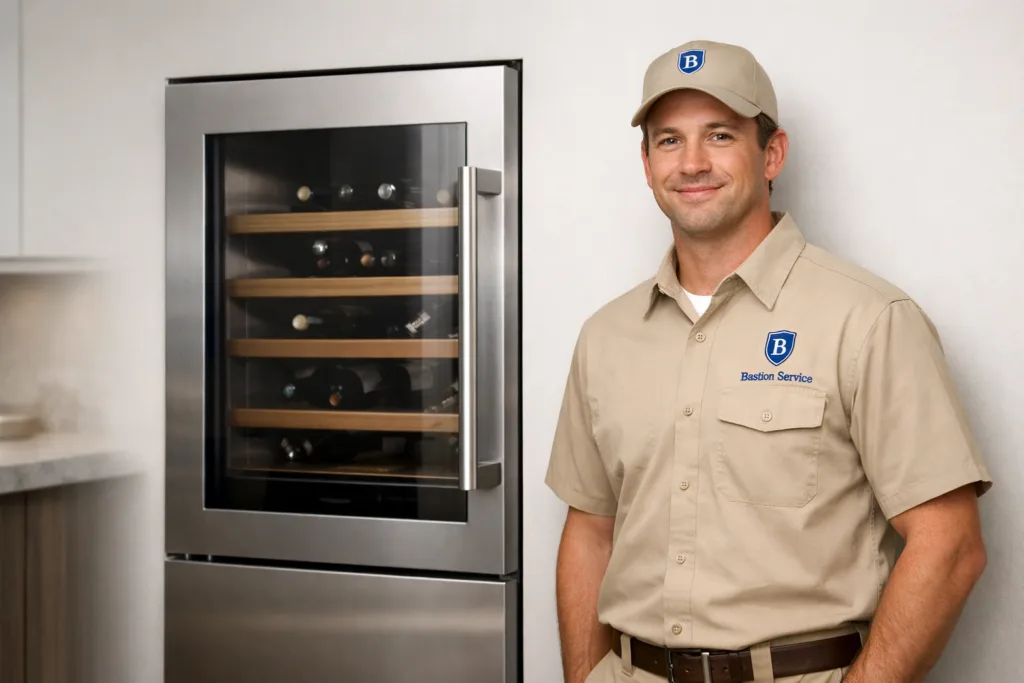
Stable temperature, controlled humidity, and low vibration are what make a wine cooler worth having. When any of those conditions starts to slip, the appliance may still appear to run, but it is no longer protecting the bottles inside the way it should. On a Miele wine cooler, small changes in cooling behavior, airflow, or door sealing can quickly turn into wider performance problems if they are ignored.
Common Miele wine cooler problems in Hawthorne homes
Most service calls begin with one of a few patterns: the cabinet is not cooling enough, the temperature swings more than usual, the fan sounds different, moisture keeps showing up inside, or the control panel behaves inconsistently. Because these symptoms can overlap, the main job is to determine whether the fault is coming from airflow, sensing, sealing, drainage, electronics, or a refrigeration component.
A wine cooler may also seem to have only a minor issue at first. Homeowners sometimes notice that bottles near one shelf feel cooler than others, the display temperature does not match the interior, or the unit runs longer than it used to. Those are useful clues because they often point to a developing problem before the cooler stops working altogether.
Not cooling or struggling to hold temperature
If the interior stays too warm, takes too long to recover after the door is opened, or never reaches the set temperature, several causes are possible. Dirty condenser components, restricted airflow, a weak evaporator fan, sensor problems, or control faults can all interfere with normal cooling. In some cases, compressor or sealed-system trouble is also involved.
A unit that cools a little but not enough is often more difficult to judge than one that fails completely. It may continue running for long periods, create the impression that it is still working, and still leave the stored wine exposed to gradual temperature drift. That is why partial cooling problems should not be treated as harmless.
Temperature swings and uneven cooling
Wine storage depends on consistency. If the temperature rises and falls without an obvious reason, or one area of the cabinet feels warmer than another, the issue may be related to a sensor, fan circulation, control board response, or a door that is not sealing evenly. Uneven cooling can also show up after frost or condensation affects how air moves through the cabinet.
In many Miele units, a display reading alone does not tell the whole story. The control may show a selected range while the actual interior conditions lag behind it. When that happens, diagnosis should focus on how the cooler is regulating temperature over time, not just whether the screen powers on.
Fan noise, humming, rattling, or vibration
A wine cooler should not draw attention to itself with harsh or changing sounds. Buzzing, rattling, repeated clicking, or stronger-than-normal humming may come from a fan motor, mounting issue, compressor strain, or components contacting the cabinet during operation. Even if cooling still seems acceptable, added vibration is a concern because the appliance is meant to provide a steady storage environment.
If the noise started suddenly, gets louder after the unit runs for a while, or appears together with weak cooling, that combination usually points to a service issue rather than normal operation. New noise is especially worth checking when it follows a recent temperature alarm or moisture problem.
Condensation, water inside, or moisture around the door
Moisture inside a wine cooler can come from poor door sealing, frequent warm air intrusion, blocked drainage, control issues, or temperature conditions that are no longer being maintained correctly. You may see droplets on interior walls, damp shelving, moisture near the gasket, or water collecting below the appliance.
A worn or misaligned gasket is one common cause. When the door does not close tightly, room air enters the cabinet and creates repeated condensation. That added moisture can make the cooler run longer, affect labels and shelving, and contribute to odor or staining if the problem continues.
Control panel problems and alarms
If the display blinks, stops responding, shows inconsistent readings, or triggers repeated alarms, the cooler may be detecting a real operating problem or it may have an issue with the interface or controls themselves. A reset can occasionally clear a temporary fault, but repeated alerts usually mean the underlying condition is still present.
When the lights work but the temperature keeps drifting, that often suggests the unit has power but is no longer managing cooling correctly. If the controls seem normal one day and erratic the next, intermittent electrical or board-related faults may be involved.
How symptom patterns help narrow the cause
Two wine coolers can show the same complaint and need very different repairs. For example, a unit that runs constantly may be dealing with warm air entering through the door seal, but another may be overworking because airflow is blocked or the cooling system is under strain. The symptom matters, but the pattern matters more.
- Runs all the time: possible seal, airflow, sensor, or cooling-system issues.
- Powers on but does not cool: possible fan, control, sensor, or compressor-related trouble.
- Beeping with no obvious reason: possible temperature regulation fault or control issue.
- Moisture keeps returning: possible gasket, drainage, humidity, or temperature-control problem.
- Cooling changes after a reset: often a sign the symptom is only temporarily masked.
Looking at the full pattern helps avoid replacing the wrong part. That is especially important with premium refrigeration, where several components work together to maintain a narrow operating range.
When service should not be delayed
Some problems can wait a short time for scheduling, but others should be addressed sooner. If the cabinet is clearly warming up, the cooler cannot maintain a stable setting, water is collecting inside, or the appliance is making new mechanical noise, continued use can add stress to other parts. A fan that is not moving air correctly, for example, can lead to broader cooling issues if the unit keeps running that way.
You should also move quickly when the door is not sealing well, alarms continue after basic checks, or the compressor seems to start and stop in an unusual pattern. These signs often mean the cooler is compensating for a fault instead of operating normally.
What to check before booking a repair visit
A few observations can make the appointment more productive. Note whether the display is fully active, whether the interior feels uniformly cool, and whether the sound changed recently. Check the gasket for visible gaps, tears, or spots where the door does not sit flush. If there is moisture, notice whether it is forming on the glass, around the door, or pooling at the bottom.
It also helps to pay attention to timing. Did the issue begin gradually or all at once? Does the beeping happen after the door is closed, during long run cycles, or at random times? Does the cooler recover after being turned off and back on, only for the same problem to return later? Those details can point the repair in the right direction faster.
Repair or replacement?
Many Miele wine cooler issues are repairable, especially when the problem is limited to sensors, fans, controls, drainage, door sealing, or other serviceable parts. Replacement becomes a more serious consideration when there is extensive cooling-system damage, repeated major failures, or overall condition that no longer supports a sensible repair investment.
The better decision comes from the actual findings: what failed, whether additional components are affected, how reliably the repair is expected to restore stable wine storage conditions, and how the unit has been performing overall. For homeowners in Hawthorne, that kind of symptom-based evaluation is usually the most useful way to decide what makes sense next.
Why wine cooler problems should be handled differently from standard refrigerator issues
A wine cooler is not just a smaller refrigerator. It is designed around steadier storage conditions, gentler airflow, and reduced vibration. Because of that, a problem that seems minor in another refrigeration appliance may have a bigger impact here. Slight temperature drift, recurring humidity, or a fan that is beginning to fail can matter more than many homeowners expect.
That is why Miele Wine Cooler Repair in Hawthorne should focus on preserving the appliance’s actual storage function, not just getting it cold again. If the repair does not restore consistent performance, the cooler is still falling short of its purpose even if it appears partly operational.