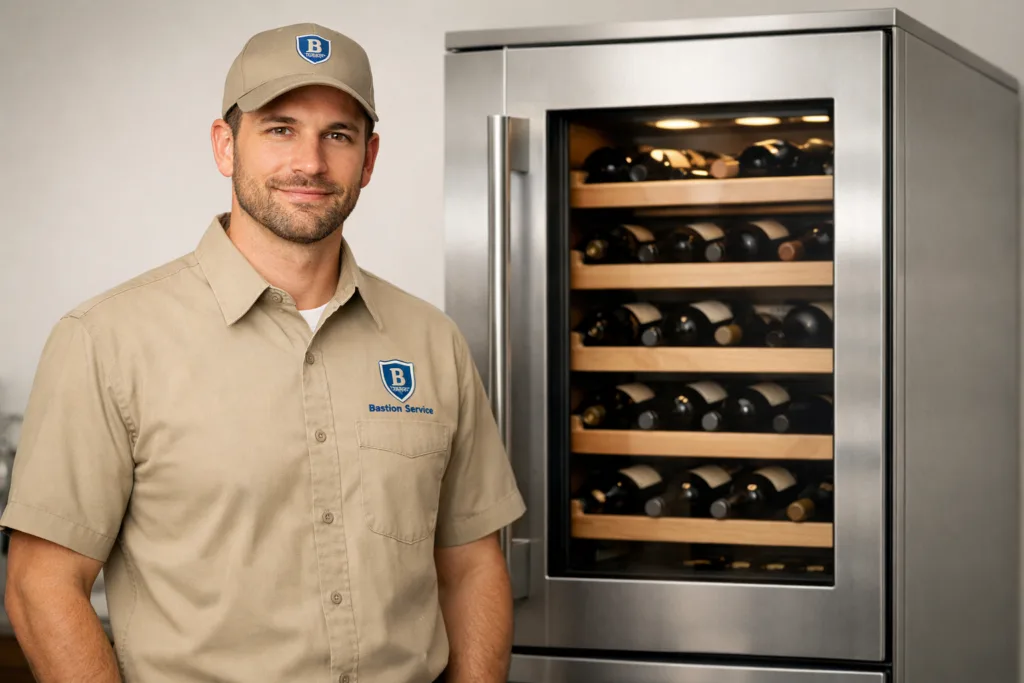
A wine cooler does its job quietly until something changes: bottles feel warmer than expected, the cabinet sounds different, or moisture starts showing up where it never did before. With Viking units, those changes usually point to a specific failure pattern rather than a random glitch, and the symptom itself often gives the first clue about what needs attention.
Signs your Viking wine cooler needs repair
Some problems are obvious, like a cabinet that is no longer cooling. Others start small and become easier to notice over time, such as longer run cycles, uneven shelf temperatures, or a door that no longer closes with the same firm seal. If the unit in your Hawthorne home is behaving differently than it used to, it is worth looking at the symptom pattern before the problem spreads.
Cabinet feels warm or temperature drifts
If bottles are not staying at a consistent temperature, the cause may involve restricted airflow, fan trouble, a sensor issue, or reduced cooling performance. A common concern is when the display appears normal but the actual cabinet temperature is off. That mismatch can happen when the control is reading inaccurately or when the system cannot maintain the set point under normal use.
Watch for these clues:
- The upper shelves feel warmer than the lower shelves
- The unit takes too long to recover after the door is opened
- Bottles never seem as cool as the setting suggests
- The cooler runs for long periods without stabilizing
Fan noise, humming, or new clicking sounds
Wine coolers normally make some operating noise, but a change in sound usually matters. A louder hum, repeated clicking, rattling, or a fan sound that comes and goes can point to a worn motor, airflow obstruction, or compressor-related stress. If the noise is new and persistent, it should not be ignored, especially if cooling performance has changed at the same time.
Condensation, water, or excess moisture
Moisture inside the cabinet or around the door can come from a gasket problem, temperature imbalance, drainage trouble, or a circulation issue. Condensation is not just a cosmetic annoyance. Over time it can affect labels, shelving, interior surfaces, and nearby flooring. If you are wiping out moisture regularly, the unit is usually telling you something is no longer operating correctly.
Unit runs constantly or cycles too often
When a Viking wine cooler rarely seems to rest, the system may be working harder than it should to hold temperature. Causes can include dirty condenser areas, weak airflow, door sealing problems, or a cooling system that is losing efficiency. Frequent starting and stopping can also signal control-related trouble. In either case, abnormal cycling puts extra wear on major components.
What these symptoms can mean
Different failures can create similar complaints, which is why symptom-based troubleshooting matters. A warm cabinet does not always mean the same thing, and a noisy unit does not always point to the compressor. The most effective repair path depends on identifying whether the issue is tied to airflow, controls, sealing, or the refrigeration side of the system.
Airflow problems
Proper circulation is essential in a wine cooler because the goal is stable, even temperature throughout the cabinet. If an internal fan slows down, stops, or becomes obstructed, you may notice uneven cooling, warm pockets, or longer run times. Airflow issues can also contribute to condensation because the cabinet is no longer balancing temperature as intended.
Sensor or control faults
If the temperature shown on the panel does not match actual storage conditions, the control system may not be reading correctly or responding as it should. In some cases, the unit cools too much. In others, it never cools enough. Control issues may also show up as erratic cycling, unresponsive settings, or intermittent shutoff behavior.
Door seal and closure issues
A gasket that is worn, loose, or not sealing evenly allows temperature loss and moisture intrusion. That can make the wine cooler run longer than normal and may lead to fogging or dampness inside. A door that looks closed but is not sealing tightly can create a gradual decline in performance that homeowners often notice only after bottles stop feeling reliably cool.
Cooling system performance loss
If the wine cooler cannot pull down to the selected temperature even though fans and controls appear to be operating, the refrigeration side may be underperforming. That type of issue often shows up as persistent warmth, extended run times, or cooling that gets worse over time instead of better. These problems need careful evaluation because the repair options can vary significantly.
When service should not wait
Some symptoms are worth addressing sooner rather than later. If the cabinet is clearly warming, if the cooler is making persistent new noises, or if condensation keeps returning, continued use can put more stress on the system. Waiting can also make it harder to protect the temperature conditions your bottles need.
It is smart to schedule service when:
- The interior no longer matches the selected setting
- The unit runs almost nonstop
- There is repeated moisture on shelves or around the door
- The cooler starts clicking, buzzing, or rattling more than usual
- The display behaves oddly or settings do not respond normally
Repair or replace?
For many Hawthorne homeowners, the right choice depends on the age of the wine cooler, its service history, and the type of failure involved. Repairs are often worthwhile when the issue is isolated to parts such as fans, controls, sensors, or door-sealing components. Replacement becomes a more serious consideration when the unit has repeated breakdowns, major cooling-system failure, or repair costs that no longer make sense relative to overall condition.
The goal is to make the decision based on the actual fault, not on guesswork. A unit that seems “dead” may have a manageable repair, while one that still runs may actually be facing a more expensive internal problem.
What homeowners in Hawthorne can do before service
Before scheduling a repair, it helps to note exactly what the cooler is doing. Useful details include whether the display is on, whether the cabinet is warm everywhere or only in certain areas, whether the noise is constant or intermittent, and whether moisture appears after the door has been closed for a while. Those observations can help narrow down the source of the issue more quickly.
You can also check a few basics:
- Make sure the door is closing fully and not being blocked by bottle placement
- Look for visible gasket gaps or signs of wear
- Listen for fan operation inside the cabinet
- Notice whether the exterior seems unusually hot or the unit is running all day
These checks do not replace service, but they can help clarify whether the problem is related to sealing, airflow, controls, or cooling performance.
What to expect from a focused repair visit
A good service call should connect the symptom you are noticing to the part of the system that is actually failing. That means confirming temperature behavior, checking fan operation, evaluating seals and airflow, and determining whether the issue is electrical, mechanical, or refrigeration-related. For a household appliance like a wine cooler, the most helpful outcome is straightforward guidance on whether the repair is targeted and sensible or whether the unit is nearing the point where replacement deserves consideration.
Protecting wine storage conditions at home
Even if the problem seems minor at first, wine coolers are less forgiving than many other household appliances because small temperature swings and repeated moisture issues affect storage quality over time. If your Viking unit is no longer holding stable conditions, addressing the problem early is usually the best way to avoid larger repair needs and restore normal performance with less disruption.