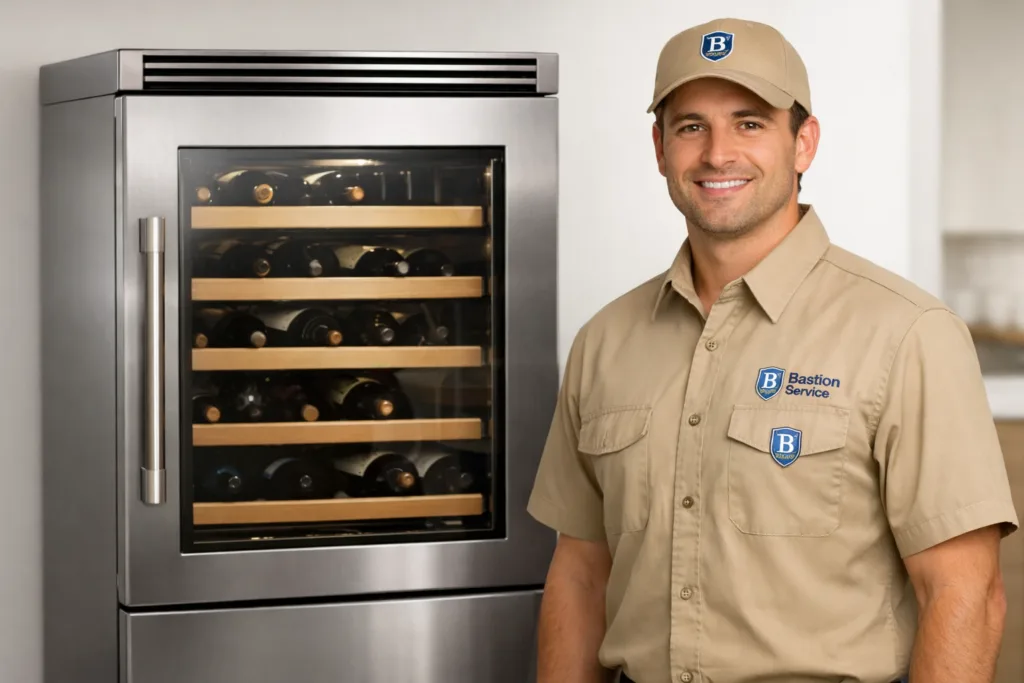
Small changes in performance are often the first sign that a True wine cooler needs attention. A cabinet that seems only a few degrees off, runs longer than usual, or develops light moisture inside may still be cooling, but it is no longer operating the way it should. Catching those symptoms early can help prevent spoiled bottles, excess wear on components, and damage to nearby flooring or cabinetry.
Common signs something is wrong
Many wine cooler problems begin gradually. Instead of a complete shutdown, homeowners often notice day-to-day changes that point to an issue developing inside the unit. The most common warning signs include:
- Bottles not feeling as cool as expected
- Temperatures drifting up and down
- The compressor running for long stretches
- New buzzing, clicking, or fan noise
- Condensation on shelves, walls, or glass
- Water collecting under or around the cabinet
- Frost buildup where it was not present before
- Controls that do not respond normally
With a True wine cooler, these symptoms can come from airflow problems, fan trouble, sensor or thermostat issues, a weak door seal, drainage problems, or more involved cooling-system faults. Similar symptoms do not always mean the same repair, which is why symptom pattern matters.
What temperature problems usually mean
Cabinet is running warm
If the interior is warmer than the set temperature, the issue may be as simple as restricted airflow or as serious as a sealed-system problem. A dirty condenser, weak condenser fan, evaporator fan failure, or inaccurate temperature sensing can all reduce cooling performance. When the cabinet is only slightly warm, it often points to a developing issue rather than a total system failure.
Temperature keeps swinging
Wine storage depends on stability, not just cold air. If the unit cools, then warms, then cools again, that pattern may suggest a control problem, sensor drift, airflow interruption, or a compressor that is struggling to cycle correctly. In a household setting, these swings can go unnoticed until bottles stop feeling consistently chilled.
Unit runs constantly but does not cool well
When a wine cooler seems to be working nonstop without reaching the proper temperature, it is usually trying to compensate for another fault. Poor ventilation, coil buildup, a failing fan, door gasket leakage, or internal frost can force the system to run harder than normal. Constant operation should be checked before it puts added strain on expensive components.
Moisture, frost, and leaks
Water-related symptoms are easy to dismiss at first, but they often point to a repair need that should not be delayed. Moisture can affect performance, leave odors inside the cabinet, and create problems around the appliance enclosure.
Condensation inside the wine cooler
Interior condensation often means warm, humid air is getting in or cold air is not circulating correctly. That can happen when the door is not sealing tightly, the cabinet is cycling improperly, or internal airflow is uneven. If moisture keeps returning after wiping it away, the cause is usually mechanical rather than cosmetic.
Frost forming in the cabinet
Frost may indicate an air leak, defrost issue, or circulation problem. Even a small amount can disrupt temperature balance and reduce usable storage space. If frost begins collecting near vents, walls, or the evaporator area, the unit should be checked before cooling becomes more erratic.
Water under the unit
Puddling near the base can come from a blocked drain path, defrost overflow, or leveling issue. In some cases, excess condensation is the real source. Because water can damage flooring and surrounding finishes, leaks are worth addressing quickly, even if the cooler still seems cold enough.
Unusual noise and what it can indicate
A True wine cooler will make some normal operating sounds, but changes in sound usually mean something has shifted. Homeowners in Hawthorne often notice noise before they notice a clear cooling failure.
- Buzzing: can point to compressor stress, vibration, or electrical component issues
- Clicking: may suggest start-related trouble or controls attempting to cycle the system
- Loud fan noise: can come from a worn motor, obstruction, or ice interference
- Rattling or vibration: may be caused by loose mounting, panel contact, or uneven placement
If the sound is new, louder, or paired with poor cooling, it is usually a sign that the cooler is working harder than it should.
Control and sensor issues
Not every wine cooler problem starts with the cooling system itself. Sometimes the cabinet is capable of cooling, but the controls are not reading or managing temperature correctly. A failed sensor, thermostat issue, or electronic control fault can cause short cycling, long run times, inconsistent temperature display, or a unit that does not respond properly to setting changes.
These problems can look similar to compressor or airflow issues from the outside, which is why accurate testing matters before replacing parts.
When repair is usually worth considering
Repair is often the sensible choice when the fault is limited to a serviceable component and the rest of the wine cooler is in solid condition. That may include:
- Fan motor problems
- Sensor or thermostat failure
- Control board issues
- Drain blockage or drainage-related leaks
- Door gasket wear
- Airflow-related cooling problems
If the cabinet structure is sound and the repair is likely to restore stable operation, service can extend the life of the unit without unnecessary guesswork.
When replacement may make more sense
Replacement becomes more likely when the cooler has severe cooling-system failure, repeated repair history, advanced age-related wear, or multiple major problems at the same time. If temperature stability cannot be restored without extensive work, it may be more practical to compare repair cost against the condition and value of the appliance as a whole.
The best choice usually depends on three things: the exact failed system, the overall condition of the cooler, and the likelihood that the repair will return it to reliable wine storage.
Why early service can prevent bigger problems
Wine coolers often continue operating in a weakened state before they stop entirely. During that period, other parts may be under extra stress. A struggling fan can lead to poor cooling, a dirty condenser can overwork the compressor, and a small gasket leak can turn into frost and drainage problems. Addressing the issue early is often easier than waiting for a full loss of cooling.
For homeowners in Hawthorne, the main benefit of prompt service is preserving consistent storage conditions while avoiding the cascade of secondary damage that can follow a minor unresolved fault.
What to do before scheduling service
Before service is arranged, it helps to note exactly what the unit is doing. Useful details include whether the cabinet is slightly warm or fully room temperature, whether noise is constant or intermittent, whether moisture appears inside or outside the cooler, and whether the controls respond normally. Those symptom details can help narrow down whether the likely issue involves airflow, drainage, controls, or the cooling system itself.
If the unit is leaking, heavily frosting, or obviously failing to hold temperature, it is best not to ignore it and hope it stabilizes on its own. Those patterns usually mean the problem is already beyond a simple adjustment.
True wine cooler repair in Hawthorne with a symptom-focused approach
The most useful repair path starts with understanding how the cooler is failing in real use. Whether the problem shows up as unstable temperatures, fan noise, condensation, leaking, or controls that no longer behave normally, the right next step is service built around the specific symptom pattern and appliance condition. That gives homeowners a better basis for deciding whether to repair the unit now or plan for replacement.