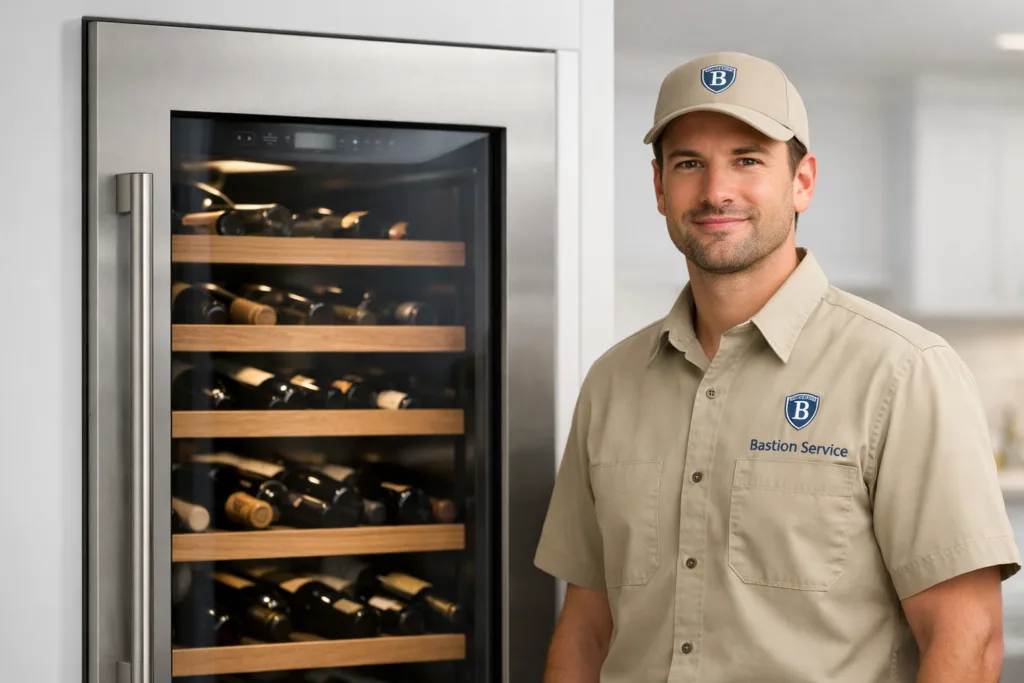
Small changes in a wine cooler can have an outsized effect on storage conditions. If your Sub-Zero unit in Hawthorne is warming up, running longer than usual, collecting moisture, or making a new noise, the best next step is to identify which system is actually causing the change. Similar symptoms can come from airflow restrictions, control failures, sensor problems, door seal leaks, fan issues, or deeper cooling-system trouble.
Common Sub-Zero Wine Cooler Symptoms at Home
Most wine cooler problems do not begin with a total breakdown. They usually start with subtle signs that become easier to notice over time, especially if you regularly check temperature, feel warm spots, or hear the unit cycling more often.
Temperature swings or poor cooling
If the cabinet no longer holds the selected temperature, the problem may involve the thermistor, temperature controls, evaporator fan, condenser airflow, or sealed-system performance. Some units still appear to be running normally while failing to cool consistently. That can put wine storage conditions at risk even before the appliance stops cooling completely.
Running all the time
A wine cooler that rarely shuts off is usually compensating for heat gain or reduced cooling efficiency. Common causes include blocked airflow, dirty condenser components, weak door gaskets, fan motor wear, or a system that is struggling to move heat properly. Longer run times often increase wear on other parts, so this is a symptom worth addressing early.
Condensation, water, or frost where it should not be
Moisture around the door, water inside the cabinet, or frost buildup can point to a poor door seal, drainage issue, airflow imbalance, or a cooling problem that is causing surfaces to behave abnormally. These issues can affect labels, shelving, and nearby cabinetry if ignored.
Buzzing, clicking, rattling, or fan noise
Not every sound means something is wrong, but a noticeable change usually deserves attention. Rattling can come from vibration or loose mounting points, while scraping or humming may suggest fan trouble. Repeated clicking can also indicate a control or compressor-related problem. New sounds are often one of the earliest clues that a component is under stress.
Display or control problems
If the display is inaccurate, unresponsive, flashing, or not matching the actual cabinet temperature, the issue may be tied to the interface, control board, sensor readings, or electrical communication inside the unit. Control-related faults can look like cooling problems even when the root issue is elsewhere.
What Different Symptoms May Mean
Symptom patterns matter because they help narrow the likely cause.
- Warm cabinet with normal fan sound: possible airflow restriction, sensor issue, or sealed-system loss of performance.
- Warm cabinet with little or no airflow: often points to a fan motor or circulation problem.
- Condensation near the door: frequently linked to gasket leaks, alignment issues, or humid air entering the cabinet.
- Heavy frost in one area: may suggest airflow trouble, defrost concerns, or a cooling imbalance.
- Constant running with only partial cooling: can indicate the unit is working harder without achieving the correct result.
- Intermittent operation: may involve controls, sensor readings, electrical supply issues, or failing components that work only part of the time.
Because one symptom can overlap with several possible causes, repair decisions are more reliable when based on testing instead of assumptions.
Why Wine Cooler Problems Should Not Be Ignored
A wine cooler is designed for stability. When that stability disappears, the issue is not only about convenience. Ongoing temperature variation can affect stored bottles, while long run times and poor airflow can place additional strain on fans, controls, and the compressor. Moisture problems may also lead to staining, odor, or deterioration around the appliance opening.
Even if the unit still cools somewhat, partial operation can be misleading. A cooler that seems close enough to normal may still be drifting outside the intended range for hours at a time.
When to Stop Using the Unit Until It Is Checked
It is smart to limit use and arrange service if the cooler is clearly warming, short cycling, tripping power, leaking, or making loud mechanical noises. The same applies if the display is erratic or the interior temperature no longer matches the setting.
Continued operation can sometimes worsen the original problem. A struggling fan can increase compressor load. A bad seal can keep the unit running continuously. A drainage or condensation issue can spread beyond the cabinet itself. If performance has changed abruptly, it is usually better not to let the unit keep fighting the problem unchecked.
Repair or Replacement: What Usually Makes Sense?
For many Hawthorne homeowners, repair is the first option worth considering when the issue is limited to controls, sensors, fans, drainage components, lighting, or door-seal related faults. These are often more straightforward than major cooling-system failures and may restore normal operation without replacing the appliance.
Replacement becomes a stronger consideration when the wine cooler has multiple significant problems, repeated cooling failures, or age-related wear that makes another major repair hard to justify. The real question is not only whether a part can be replaced, but whether the completed repair is likely to return the unit to stable, usable performance.
What a Good Service Visit Should Evaluate
A focused wine cooler diagnosis should look beyond the surface complaint. In a residential setting, that usually means checking the actual temperature behavior, airflow, fan operation, controls, sensors, gasket condition, drainage, and signs of deeper cooling loss. That process helps determine whether the issue is isolated or part of broader wear inside the unit.
This is especially important with Sub-Zero refrigeration products, where a problem that appears simple from the outside may have several possible causes. Careful testing helps avoid replacing parts that are not actually responsible for the symptom.
Practical Steps Homeowners Can Take Before Service
Before scheduling repair, it helps to note a few details about what the unit is doing. These observations can make the issue easier to diagnose:
- Whether the cabinet is too warm, too cold, or fluctuating
- If the problem is constant or comes and goes
- Any recent increase in fan noise, buzzing, or clicking
- Where condensation, water, or frost is appearing
- Whether the door feels loose, misaligned, or not fully sealed
- If the display reading seems inaccurate compared with actual interior conditions
You can also make sure the door closes fully and that nothing inside is blocking airflow. If the unit is obviously failing to cool, however, observation is usually more helpful than repeated adjustment of settings.
Sub-Zero Wine Cooler Repair in Hawthorne
For homeowners in Hawthorne, the most useful service approach is one that matches the repair plan to the exact symptom pattern, appliance condition, and likely failure point. Whether the issue involves temperature swings, fan noise, condensation, or control problems, the goal is to determine what is actually failing and whether repair is the sensible next step for the unit you have.
When a wine cooler is built into the kitchen or another finished living space, prompt attention can also help reduce inconvenience and protect surrounding cabinetry from avoidable moisture or heat-related stress. A well-diagnosed repair gives you a clearer picture of urgency, expected scope, and whether the appliance is likely to return to reliable use.