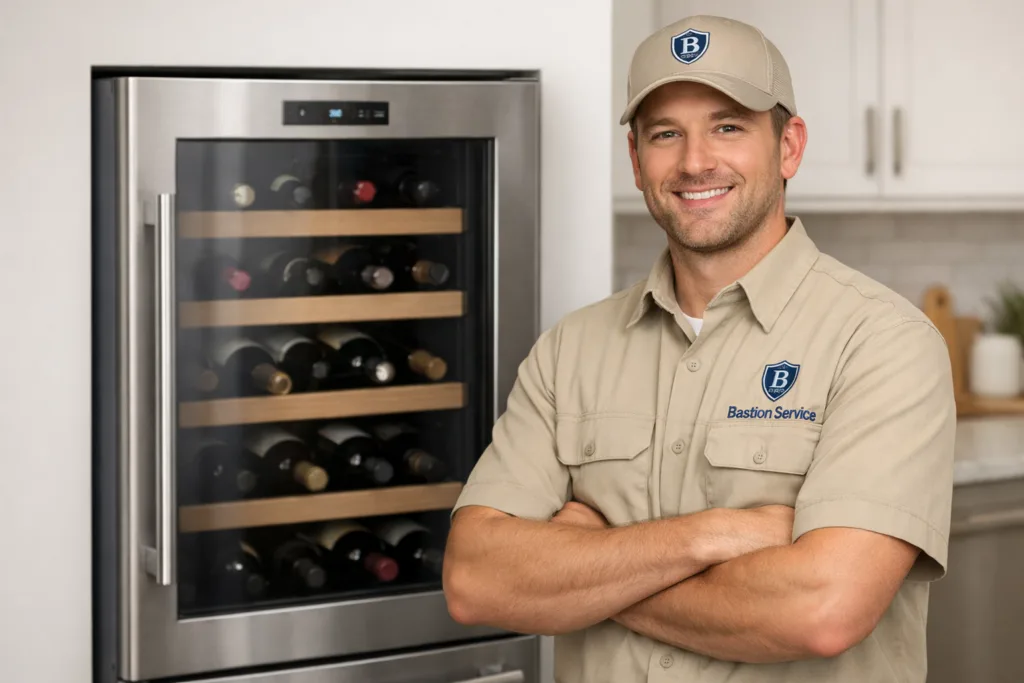
Wine coolers depend on steady, controlled cooling. When that balance slips, the problem usually shows up as bottles warming too quickly, uneven temperatures from top to bottom, excess condensation, or a cabinet that seems to run all day without settling where it should. Because several different faults can create similar symptoms, the most useful first step is to match the pattern of the problem to the parts most likely involved.
Common wine cooler problems and what they can mean
Temperature instability is one of the most frequent complaints. If the cabinet is warmer than the setting, cools unevenly, or takes too long to recover after the door is opened, common causes include restricted condenser airflow, a weak evaporator fan, a faulty thermistor, or a door gasket that is no longer sealing tightly. If the unit is overcooling, freezing bottles near the back, or cycling at odd times, the fault may be tied to the control system rather than the cooling components alone.
Condensation and dampness often point to warm air getting into the cabinet. Fogging on the glass, moisture on shelves, or water collecting at the bottom can happen when the door is opened often, the seal is damaged, the drain path is partially blocked, or internal temperatures are fluctuating more than they should. Left alone, that moisture can affect labels, shelving, insulation, and electronic parts.
Noise changes are also important clues. A light hum is normal, but louder buzzing, repeated clicking, fan scraping, rattling panels, or vibration against cabinetry can signal fan wear, loose hardware, leveling issues, or a compressor working harder than normal. If the cooler sounds busier than usual while cooling performance gets worse, the issue is unlikely to be solved by settings changes alone.
Why wine cooler diagnosis is different from standard refrigeration
A wine cooler is designed for narrower, more stable temperature control than many household cold-storage appliances. That makes small sensor errors, airflow problems, and door-seal issues more noticeable in day-to-day use. A unit may still feel somewhat cool while failing to protect wine from repeated temperature swings, which is why symptom-based diagnosis matters more than a quick touch test.
In some homes, the cooling complaint is not limited to the wine cooler. If a freezer compartment is also developing frost, struggling with airflow, or taking too long to recover temperature after opening, it may be helpful to compare those symptoms with Freezer Repair in Hawthorne. Similar airflow and sealing issues can affect more than one refrigeration appliance, even though the exact repair is different.
Symptoms that suggest a repair should be scheduled soon
- The cabinet no longer reaches or holds the selected temperature.
- The unit runs almost constantly but contents still feel too warm.
- Condensation keeps returning on the door or inside surfaces.
- There is repeated clicking, buzzing, scraping, or a sudden increase in fan noise.
- Water appears inside the cabinet or around the base.
- The display, buttons, or temperature controls respond inconsistently.
These signs often start mildly and then become easier to notice over a few days or weeks. Prompt service can help prevent added wear on motors, controls, and cooling components, especially when the appliance is already struggling to maintain a stable range.
What homeowners can check before service
A few basic checks may help rule out simple operating issues. Make sure the door closes fully without bottles or shelves interfering. Check that vents are not blocked by tightly packed contents. Confirm the unit is level and has enough clearance for heat to dissipate. If the condenser area is accessible, visible dust buildup can also contribute to poor cooling and long run times.
If the problem continues after those checks, the next step is usually testing rather than guessing. Replacing parts without confirming the fault can turn a straightforward repair into a longer, more expensive process.
When the issue may involve related kitchen cooling systems
Sometimes homeowners notice multiple refrigeration problems around the same time. If the concern includes poor ice production, slow fill, leaking around the ice area, or cubes that are too small or misshapen, the more relevant comparison is Ice Maker Repair in Hawthorne. That points away from a specialty cooling cabinet and toward the water-supply or ice-production side of the kitchen setup.
If fresh-food storage is also running warm, producing excess condensation, or cycling unpredictably, those symptoms may line up more closely with Refrigerator Repair in Hawthorne. That distinction helps separate a wine cooler-specific issue from a broader household refrigeration problem.
Repair or replacement?
Repair is often worthwhile when the fault is limited to accessible parts such as a fan motor, sensor, control interface, switch, gasket, or drain-related component. Those issues can often restore normal operation without replacing the entire unit. Replacement becomes more likely when the appliance has a major sealed-system failure, repeated cooling breakdowns, heavy corrosion, or multiple age-related problems appearing at once.
For many households in Hawthorne, the best decision comes down to whether the cooler can return to stable everyday performance without ongoing service calls. Looking at the specific symptom pattern, the age of the unit, and the condition of the cabinet helps keep that decision practical.
What to expect from a useful repair visit
A productive service appointment should focus on how the cooler is actually behaving in the home: whether temperatures drift, whether noise changes during operation, whether moisture appears after door openings, and whether the controls are responding normally. From there, testing can narrow the issue to airflow, sensing, electrical controls, drainage, or a more serious cooling-system fault.
That kind of diagnosis helps avoid trial-and-error repairs and gives homeowners a clearer idea of whether the problem is minor, urgent, or better solved by replacement. For a wine cooler in regular household use, restoring steady operation matters more than temporary improvement.