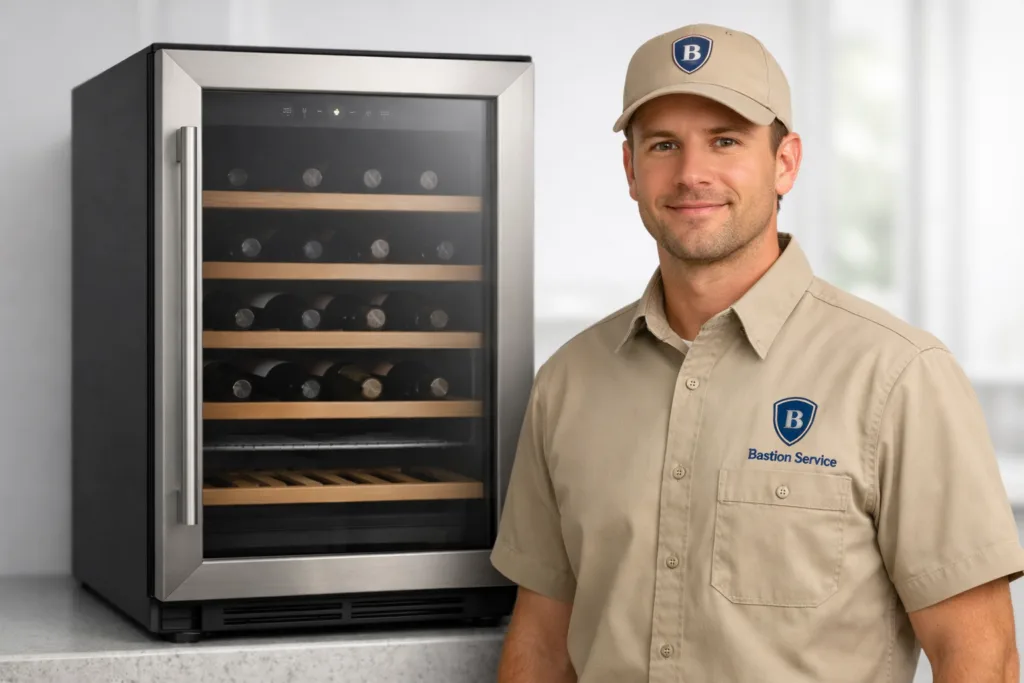
Small changes in wine cooler performance often point to different underlying faults. A cabinet that feels a few degrees warmer than usual, a new fan sound, or moisture collecting near the door may look minor at first, but each symptom can lead to a very different repair path on an EdgeStar unit.
Common EdgeStar Wine Cooler Problems in Hawthorne Homes
Residential wine coolers are expected to hold a steady environment. When they stop doing that, the issue is usually related to airflow, controls, door sealing, drainage, or the cooling system itself. Paying attention to the exact behavior helps narrow down what is most likely failing.
Not Cooling Enough
If the cabinet is staying warm or taking too long to recover after the door is closed, the cause may be a failed fan motor, inaccurate temperature sensing, a control problem, restricted airflow, or a more serious compressor or sealed-system issue. Some units run continuously without reaching the set point, while others cool only part of the cabinet. Those differences matter because they often indicate different components.
Temperature Swings
When the temperature drops properly for a while and then climbs again, intermittent operation is often involved. An EdgeStar wine cooler may have a sensor drifting out of range, a board not responding consistently, a fan cutting in and out, or a door gasket allowing warm air into the cabinet. Fluctuation is worth addressing early because unstable storage conditions can affect both the appliance and the contents inside.
Water Inside or Around the Unit
Condensation can build up from a poor door seal, frequent warm-air entry, or a drainage problem. Water under the appliance may come from internal moisture not draining as intended. If the cabinet shows repeated moisture, fogging, or pooling, the source should be checked before it affects nearby flooring or cabinetry.
Fan Noise, Buzzing, or Rattling
Different noises point to different repair needs. A rubbing or scraping sound often suggests fan blade or fan motor trouble. Buzzing can come from vibration, electrical components, or compressor strain. Clicking may be normal at parts of the cycle, but repeated clicking without proper cooling can indicate a startup or control issue. The timing of the noise is often as important as the sound itself.
Display, Button, or Light Problems
If the display is blank, the controls stop responding, or the light works while cooling does not, the issue may be in the user interface, main control, power path, or wiring. A nonresponsive panel does not automatically mean the entire cooler has failed, but it does mean the control system needs closer attention.
What Specific Symptoms Usually Mean
Homeowners often notice the symptom before they notice the pattern. Looking at the pattern can help separate a smaller repair from a larger one.
The Cooler Runs Constantly
Constant run time can happen when warm air is entering through a worn gasket, when a sensor is reading incorrectly, when coils cannot release heat effectively, or when the cooling system is struggling to keep up. If the cabinet still is not cold enough despite long run times, the repair should not be delayed.
The Cooler Turns On and Off Too Often
Short cycling can point to a control issue, sensor error, airflow problem, or compressor-related fault. Frequent starts and stops create extra wear, and they usually mean the unit is not maintaining temperature as efficiently as it should.
The Door Does Not Seal Tightly
A loose or damaged gasket allows room air into the cabinet, which can lead to condensation, frost in the wrong areas, longer run cycles, and unstable temperatures. Sometimes the gasket itself is the problem. In other cases, shelf positioning, door alignment, or cabinet leveling is contributing to the seal issue.
The Interior Feels Unevenly Cold
If one section is cooler than another, airflow should be checked first. Blocked vents, fan trouble, or frost buildup around key components can prevent consistent circulation. Uneven cooling is especially important in a wine cooler because the problem may not be obvious until bottle storage temperatures have already drifted.
Why Proper Diagnosis Matters
Two EdgeStar wine coolers can show the same symptom for completely different reasons. A warm cabinet may be caused by a fan failure on one unit and by a sealed-system problem on another. Replacing parts based only on the visible symptom can waste money and delay the real fix. The most useful next step is a clear diagnosis that confirms whether repair is likely to be straightforward or whether the unit is moving into a higher-cost category.
When to Stop Using the Wine Cooler
It is usually best to stop running the unit if it is clearly not maintaining temperature, if the compressor seems excessively hot, if the appliance is clicking repeatedly without cooling, or if leaking and heavy condensation are getting worse. Continued operation under those conditions can increase wear on already stressed components and may turn a manageable repair into a larger one.
If the problem is mainly cosmetic, such as a light issue with normal cooling still intact, immediate shutdown may not be necessary. But if storage temperatures are no longer reliable, unplugging the unit is often the safer choice until the cause is identified.
Repair or Replace?
Many EdgeStar wine cooler problems are repairable, especially when the fault involves a fan motor, sensor, control, switch, gasket, or drain-related part. Replacement becomes more likely when the diagnosis points to a major compressor or sealed-system failure, repeated electronic issues, or a repair cost that no longer makes sense for the appliance’s age and overall condition.
For many households in Hawthorne, the decision comes down to three factors:
- Whether the fault is isolated to one repairable component
- How consistently the cooler has performed before this problem
- Whether the projected repair cost is reasonable for the unit
If the cooler has otherwise been reliable and the issue is confined to a serviceable part, repair is often the sensible choice. If cooling has been declining for a while and testing points to a major refrigeration problem, replacement may be the better long-term option.
What to Notice Before Scheduling Service
A few simple observations can make diagnosis faster and more accurate. Before service, it helps to note:
- Whether the cabinet is always warm or only sometimes
- Whether the fan can be heard running
- Whether the displayed temperature seems accurate
- Whether moisture appears after normal door use
- Whether the unit has become louder than it used to be
- Whether the problem began suddenly or developed gradually
Those details often reveal whether the likely issue is airflow, control-related, seal-related, or part of the cooling system itself.
Residential EdgeStar Wine Cooler Service in Hawthorne
In Hawthorne homes, wine cooler problems are often first noticed as inconsistency rather than total failure. Addressing early warning signs can help limit temperature instability, reduce strain on internal components, and improve the chances that repair remains practical. If your EdgeStar wine cooler is drifting off temperature, collecting moisture, making new noises, or responding poorly at the controls, the right repair decision starts with identifying the exact fault rather than guessing from the symptom alone.