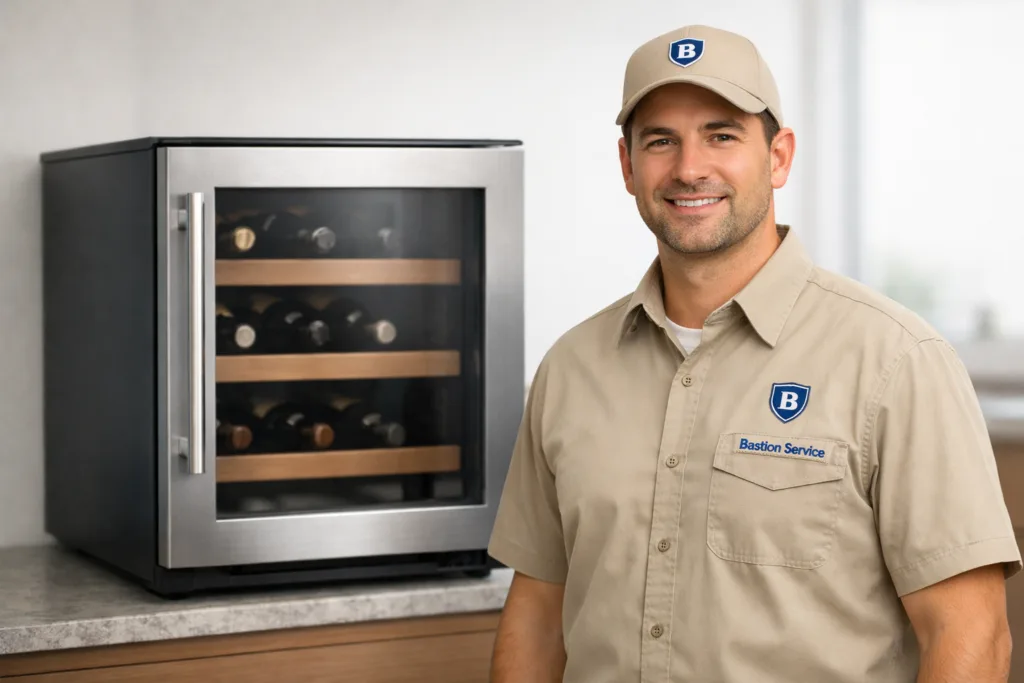
Wine storage problems rarely stay isolated for long. A temperature drift that seems minor at first can turn into spoiled bottles, excess moisture, louder operation, or a unit that runs almost nonstop. With U-Line wine coolers, the visible symptom is only the starting point, because cooling, airflow, sensor, door-seal, and electrical issues can overlap.
Common U-Line wine cooler issues seen in Hawthorne homes
Homeowners usually notice a problem in one of a few ways: the cabinet feels warmer than expected, bottles are too cold, the fan or compressor sounds different, condensation appears inside, or water shows up around the base of the unit. In some cases, the display is working normally even though the actual storage temperature is not.
That mismatch matters because a wine cooler can appear to be functioning while still failing to protect what is inside. A control problem may cause temperature swings. A weak fan can reduce airflow and create uneven cooling. A worn gasket can let warm room air in, leading to moisture, frost, and longer run times. What looks like one simple complaint can come from several different component failures.
Symptom-based troubleshooting that helps narrow the cause
Wine cooler is not cooling enough
If the cabinet is staying warm or takes too long to recover after the door is opened, several systems need to be considered. The issue may involve the temperature sensor, control board, evaporator fan, condenser airflow, or compressor performance. Restricted airflow can make the unit struggle even when the sealed system is still functioning, while a failing compressor or sealed-system fault usually shows up as persistent weak cooling despite long run times.
Homeowners may also notice that upper and lower sections feel different, or that recently loaded bottles never reach the target temperature. Those details help separate an airflow problem from a broader cooling failure.
Wine cooler is too cold or freezing contents
Overcooling is often tied to a sensor or control issue. If the cooler keeps running past the set temperature, the unit may be misreading cabinet conditions or failing to cycle off when it should. This is especially important when the display setting looks correct but the interior is clearly colder than it should be.
Freezing conditions are not just inconvenient. They can affect wine quality and may indicate that the cooler is no longer regulating temperature properly from cycle to cycle.
Temperature swings from day to day
Fluctuating temperatures often point to inconsistent sensing, control irregularities, intermittent fan operation, or a door that is not sealing tightly. Some homeowners in Hawthorne first notice this when bottles feel different from one shelf to another or when the unit seems normal one day and noticeably warm the next.
Repeated temperature swings are worth addressing early because they often put extra strain on the cooling system as the machine keeps trying to correct itself.
Fan noise, buzzing, rattling, or clicking
Not every sound is a problem, but a new or more aggressive noise usually deserves attention. Buzzing can come from vibration or compressor strain. Rattling may indicate loose panels, tubing contact, or an installation issue. Clicking can be related to starting components or control problems. A fan motor beginning to fail may sound rough, uneven, or louder than usual.
When sound changes happen together with poor cooling or longer run times, they become more significant. Noise by itself may be minor, but noise combined with performance changes often points to a repairable mechanical or electrical issue.
Condensation, leaks, or frost buildup
Moisture inside the cabinet usually means warm air is entering where it should not, or that the unit is not managing drainage and defrost conditions correctly. A worn gasket, a drain issue, or frost affecting airflow can all contribute. Water around the base may come from internal condensation that is no longer being handled properly.
If labels are damp, shelves feel wet, or frost keeps returning, the problem should not be ignored. Moisture can affect the interior finish and may also reach surrounding cabinetry or flooring.
Why U-Line wine coolers can run constantly
A wine cooler that rarely shuts off is telling you it is working harder than normal to maintain its setting. That can happen when cold air is leaking out through the door seal, when the condenser area cannot shed heat efficiently, when a fan is underperforming, or when the control system is not cycling correctly.
Constant running does not always mean the compressor is bad, but it does mean the unit is under strain. If that pattern continues, wear on other components can increase. In many households, this is the point where a small repair becomes a larger one simply because the early warning signs were easy to dismiss.
Signs the issue is more than a simple setting problem
- The displayed temperature does not match the actual cabinet temperature.
- The unit cools unevenly or only cools part of the cabinet.
- The cooler starts and stops without maintaining stable conditions.
- The fan is noisy or seems inconsistent.
- There is recurring moisture, frost, or leaking.
- The door closes, but the gasket does not seal evenly all the way around.
- The unit has begun tripping power or showing control/display issues.
These symptoms usually mean the problem goes beyond loading habits or a thermostat adjustment. They point to a part or system that needs closer inspection.
When to stop using the wine cooler until it is checked
Continued use is not always the best choice. If the cabinet is clearly too warm, freezing contents, building heavy frost, leaking water, or making sharp new noises, running the unit further may add stress to the compressor, fan system, or controls. A cooler that repeatedly trips power or has an unresponsive display should also be left off until the electrical side is evaluated.
This is especially true when the cooler is running nonstop without restoring normal conditions. In that situation, the appliance is consuming energy and adding wear without doing its main job.
Repair or replacement: how the decision usually gets made
Most homeowners do not need a broad brand pitch or a guess based on age alone. The real decision comes down to what failed, how extensive the repair is, and whether the rest of the unit is still in solid condition. Fan motors, sensors, controls, gaskets, and drainage-related issues are often more straightforward repair paths. A major sealed-system problem or multiple failing components at once can shift the value equation.
For a U-Line wine cooler repair in Hawthorne, the most helpful outcome of a service visit is knowing whether the repair is likely to restore stable everyday operation or whether the machine is moving into a pattern of larger failures. That makes the next step easier and more informed.
What homeowners should expect from a service diagnosis
A useful visit should identify whether the fault is mainly related to cooling performance, airflow, controls, sealing, drainage, or incoming power. That matters because “not cooling” is a symptom, not a diagnosis. The right repair path depends on what is actually failing and whether there are secondary issues caused by the original fault.
For example, a door-seal problem can lead to moisture and frost that then affect airflow. A weak fan can imitate a larger cooling problem. A control issue can look like a compressor problem from the outside. Sorting that out early gives homeowners a better basis for repair decisions and helps avoid spending money in the wrong direction.
Practical next steps for Hawthorne homeowners
If your U-Line wine cooler is showing unstable temperatures, unusual sounds, condensation, or poor cooling, it makes sense to have the symptom pattern checked before the problem spreads. Small refrigeration issues often become more expensive when the unit is left to run under strain.
The goal is simple: restore reliable storage conditions, protect the bottles inside, and determine whether repair is the sensible path for the unit you have. For many households in Hawthorne, that starts with a careful look at how the cooler is cooling, cycling, sealing, and draining rather than guessing from the symptom alone.