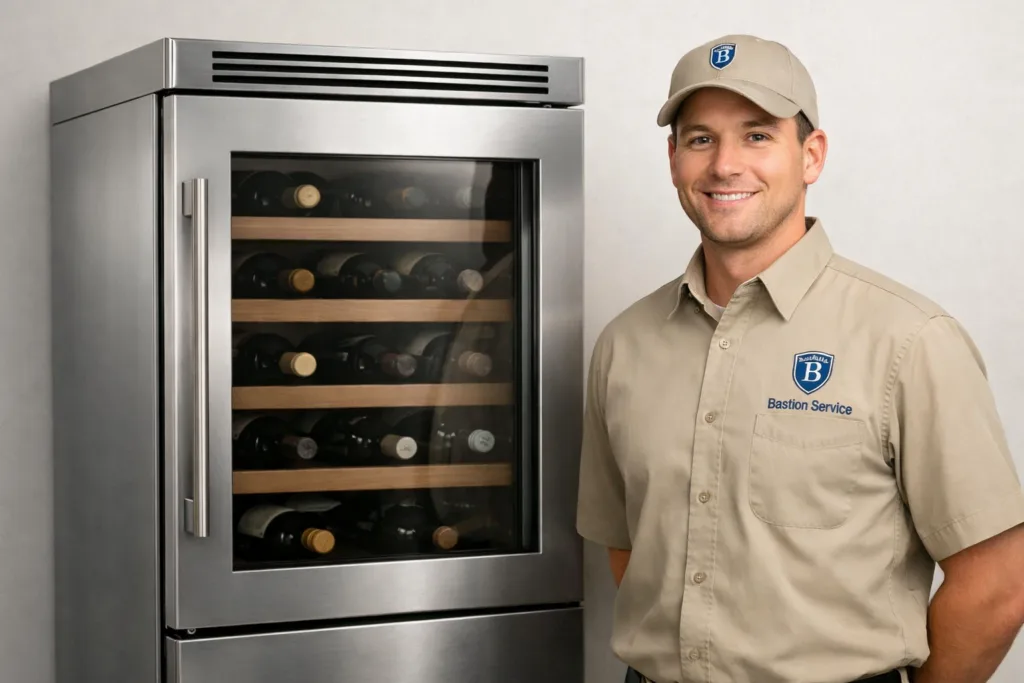
Small changes in wine cooler performance can have a real effect on storage conditions. When a Perlick unit starts running warm, collecting moisture, or sounding different than usual, the safest next step is to look at the exact behavior of the appliance rather than assume it needs a major repair. Similar symptoms can come from very different faults, including airflow restrictions, fan failure, sensor problems, door sealing issues, or trouble in the cooling system.
Start with what the cooler is actually doing
The most useful clues usually come from the pattern of the problem. A cooler that is slightly warm but still running may point to a different issue than one that clicks, shuts off, and never reaches the set temperature. In Hawthorne homes, homeowners often notice one or more of these signs first:
- The cabinet temperature drifts higher than the display setting
- The unit runs for long periods without recovering
- One area feels cooler than another
- There is water under the appliance or moisture inside
- The fan becomes louder, rattles, or hums continuously
- The controls respond inconsistently or show unusual readings
Describing the symptom clearly helps separate a control issue from an airflow problem, and a door-seal problem from a sealed-system concern.
Common Perlick wine cooler symptoms and what they may mean
Not cooling well or warming up
If bottles are no longer staying at a stable temperature, the cause may be as simple as restricted condenser airflow or as involved as a compressor-related issue. A faulty evaporator fan can reduce circulation inside the cabinet and create warm spots. A sensor or control fault can cause the unit to misread conditions and cool at the wrong times. If the cooler seems to run constantly but still feels too warm, that often means the system is working harder than it should and not achieving the result it should.
Temperature swings
Fluctuating temperature is especially hard on wine storage because the problem may not be obvious at first. You may see the display change often, notice bottles are cooler one day and warmer the next, or find the unit struggling after the door has been opened. This can happen when the thermostat circuit is inaccurate, the fan operation is inconsistent, or the door gasket allows outside air to enter the cabinet.
Condensation, leaks, or interior moisture
Moisture on shelves, damp labels, or water near the base of the cooler should not be ignored. These symptoms can point to a blocked drain, humid air entering through a poor seal, or an internal cooling imbalance that is creating excess condensation. If moisture keeps returning, the cooler is not maintaining the controlled environment it was designed to provide.
Frost buildup
Frost inside a wine cooler usually suggests an airflow or defrost-related problem, or warm air entering where it should not. Even light frost can affect circulation and make temperatures less consistent. If frost is increasing over time, continued operation may put extra strain on the system and reduce cooling performance further.
Fan noise, rattling, or buzzing
A noticeable increase in noise often means a moving part is under stress. Fan blades can become obstructed, motors can wear out, and mounting components can loosen enough to create vibration. Buzzing or clicking may also indicate the compressor is having difficulty starting or is running under poor cooling conditions. When a Perlick wine cooler suddenly sounds different, that change is usually worth checking before the problem spreads to other components.
Control or display problems
If the panel is unresponsive, the displayed temperature does not match cabinet conditions, or the settings change unpredictably, the issue may be electrical rather than mechanical. Control board faults, sensor problems, and wiring issues can all affect how the appliance cycles. These problems can look like general cooling failure even when the refrigeration system itself is still functional.
Why symptom timing matters
When the problem occurs can be just as important as the symptom itself. For example, a noise that happens only at startup suggests a different path than a fan that runs loudly all the time. A cooler that struggles only after the door opens may point to recovery or airflow trouble. A unit that is warm throughout the cabinet differs from one with uneven temperatures from top to bottom or front to back.
Before service, it helps to note:
- Whether the issue is constant or intermittent
- If the whole cabinet is affected or only part of it
- Any recent increase in noise, moisture, or run time
- Whether the display appears normal
- If the door closes and seals evenly
When continued use can lead to a larger repair
It is common to keep using a wine cooler as long as it still feels somewhat cool, but partial cooling can be misleading. A unit that runs nonstop, short cycles, or develops recurring frost may be putting unnecessary wear on fans, controls, and compressor components. Ongoing moisture can also affect shelves, labels, and the interior condition of the cabinet.
If the cooler is actively warming, leaking, or failing to hold a stable range, delaying service can turn a limited repair into a broader one. That is especially true when the symptom is repeatable day after day.
Repair or replacement depends on the failure, not just the age
Many Perlick wine cooler problems are tied to a specific failed part rather than total appliance failure. Issues involving fans, sensors, switches, gaskets, drains, or certain electrical components are often repairable when the cabinet is in good shape and the core refrigeration system remains sound. On the other hand, major sealed-system trouble, repeated prior breakdowns, or heavy wear throughout the unit can shift the decision toward replacement.
The point of service is to identify which category the problem falls into before spending money in the wrong direction. A premium residential wine cooler may still be a good repair candidate even when the symptom looks severe from the outside.
What to prepare before a service visit
A little information from the homeowner can make the appointment more productive. If possible, have the model information ready and note the current display reading, how the cabinet actually feels, and when the issue first appeared. If the unit is built in, make sure the front area is accessible so ventilation, fit, and door operation can be checked properly.
For homeowners comparing options in Hawthorne, the clearest path is to match the repair plan to the symptom pattern, the condition of the cooler, and the likely component involved. That usually leads to faster decisions and fewer surprises once the unit is inspected.