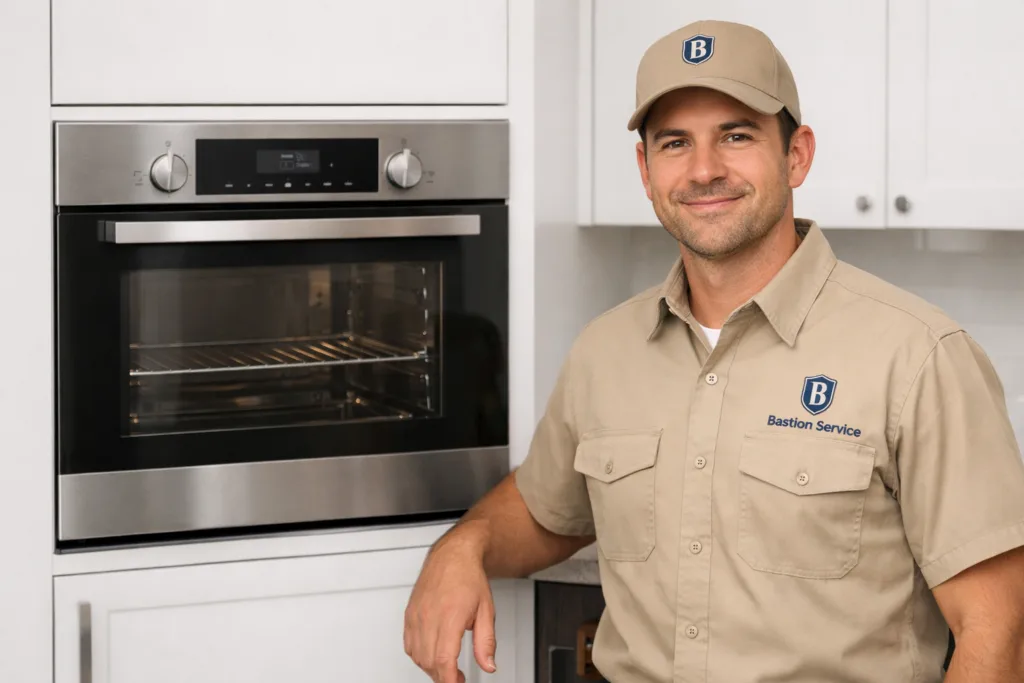
Miele ovens are built for precise cooking, so even a small fault can show up quickly in daily use. If baking times suddenly change, preheat drags on, or the oven behaves inconsistently from one cycle to the next, the symptom pattern usually tells a lot about where the problem is starting. In Hawthorne homes, that matters because temperature-related issues, control faults, and door or latch problems can look similar at first while requiring very different repairs.
Common Miele Oven Problems Homeowners Notice
Many service calls begin with one of a few recurring complaints: the oven does not heat, takes too long to preheat, bakes unevenly, runs hotter or cooler than the setting, or displays an error and stops mid-cycle. On Miele models, these symptoms can involve heating elements, temperature sensors, convection components, relays, control boards, or power supply issues.
What makes oven problems frustrating is that the display may still appear normal even when the heating system is not working correctly. A unit can light up, accept settings, and start a cycle while failing to generate or regulate heat the way it should. That is why the exact symptom matters more than whether the screen is on.
Slow preheat
If preheat now takes much longer than it used to, the oven may be heating on only part of the circuit, struggling with a weakened element, or getting inaccurate feedback from the sensor. Some homeowners first notice this when weeknight meals take longer than expected or the oven seems to stay in preheat far past the normal time.
Uneven baking
Cookies browning more on one side, casseroles finishing at the edges first, or repeated need to rotate pans can point to airflow or temperature-distribution issues. In convection models, fan performance can be part of the problem. In standard baking modes, the concern may be tied more closely to heating consistency or sensor accuracy.
Temperature swings
An oven does not hold one exact temperature every second, but large swings can create noticeable cooking problems. If food alternates between underdone and overdone even with familiar recipes, the oven may be cycling incorrectly, reading temperature poorly, or failing to recover heat the way it should after the door opens.
What Specific Symptoms Often Mean
The oven is not heating at all
When the cavity stays cool, the problem may be in the bake circuit, broil circuit, sensor system, electronic control, or incoming power. In some cases, homeowners assume the entire appliance has failed because nothing cooks, but the actual issue is isolated to one heating function or the control output that should be activating it.
If the oven recently stopped heating completely after showing weaker performance for a while, that gradual decline can be a useful clue. It may suggest a component that was failing over time rather than a sudden total breakdown.
The oven heats, but food is still undercooked
This usually points to an oven that is reaching some heat, just not the correct temperature. The thermostat reading may be off, the sensor may be sending incorrect information, or the heating system may be underperforming enough that the selected temperature is never truly maintained. For homeowners, this often shows up as recipes taking noticeably longer without any obvious error code.
The broiler works but baking does not
When one function works and another does not, the fault may be more narrowly contained. That can help isolate whether the issue is related to a specific element, relay, or control path rather than the oven as a whole. It is one reason it helps to note whether the problem affects bake, broil, convection, or all modes equally.
The controls respond, but the cycle will not run normally
Buttons that appear to work while the oven refuses to start properly can indicate interface or board issues, but they can also relate to door position sensing, lock mechanisms, or safety conditions the control is detecting. A responsive display does not always mean the internal systems are ready to operate.
Error Codes, Resets, and Mid-Cycle Shutoffs
Miele ovens are designed to flag certain problems before they become larger ones. If the oven displays an error code, beeps repeatedly, resets itself, or turns off during a cycle, the code or behavior pattern can help narrow the diagnosis. Some faults are tied to overheating, some to communication problems, and others to latch, sensor, or control failures.
Intermittent shutdowns deserve attention even if the oven starts working again later. A problem that appears only during preheat, after the oven has been hot for a while, or during self-clean can indicate a heat-related component issue that is becoming less stable over time.
- Write down the exact error code if one appears.
- Note whether the problem happens in every cooking mode or only one.
- Pay attention to whether failure happens immediately, during preheat, or after extended use.
- Stop repeated test cycles if the oven is shutting down unpredictably.
Door, Lock, and Self-Clean Problems
Door and latch issues can affect far more than convenience. If the door does not close fully, heat can escape and cooking performance suffers. If the lock stays engaged or fails to engage correctly, the control may prevent normal operation. These problems are especially noticeable after self-clean, when heat stress can expose weakness in the latch system or related switches.
Homeowners sometimes try to force a stuck door or restart the cycle repeatedly, but that can add wear to the latch assembly or create new alignment issues. If the oven is locked and not returning to normal on its own, it is better to stop and have the mechanism evaluated.
Signs the Problem May Be Electrical or Control-Related
Some symptoms point less to the heating hardware and more to the oven’s electronics. Flashing displays, settings that do not save, random beeping, clock resets, or a panel that responds inconsistently can all affect normal cooking. In a modern Miele oven, control and temperature regulation are closely connected, so electronic faults often show up as cooking-performance complaints first.
Another clue is inconsistency. If the oven works perfectly one day and fails the next without any change in household use, the issue may involve a control board, relay behavior, or connection that becomes unreliable as the appliance heats up.
When Repair Makes Sense
Repair is often worthwhile when the oven is otherwise in good condition and the issue is limited to a specific failed component or system. That may include a temperature sensor, heating element, door-latch part, fan-related issue, or a control fault that can be confirmed through testing. For many households in Hawthorne, keeping a well-performing Miele oven in service is the better choice when the problem is isolated and the rest of the appliance remains solid.
Replacement becomes more likely when there are multiple major faults, recurring control issues, or repair costs that are too close to the value of continuing with the existing unit. The best decision usually comes after the actual cause is identified rather than guessed from symptoms alone.
What to Check Before Scheduling Service
A few notes from the homeowner can make the appointment more productive. If possible, gather the model number and write down what the oven is doing differently. Try to be specific rather than general. “Runs hot after 20 minutes” or “broil works but bake does not” is more useful than “not working right.”
- Record any error code shown on the display.
- Note whether the issue affects bake, broil, convection, or self-clean.
- Pay attention to whether the problem is constant or intermittent.
- Notice if the symptom began suddenly or gradually worsened over time.
- Stop using the oven if it smells overheated, trips power, or shuts off unpredictably.
Safety Situations That Should Not Be Ignored
Some oven issues are inconvenient. Others should be treated as immediate safety concerns. If the appliance trips the breaker repeatedly, gives off a strong burning smell, shows signs of overheating around the control area, or will not stop heating normally, discontinue use until it is checked. If a gas model produces a persistent gas odor, stop using it and address the safety issue before any further operation.
Even when the oven still seems partly usable, continuing to run it through repeated test cycles can make diagnosis harder and may worsen a failing component. One careful evaluation is usually more helpful than multiple trial runs.
Service Focused on the Actual Cooking Problem
For homeowners in Hawthorne, the most useful approach is to match the repair plan to the way the oven is failing in real use. Whether the issue is no heat, uneven results, slow preheat, erratic controls, or a door that will not cooperate, the goal is to identify the failed system and determine whether repair is the sensible next step for the appliance you have.