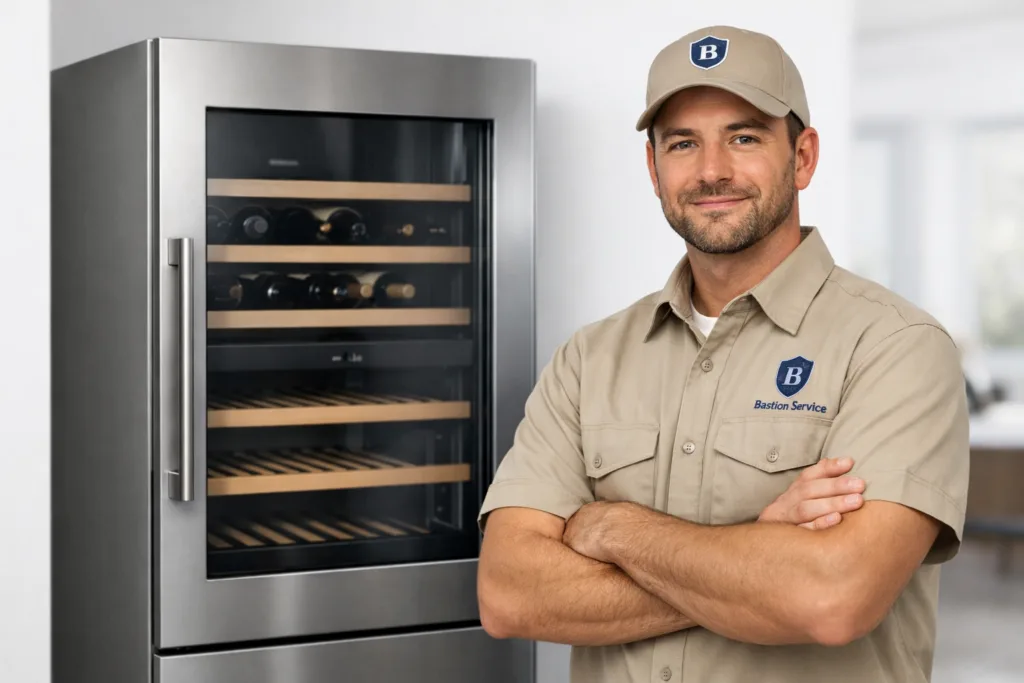
Stable wine storage depends on more than a cold cabinet. A Miele wine cooler has to manage temperature, airflow, humidity, door sealing, and control feedback at the same time. When one part of that system slips out of range, the first symptoms may seem minor at home, but they can quickly affect storage conditions and lead to uneven cooling from shelf to shelf.
In Los Angeles homes, built-in installation, warm kitchen conditions, and frequent door opening can all influence how a wine cooler performs. Those factors matter, but they should be separated from actual component failure. A unit that is running too long, collecting moisture, or sounding different than usual often needs symptom-based testing rather than trial-and-error part replacement.
Common Miele wine cooler problems homeowners notice
Most service calls start with one visible symptom, but several different failures can create the same result. That is why it helps to look at how the problem behaves, not just what it looks like.
Not cooling enough
If the cabinet feels warm or the temperature will not reach the set point, the cause may involve restricted airflow, a weak fan motor, a bad sensor, dirty heat-transfer surfaces, an electronic control fault, or a sealed-system problem. Some units do not stop cooling entirely but drift several degrees above the selected setting, which can be just as frustrating when you are trying to protect wine over time.
Uneven cooling is another version of the same issue. If one area feels colder than another, or bottles near the top and bottom seem noticeably different, airflow and sensor performance both deserve attention.
Running constantly or cycling too often
A wine cooler that rarely seems to rest may be compensating for warm air entering through a poor seal, low ventilation around the cabinet, or a cooling system that is losing efficiency. Short on-off cycles can point in a different direction, including sensor, thermostat, or control-board issues. The pattern matters because nonstop running and rapid cycling do not usually indicate the same repair path.
Condensation, moisture, or leaking
Moisture inside the cabinet or around the door can come from a gasket problem, drainage restriction, alignment issue, or humidity imbalance. Sometimes the first sign is fogging on glass, damp shelves, or labels beginning to wrinkle. If water begins collecting at the bottom or near the front edge, the problem should be addressed before it affects cabinetry or internal electrical parts.
Fan noise, rattling, or vibration
New noise often gives an early warning before full cooling failure. A rattling sound may be related to installation or panel contact. A stronger buzzing or humming may suggest the cooling system is under stress. Fan noise can come from a worn motor, ice or debris interference, or an airflow issue that makes the fan work harder than normal. If the sound changes suddenly, gets louder, or happens with every cycle, it is worth having inspected.
Display errors, alarms, or lighting faults
Repeating alarms and display problems are not always isolated electronic glitches. They can reflect a temperature sensing issue, door-status problem, communication fault, or cooling condition that the controls are detecting. Interior lighting problems may seem separate, but on some units they can appear alongside door-switch or control issues. When alarms return after a reset, the unit is usually telling you something more than “try again.”
How symptom patterns help narrow the cause
The same appliance can behave differently depending on the failed part. Looking at the pattern helps identify whether the issue is likely mechanical, electrical, airflow-related, or installation-related.
- Warm all the time: often points to cooling performance, fan failure, sensor issues, or control problems.
- Cold sometimes, then warm: more often linked to intermittent controls, thermistors, fans, or defrost-related behavior.
- Moisture with normal cooling: commonly suggests door sealing, drainage, or humidity management concerns.
- Noise with declining performance: can indicate strain in the fan or compressor area and should not be ignored.
- Alarm without obvious warmth: may still involve sensing or door-status faults that affect reliability.
This kind of symptom sorting is important because replacing a visible part without testing the system behind it can leave the original failure unresolved.
What Los Angeles homeowners can check before scheduling repair
There are a few useful things to review before service, especially if the problem has just started:
- Confirm the selected temperature has not been changed accidentally.
- Make sure the door is closing fully and nothing is preventing a complete seal.
- Check for visible gaps, hardened gasket sections, or bottles interfering with closure.
- Look for blocked interior airflow from overcrowded shelving or improper loading.
- Notice whether surrounding cabinetry leaves enough ventilation space for the unit design.
- Write down any error code, alarm behavior, or recent change in sound.
- Pay attention to whether the problem is constant or only happens during certain times of day.
These observations will not replace diagnosis, but they often make service more efficient and help separate a use-condition issue from a failing component.
When continued use can make things worse
Some wine cooler issues are inconvenient but stable for a short time. Others tend to escalate if the appliance keeps running. If the cabinet cannot hold temperature, the fan is loud or inconsistent, condensation keeps returning, or the unit runs almost nonstop, waiting can add wear to the cooling system and increase the chance of a larger failure.
Continued use is especially risky when there is active leaking, clear overheating, recurring alarms, or obvious temperature instability. In a built-in setup, trapped heat and restricted ventilation can also magnify the strain on components if the original problem is left unresolved.
Repair or replace: what usually matters most
For many households, the decision depends on the exact failed system, the age and general condition of the wine cooler, and whether the cabinet remains structurally sound. Repairs are often reasonable when the issue involves a fan, sensor, seal, drain path, switch, or certain control-related components. Those problems can often be addressed without changing the overall value of the appliance.
If testing points to major sealed-system trouble, multiple related failures, or a unit with broader wear beyond the current symptom, replacement may become the more practical option. The key question is not whether the cooler still powers on, but whether a repair can restore stable and consistent storage conditions.
Signs it is time to schedule Miele wine cooler repair in Los Angeles
It is usually time to arrange service if you notice any of the following:
- The cabinet stays warmer than the set temperature.
- Different shelves feel noticeably inconsistent.
- The unit runs much longer than it used to.
- Condensation keeps returning on the door, shelves, or interior walls.
- You hear new fan noise, rattling, or stronger vibration.
- Door alarms or display alerts come back after resetting.
- The door no longer seals tightly or appears misaligned.
These symptoms rarely correct themselves for long. A proper inspection can show whether the issue is a relatively contained repair or a sign of larger cooling-system stress.
Focused help for a temperature-sensitive appliance
A wine cooler is not just another refrigeration unit in the home. It is expected to hold a narrow, stable environment, and even modest fluctuations can undermine that purpose. For homeowners dealing with temperature swings, fan noise, recurring moisture, or control issues, Miele Wine Cooler Repair in Los Angeles is most useful when the repair plan is based on the actual failure rather than the broad symptom alone.
Bastion Service helps homeowners evaluate whether the problem is repairable, whether continued use is a risk, and what the most sensible next step looks like for the specific unit in the home.