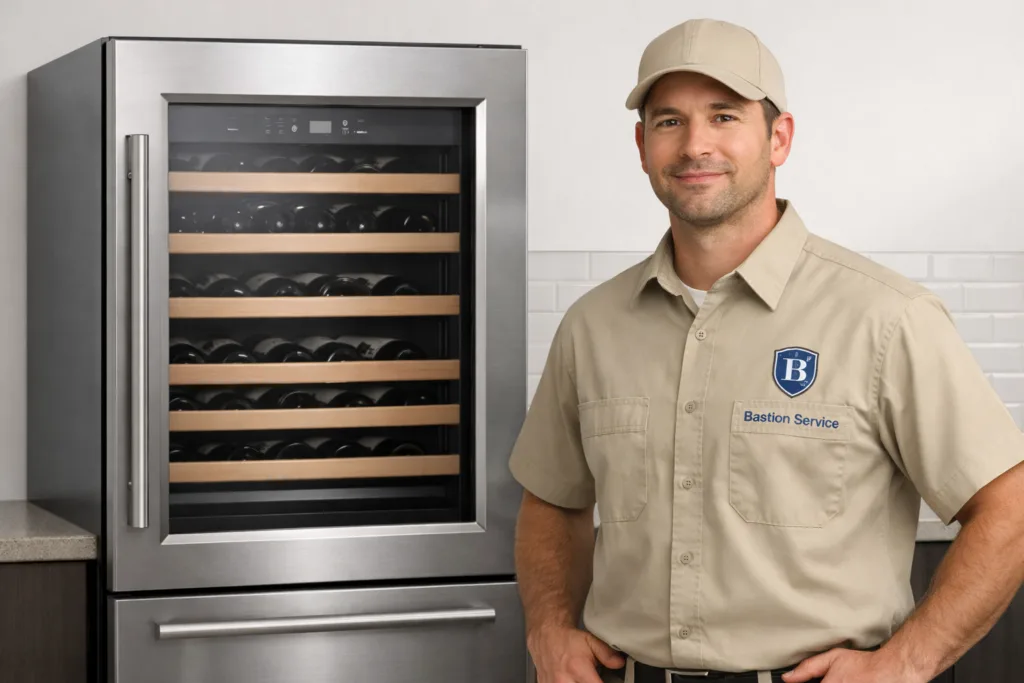
A KitchenAid wine cooler that no longer holds a steady temperature, runs far longer than usual, or starts building up moisture can put both short-term serving bottles and long-term storage at risk. In Los Angeles homes, those symptoms often show up gradually at first, then become harder to ignore as the cooler struggles to recover after the door opens or after warm days increase the workload. The most useful approach is to match the repair path to the exact behavior of the unit rather than assuming every cooling complaint has the same cause.
What common KitchenAid wine cooler symptoms usually mean
Wine coolers are designed to maintain a narrower, more stable environment than many homeowners realize. When that stability changes, the problem may involve airflow, temperature sensing, door sealing, controls, fan performance, or the refrigeration system itself. Similar complaints can look the same from the outside, so symptom-based troubleshooting matters.
Not cooling enough
If the cabinet feels warmer than the display suggests, the issue may be tied to restricted airflow, dirty coils, a weak fan, a faulty sensor, or an electronic control problem. In some cases, poor cooling with long run times can point to compressor or sealed-system trouble. A wine cooler that cools only slightly, cools slowly, or never reaches the set point should be checked before bottles are exposed to repeated warming cycles.
Temperature swings
Temperature fluctuation is often one of the first signs homeowners notice. You may see the display move more than expected, notice bottles warming and cooling back down, or find that one area of the cooler feels different from another. This can happen when internal airflow is uneven, when the thermistor is misreading cabinet conditions, or when the control board is not cycling the system correctly.
Constant running
A KitchenAid wine cooler that seems to run constantly without settling into normal cycles may be struggling to remove heat efficiently. That can happen because of ventilation issues around a built-in installation, a door gasket leak, dirty condenser components, or a refrigeration problem that reduces cooling capacity. Constant operation is more than an annoyance; it can increase wear and drive temperatures further out of range.
Fan noise, buzzing, or vibration
Some sound is normal, but new rattling, humming, clicking, or fan noise usually means something has changed. A fan motor may be failing, a blade may be rubbing, mounting hardware may have loosened, or the unit may be vibrating against surrounding cabinetry. If noise appears along with weak cooling, the sound may be part of the same underlying problem rather than a separate issue.
Condensation, water, or frost
Water droplets on shelves, pooling inside the cabinet, or frost buildup around interior panels can point to poor door sealing, a blocked drain path, or airflow trouble. Condensation is especially important to address early because excess moisture can lead to odor, inconsistent cooling, and longer run cycles. Frost is also a warning sign that the cooler may not be circulating air or managing temperature correctly.
Control and display problems
If the display is blank, unresponsive, inaccurate, or resetting unexpectedly, the cooler may have a control issue rather than a simple temperature problem. Buttons that stop responding, erratic readouts, or settings that do not seem to change performance can all indicate a fault in the user interface, control board, or sensor circuit.
Why built-in wine coolers often need closer diagnosis
Many KitchenAid wine coolers in Los Angeles are installed into kitchen or bar cabinetry, which means airflow and leveling matter more than many people expect. A cooler that is crowded by surrounding panels, not sitting squarely, or dealing with a worn gasket may have trouble rejecting heat properly. That can show up as longer cycles, hot cabinet edges, noise, or temperature inconsistency.
Built-in placement can also make early warning signs easier to miss. Because the unit is integrated into the room, homeowners may not notice subtle fan noise changes, heat buildup near the grille, or slight moisture formation until cooling performance has already dropped. A service visit should take installation conditions into account, not just the controls on the front panel.
Signs the problem is getting worse
Some wine cooler issues remain intermittent for a while before becoming obvious failures. It is smart to schedule service when you notice any of the following:
- Bottles feel warmer than they should even though the display appears normal
- The cooler runs almost nonstop
- Noise has changed from the usual operating sound
- Water is collecting inside or around the unit
- Frost keeps returning after being cleared
- The door does not close or seal as firmly as before
- The controls are not responding consistently
- The unit cools unevenly from top to bottom or front to back
These symptoms do not all point to the same repair, but they do suggest that normal operation has been disrupted. Continued use without identifying the cause can lead to more stress on the compressor, fans, and control system.
When repair is usually worth considering
Repair is often a practical option when the cabinet is in good condition and the issue is tied to a specific component such as a fan motor, thermistor, control part, drain problem, or door gasket. Those types of failures can often be addressed without replacing the entire appliance, especially if the wine cooler has otherwise been reliable.
Replacement may make more sense when the unit has repeated major problems, significant sealed-system trouble, or overall wear that makes future reliability doubtful. Age alone does not decide the answer; condition, symptom history, and the type of failure matter more. For many households, the right decision becomes clearer once the problem has been isolated to the actual failed part or system.
What homeowners can check before service
Before scheduling KitchenAid wine cooler repair in Los Angeles, a few basic observations can help narrow down the issue:
- Confirm the set temperature and whether the display changes on its own
- Notice whether the interior light, fan sound, or compressor sound behaves differently than usual
- Check for gaps in the door seal or resistance when closing the door
- Look for visible moisture, frost, or leaking water
- Pay attention to whether the cooler is unusually hot near the vented areas
- Note whether the problem is constant or appears at certain times of day
These observations are useful because they help separate a simple access, sealing, or airflow problem from a deeper cooling or control fault.
What a service visit should clarify
A worthwhile service appointment should identify whether the problem comes from airflow restriction, sensor error, fan failure, control malfunction, drainage, door sealing, or the refrigeration system. For a household wine cooler, that means looking beyond the display and checking how the appliance is actually performing under normal operating conditions.
Homeowners should come away knowing what failed, whether continued operation risks more damage, and whether the repair is sensible for the age and condition of the unit. That is especially important when the symptom seems minor but the cooler stores bottles that depend on stable conditions day after day.
Residential KitchenAid wine cooler repair focused on storage reliability
Unlike a standard refrigerator, a wine cooler is often judged by subtle performance changes rather than obvious food spoilage. A few degrees of drift, longer recovery times, or recurring moisture can be enough to signal that the appliance is no longer protecting your collection the way it should. For Los Angeles homeowners, timely repair helps restore consistent performance before a small symptom turns into a full cooling failure.
When the cooler is making unusual noise, not cooling properly, collecting condensation, or showing control problems, the next step should be based on the real source of the issue. That makes it easier to decide whether repair is the right move and what it will take to get the unit back to stable operation.