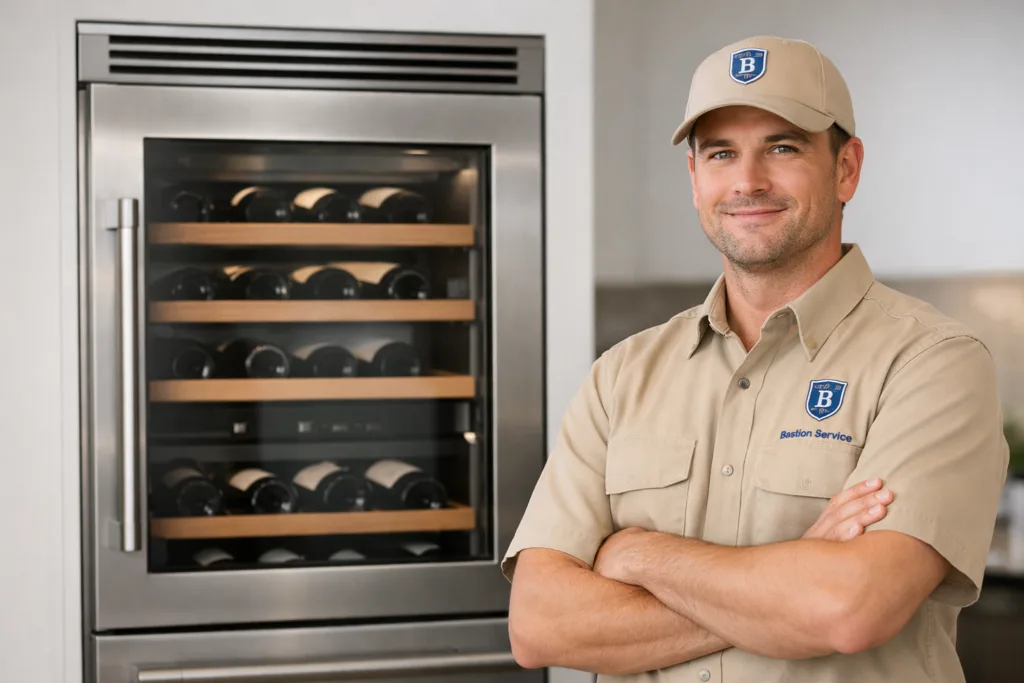
Wine storage problems usually show up as a pattern rather than a single failure. One homeowner notices bottles are no longer as cool as expected. Another hears a new fan sound, sees moisture near the door, or finds that the display setting does not match the actual cabinet temperature. With a Sub-Zero wine cooler, those details matter because similar symptoms can come from very different causes.
In Los Angeles homes, wine coolers are often installed under counters, in bar areas, or within custom cabinetry. That means airflow, door alignment, surrounding heat, and installation conditions can all affect performance along with the internal refrigeration components. The most useful next step is identifying which symptom is primary and which ones appeared afterward.
How Sub-Zero wine cooler problems typically develop
A wine cooler rarely goes from normal operation to total failure without warning. More often, the early signs are subtle: longer run times, uneven temperature from one shelf to another, occasional clicking, light condensation, or a display that seems inconsistent. Catching those changes early can help limit stress on the compressor and reduce the chance of spoiled bottles.
Because Sub-Zero wine coolers are designed for steady, controlled storage, even small changes in cooling behavior deserve attention. A unit that is only a few degrees off may still seem functional, but repeated fluctuations can point to a fan issue, sensor drift, restricted airflow, or trouble in the sealed system.
Common symptoms and what they may mean
Not cooling properly
If the cabinet is warmer than the selected setting, the cause may be as simple as restricted airflow or as serious as a refrigeration-system fault. Common possibilities include condenser buildup, fan failure, a weak seal allowing warm air in, a faulty thermistor, or control board problems. If the unit is built into tight cabinetry, ventilation conditions should also be checked.
When cooling loss is gradual, homeowners sometimes lower the temperature setting to compensate. That may mask the issue briefly, but it usually does not solve the underlying problem and can lead to longer run cycles.
Temperature swings
A wine cooler that alternates between too warm and too cold often points to a regulation problem rather than a total cooling failure. Sensors, controls, intermittent fan operation, frost affecting airflow, and door sealing issues can all create unstable conditions inside the cabinet.
If one section of the cooler feels different from another, that often suggests an airflow or circulation issue. Uneven cooling is especially important to address when bottles stored on different shelves are not experiencing the same conditions.
Running constantly
When a Sub-Zero wine cooler seems to run all day, it is usually working harder than it should to maintain the set temperature. That extra runtime may be caused by warm air entering through a worn gasket, blocked condenser airflow, a control issue, or declining refrigeration performance.
Constant operation does not always mean the unit has stopped cooling, but it does mean efficiency and normal cycling have changed. Left unchecked, that can increase wear on major components.
Condensation, frost, or water buildup
Moisture inside a wine cooler is never something to ignore. Condensation around the door can indicate a sealing issue or warm-air intrusion. Water inside the cabinet may point to a drainage problem. Frost where it should not be forming can suggest airflow restrictions, a door not closing fully, or temperature-control trouble.
Even minor moisture problems can lead to label damage, shelf wear, and reduced cooling consistency. If the same area keeps collecting water or frost, the source should be identified rather than wiped away and monitored indefinitely.
Buzzing, clicking, rattling, or fan noise
Different sounds usually point to different components. A rattling noise may come from vibration, mounting, or a panel issue. Buzzing can be related to fan obstruction or electrical components. Repeated clicking may indicate trouble with startup components or control-related cycling.
Noise matters most when it appears alongside another symptom such as poor cooling, excess runtime, or moisture. That combination often means the fault is affecting overall operation rather than being a harmless sound change.
Display or control problems
If the panel is blank, the temperature reading seems inaccurate, or buttons stop responding normally, the issue may involve the interface, wiring, electronic controls, or sensor communication. On a premium built-in appliance, control faults can affect much more than convenience. They may change how the unit cycles, how long it runs, and how accurately it maintains storage conditions.
Issues that are often overlooked in Los Angeles homes
Installation conditions can play a larger role than many homeowners expect. A built-in wine cooler needs proper clearance and airflow to reject heat effectively. If surrounding cabinetry is tight, vents are obstructed, or the area near the appliance runs warm, the unit may struggle even when the internal components are only partly affected.
Door use patterns matter too. In entertaining spaces, frequent opening can introduce warm, humid air that makes a marginal sealing or cooling problem more noticeable. If condensation appears mostly after heavier use, that detail helps narrow down the likely cause.
When service should not be delayed
It is best to schedule service when the wine cooler will not hold temperature, runs much longer than usual, develops new noises, shows recurring moisture, or has a display that no longer behaves normally. These symptoms rarely resolve on their own, and continued operation can make the repair more involved.
Prompt attention is especially important if the cabinet temperature is drifting upward while the unit continues to run. That pattern can indicate the appliance is under strain and no longer able to maintain normal performance.
Repair or replacement: what usually makes sense
Many Sub-Zero wine cooler problems are repairable, especially when the issue involves fans, sensors, controls, drainage, door sealing, or accessible electrical components. If the cabinet is otherwise in good condition and the problem is limited to a specific system, repair is often the better value.
Replacement becomes a more realistic discussion when there is severe sealed-system damage, repeated major failures, or repair cost no longer aligns with the unit’s overall condition and expected service life. That decision is best made after the exact fault is identified, not based on symptoms alone.
What to expect from the repair process
Effective service starts with symptom-based testing rather than assumptions. That usually includes checking temperature behavior, airflow, fan operation, control response, door sealing, and any visible signs of frost or moisture. For built-in units, access and ventilation around the appliance are often part of the evaluation.
From there, the repair path depends on what the testing shows. Some issues are isolated and straightforward. Others require looking at how multiple symptoms connect, such as a unit that is both noisy and warm or one that has moisture buildup along with unstable temperatures. The goal is a practical repair plan based on the actual fault, appliance condition, and expected outcome.
Signs your wine cooler is getting worse, not better
- The temperature setting stays the same, but bottles are warmer than before.
- The unit runs longer each week or seems to stop cycling off.
- Condensation returns after being wiped away.
- New noises become more frequent or louder.
- The display becomes inconsistent, blank, or slow to respond.
- Different shelves no longer feel equally cooled.
When those signs start stacking together, the problem is usually progressing. Addressing it earlier can help preserve the appliance and avoid a more disruptive loss of cooling later.