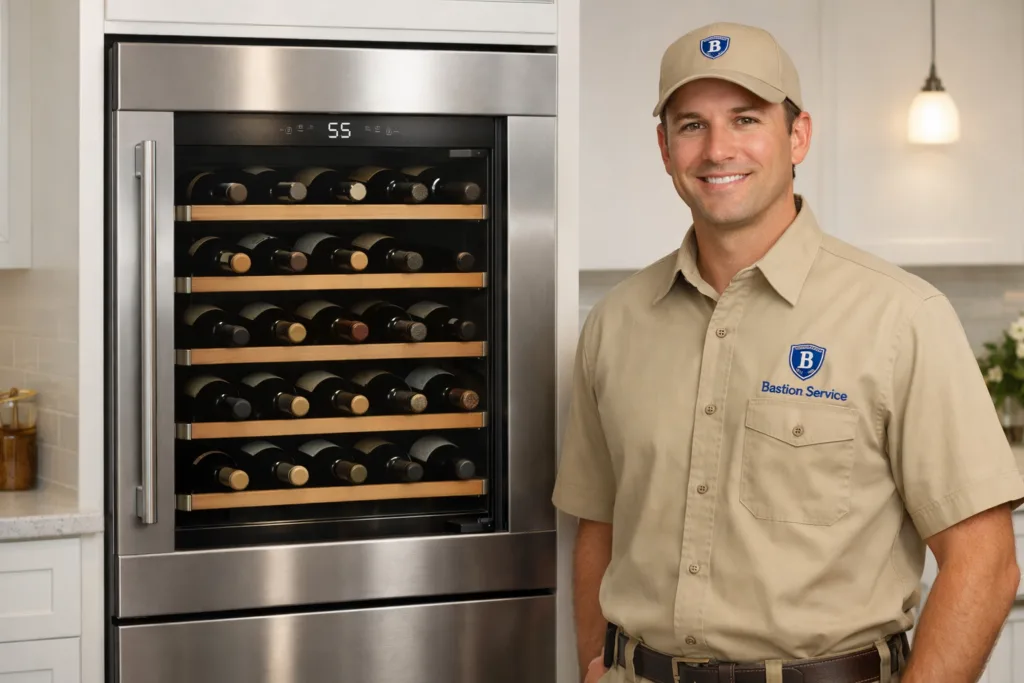
When a wine cooler stops holding temperature, runs constantly, or starts making unusual noise, it can quickly turn into a household problem instead of a convenience. For wine cooler repair in Los Angeles, the most important step is a clear diagnosis first, because the same symptom can come from very different faults and the right repair decision depends on what is actually failing.
Common wine cooler problems in Los Angeles homes
Most service calls start with one of a few familiar issues: the unit is not cooling enough, the temperature swings up and down, the interior feels too cold and starts affecting labels or corks, water appears around the cooler, or the appliance becomes noisy. In many homes, these problems are caused by restricted airflow, a faulty thermostat or sensor, a door that is not sealing correctly, condenser buildup, fan motor trouble, or an issue in the sealed cooling system.
Because wine coolers are built to maintain a narrower temperature range than standard kitchen refrigeration, even a small control problem can create noticeable performance changes. A unit that is only a few degrees off may not seem urgent at first, but repeated temperature instability can point to an underlying failure that usually does not correct itself.
What different symptoms can indicate
Wine cooler not cooling properly
If bottles are not staying at the set temperature, the cause may be as simple as blocked vents, dirty condenser coils, or a door left slightly ajar. It can also indicate a failed evaporator fan, a weak start device, control board problems, or low cooling performance from the sealed system. If the cooler is running but the interior remains warm, diagnosis should focus on whether the issue is airflow, controls, or compressor-related.
Temperature swings or inconsistent cooling
When the temperature seems fine one day and too warm the next, the problem often involves the thermostat, thermistor, electronic controls, or intermittent fan operation. Placement can matter too. A wine cooler installed too tightly into cabinetry or exposed to heat from nearby appliances may struggle to regulate temperature consistently.
Too cold or partial freezing
A wine cooler that overcools can have a faulty temperature sensor, a stuck control, or a board issue that keeps the cooling cycle running too long. This is not a symptom to ignore, especially if the appliance is supposed to maintain a stable storage range and instead starts creating extreme cold zones.
Water buildup or moisture inside
Condensation, water under shelves, or dampness near the door can result from poor door sealing, frequent warm air entry, a clogged drain path on applicable models, or cooling components not cycling as intended. In Los Angeles homes, this may also show up when the cooler is opened often during gatherings or placed in a location with poor ventilation.
Buzzing, rattling, or constant running
Not every sound means a major breakdown, but changes in noise level usually mean something has shifted. Rattling may come from loose panels or an uneven floor. Buzzing can point to compressor startup trouble. A fan blade contacting ice or debris can create repetitive noise. If the unit runs nearly nonstop, it may be fighting heat, losing efficiency, or failing to reach the target temperature.
Why proper diagnosis matters
Wine cooler symptoms overlap. A warmer cabinet does not always mean compressor failure, and excess condensation does not always mean a leak. Replacing the wrong part wastes time and money, especially on compact refrigeration appliances where controls, fans, and sealed system components all affect one another. Good diagnosis helps determine whether the issue is a practical repair, a maintenance-related correction, or a larger failure that changes the value of repairing the unit.
For homeowners in Los Angeles, diagnosis also helps avoid continued operation that can worsen damage. A struggling fan motor can lead to poor airflow and heavier cooling strain. A bad door gasket can force constant run time. An electrical issue ignored for too long can affect additional components.
When to schedule wine cooler service
Service is usually worth scheduling when the appliance cannot maintain the set temperature, restarts unpredictably, leaks, produces new or persistent noise, trips power, or shows visible signs of frost or moisture that do not clear with normal use. If the cooler is storing higher-value bottles or serving as the main temperature-controlled storage area in the home, it makes sense to address early symptoms before performance drops further.
It is also smart to stop and assess the unit if continued use seems to be making the problem worse. Examples include rising cabinet temperatures, longer run cycles, burning smells, clicking without startup, or moisture spreading beyond the cooler area. Those signs usually point to a condition that should not be left to “see if it fixes itself.”
Repair versus replacement considerations
Not every wine cooler problem leads to replacement. Many issues involving sensors, thermostats, fans, door seals, and accessible electrical components are repairable when the rest of the unit is in solid condition. Repair is often the sensible choice when the cabinet, insulation, shelving, and cooling performance history are otherwise good.
Replacement becomes more relevant when the sealed system has failed, the compressor has major issues, parts availability is poor, or the unit has multiple age-related problems at once. The decision also depends on the cooler’s age, overall condition, and whether the repair restores dependable temperature control rather than only providing a short-term improvement.
Closely related cooling appliances can sometimes show overlapping performance problems around temperature control, airflow, or frost buildup. In those situations, Refrigerator Repair may also be relevant.
Some cooling symptoms overlap between refrigerator and freezer compartments, especially when airflow, frost buildup, or temperature consistency become part of the problem. In those cases, Freezer Repair may also be relevant when a separate freezer issue is part of the overall household cooling picture.
Cooling performance problems can also affect ice production, water flow, or temperature stability around built-in ice systems. In that situation, Ice Maker Repair may also be relevant when the ice function is showing its own separate symptoms.
What homeowners can expect from a practical service approach
A useful service visit focuses on the actual fault, not guesswork. That means checking temperature behavior, airflow, fan operation, seals, control response, and cooling performance before deciding on parts or next steps. For wine cooler repair in Los Angeles, a practical approach should answer three questions clearly: what is causing the symptom, whether continued use risks more damage, and whether repair is likely to be worthwhile for normal household use.
That kind of clarity matters because wine coolers are specialty refrigeration appliances. They do not fail in exactly the same way as a full-size refrigerator, and they are usually purchased for stable storage rather than heavy everyday access. A targeted diagnosis helps homeowners make a realistic decision without overcommitting to unnecessary work or delaying a repair that should be handled promptly.