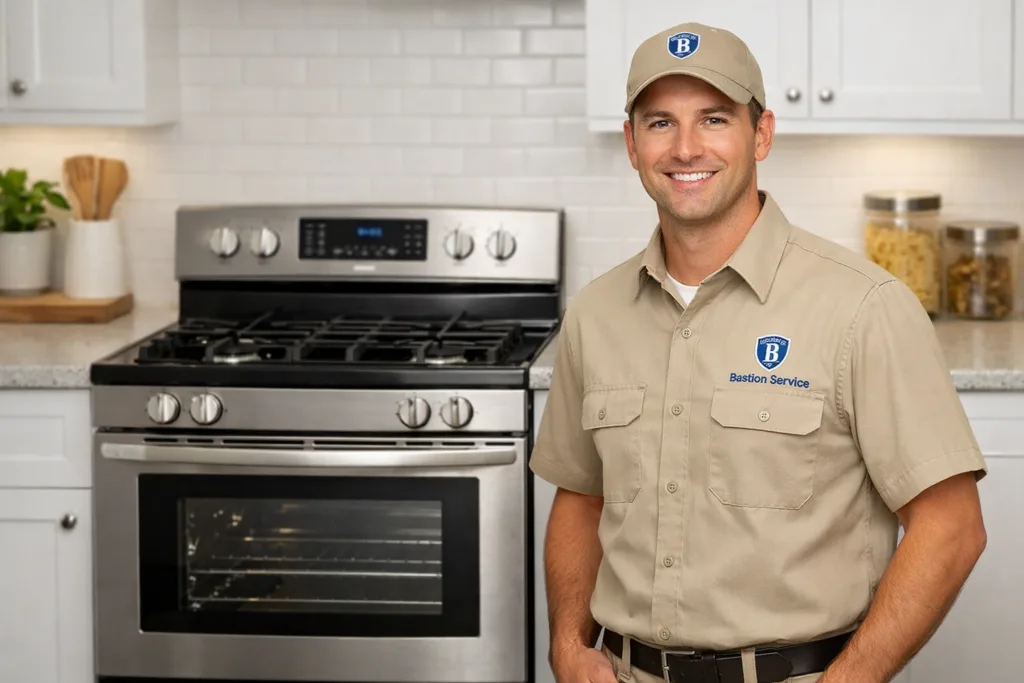
Oven problems tend to show up in everyday cooking before they turn into a full breakdown. A roast that takes far longer than usual, a baking sheet that browns on one side but not the other, or a unit that clicks and never fully heats are all signs that the appliance should be checked before the issue spreads to other components.
For many homes in Palms, the most useful starting point is to look closely at the exact symptom pattern. The same Kenmore oven can fail in very different ways depending on whether the problem involves ignition, heat production, temperature sensing, door sealing, or the electronic controls.
Common Kenmore oven symptoms and what they can mean
One reason oven repairs are often misjudged is that different failures can create similar cooking results. Food coming out underdone does not always mean the same part has failed. Symptom-based diagnosis helps narrow the problem faster and avoids replacing parts based on guesswork.
Oven will not heat at all
If the control panel powers on but the oven never gets warm, the cause may be a failed bake element, a weak or non-functioning igniter, a sensor issue, a control fault, or a power-related problem. In some cases, broil may still work while bake does not, which helps point to a more specific failure.
This kind of no-heat condition is usually more than a minor inconvenience. Continued attempts to start the oven can sometimes place extra strain on ignition or control components, especially when the unit repeatedly tries and fails to begin a heating cycle.
Slow preheating
An oven that eventually reaches temperature but takes much longer than it used to often points to a weakening igniter, reduced element output, or a sensor reading problem. Slow preheat can be easy to overlook because the oven still appears to function, but it often shows that a part is deteriorating rather than working normally.
In real use, homeowners usually notice this first with weeknight cooking: meals that once needed a standard preheat now require extra waiting, and recipes begin falling behind schedule. That pattern is worth addressing before it turns into complete no-heat failure.
Uneven baking or hot and cold spots
If one rack cooks faster than another, cookies brown unevenly, or casseroles need to be rotated constantly, the issue may involve inaccurate temperature sensing, inconsistent element performance, weak ignition, or airflow problems inside the oven cavity. A damaged door gasket or poor door alignment can also let heat escape and affect consistency.
Uneven results matter because they usually get worse gradually. Many people adapt by changing rack positions, rotating pans more often, or adding time, but those workarounds can hide a repairable fault for months.
Temperature swings or overheating
When the oven seems much hotter or cooler than the display setting, the problem may involve the temperature sensor, control calibration, relay behavior, or a heating component that is not cycling correctly. Some units drift slowly off temperature, while others spike unexpectedly and scorch food.
Temperature instability is especially frustrating for baking because small swings can ruin recipes that depend on steady heat. If results have become unpredictable even with familiar dishes, the oven likely needs more than a simple settings adjustment.
Display and control problems
A blank panel, unresponsive buttons, error codes, or an oven that shuts off mid-cycle can point to a failing control board, interface issue, loose connection, or power supply problem. Electronic faults can be intermittent at first, which makes them easy to dismiss until the unit stops working during a meal.
If controls are behaving unpredictably, it is usually better not to keep testing the oven repeatedly. Inconsistent commands and random shutoffs often indicate a fault that should be inspected directly.
Door, hinge, and latch issues
A door that will not close fully or seal tightly can affect both performance and safety. Heat loss from a poor seal can cause long cook times, uneven baking, and excessive heat around the front of the appliance. If the problem started after a self-clean cycle, the latch or lock system may also be involved.
Some homeowners notice this as a strip of heat escaping from the top or side of the door, while others see that the door sits unevenly or needs to be pushed shut. Those details can help identify whether the issue is with the hinge, gasket, alignment, or latch response.
Why the exact symptom matters
Two ovens can seem to have the same problem while requiring completely different repairs. An appliance that does not reach temperature may have a weak igniter on one model and a failing sensor or control issue on another. An oven that appears dead may actually have a localized heating failure rather than a total electrical problem.
That is why the best repair decision starts with how the oven behaves in actual use. Useful details include:
- Whether the problem affects bake, broil, or both
- Whether the display and timer still work
- Whether the issue is constant or intermittent
- Whether the problem began after a self-clean cycle
- Whether cooking is too cool, too hot, or inconsistent
- Whether the door closes and seals normally
These observations often make the difference between a broad guess and a targeted repair plan.
Signs it is smart to stop using the oven for now
Some faults are mostly about poor cooking performance, while others can lead to added damage if the oven keeps running in that condition. It is usually best to stop using the unit and have it checked when you notice:
- Repeated failed ignition or clicking without proper heating
- The oven shutting off during normal cooking
- Burning smells that are new or unusually strong
- Error codes that return after resetting the controls
- Temperature overshoot that burns food unexpectedly
- A door that will not stay closed or seal correctly
- Tripped power related to oven use
Using the appliance despite those warning signs can turn a single-part repair into a larger electrical or control problem.
Repair versus replacement for an older Kenmore oven
Many Kenmore oven issues are repairable, especially when the fault is isolated to a heating component, igniter, sensor, latch assembly, or a specific control-related part. If the oven is otherwise in solid condition and has been performing well apart from the current issue, repair is often the more sensible route.
Replacement becomes more worth discussing when the unit has multiple failing systems, recurring control trouble, heavy wear, or repair costs that are high relative to the oven’s age and condition. The key is to base that decision on the actual fault, not on frustration alone after a bad week of cooking results.
What Palms homeowners can do before scheduling service
A few simple notes can make service more efficient. Before the visit, it helps to write down the set temperature, the approximate actual cooking result, whether preheat completes, and whether the problem occurs every time or only on certain cycles. If one function works and another does not, that is also useful information.
It is also helpful to avoid repeated trial runs, especially if the oven is showing signs of electrical or control trouble. One or two clear observations are more valuable than multiple reset attempts that may complicate the symptom history.
Focused help for home cooking problems
When a household oven starts missing temperatures, heating unevenly, or refusing to start, the goal is not just to restore power to the appliance but to restore predictable cooking. For homeowners in Palms, Kenmore oven service makes the most sense when it is guided by the specific symptom, the condition of the unit, and whether the repair will return stable everyday performance.
That approach gives you a practical path forward, whether the issue turns out to be a straightforward part failure or a broader sign that the oven is nearing the end of its useful life.