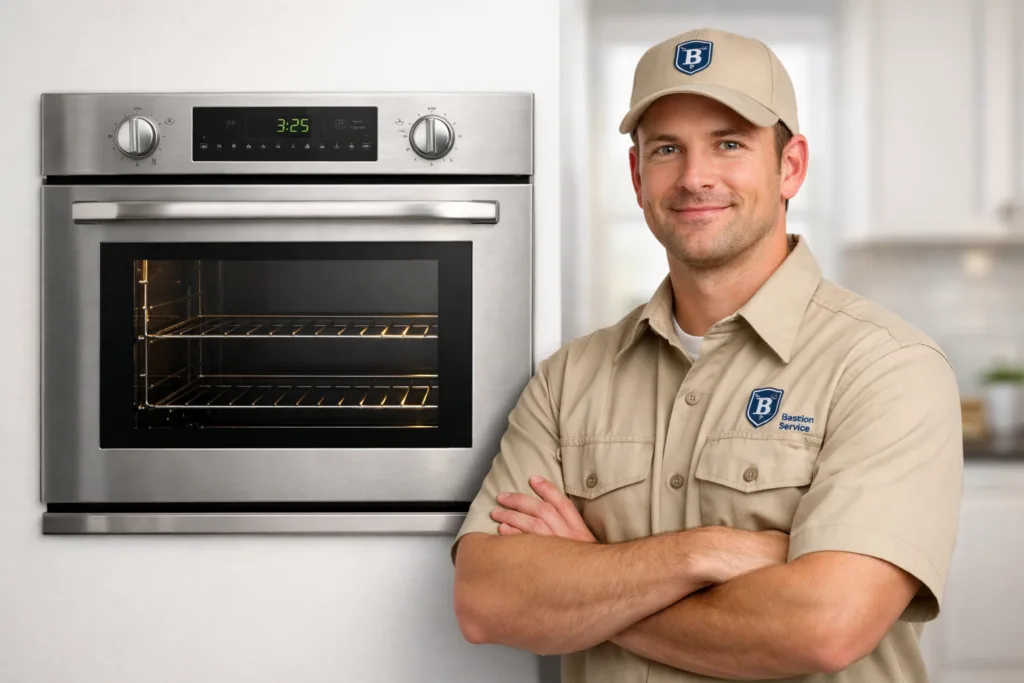
Common Electrolux oven problems and what they usually point to

Electrolux ovens can fail in ways that seem similar on the surface but come from very different components. An oven that turns on but will not heat may have a heating, ignition, sensor, relay, or power-supply issue. One that heats sometimes but not consistently may be cycling improperly, reading temperature incorrectly, or losing performance as parts warm up.
Looking at the exact symptom pattern matters. Homeowners in Palms often notice clues such as whether broil still works when bake does not, whether preheat stalls at a certain temperature, or whether the display acts up only after the oven has been running for a while. Those details help narrow the problem much faster than guessing at parts.
Oven not heating at all
If the cavity stays cold, the cause may be a failed bake element, broil element, igniter, thermal cutoff, temperature sensor, wiring fault, or electronic control problem. On some electric models, a partial power issue can leave the clock and light working while the heating circuit does not operate correctly.
This is one reason the same “not heating” complaint should not automatically lead to a control board replacement. Proper testing helps determine whether the oven is missing heat because it cannot generate it, cannot detect it, or cannot command it.
Slow preheating
When preheat takes much longer than normal, the oven may still be producing heat but not enough of it. Weak elements, aging igniters, drifting sensors, relay issues, and convection problems can all show up as sluggish warmup. In everyday use, that usually means longer dinners, inconsistent results, and recipes that stop behaving the way they used to.
Uneven baking or temperature swings
If one rack browns too quickly while another lags behind, the problem may involve element cycling, sensor accuracy, air circulation, or poor door sealing. Some homeowners first notice it with cookies, casseroles, or baked dishes that come out overdone on top and underdone in the center.
Temperature complaints are best judged by a pattern, not a single meal. Repeated undercooking, scorched edges, or noticeable hot and cool spots usually indicate an issue worth checking.
Control panel issues and error codes
Beeping, flashing displays, unresponsive buttons, and recurring fault codes can stem from control failures, sensor faults, latch problems, or communication errors between components. Codes are useful starting points, but they do not always identify the failed part by themselves.
What matters is what the oven was doing when the code appeared. A code during preheat may suggest something different from a code that appears only during self-clean or after the oven reaches higher temperatures.
Door lock or latch problems
If the oven door will not lock, will not unlock, or feels stuck after a cycle, the issue may involve the latch motor, switch, alignment, or control logic. This is especially common after self-clean, when heat stress can expose weakness in lock-related parts. Forcing the door can turn a repairable problem into a larger one.
Symptoms that should not be ignored
Some oven issues are more than a cooking inconvenience. They can point to overheating, electrical stress, or ignition trouble that should be checked before the appliance is used again.
- The oven trips the breaker during preheat or while baking
- A heating element is blistered, cracked, or visibly sparking
- The control panel resets, flickers, or shuts off when the oven gets hot
- The appliance turns itself off mid-cycle
- The door does not close firmly and heat escapes around the seal
- A gas model clicks repeatedly, lights late, or fails to ignite reliably
If there is a persistent gas odor from a gas oven, stop using it and treat the issue as a safety concern first. For electric models, burning smells, arcing, or repeated breaker trips also deserve prompt attention.
What causes uneven baking in an Electrolux oven?
Uneven baking is one of the most common complaints because it can build gradually. A small temperature drift may not be obvious at first, but over time it starts affecting everyday cooking. Food may need extra minutes one week, then come out unexpectedly overbrowned the next.
Typical causes include:
- A temperature sensor reading outside its expected range
- A bake or broil element that is no longer heating evenly
- A convection fan that is not moving air properly
- A worn door gasket allowing heat to escape
- A control problem causing poor heat cycling
In Palms homes where the oven is used often for daily meals, these issues tend to show up quickly as inconsistent results rather than a complete shutdown.
When repair usually makes sense
Many Electrolux oven problems are worth repairing when the appliance is otherwise in solid condition. Issues involving elements, igniters, sensors, fan motors, latch assemblies, and some control-related parts are often practical to address when the rest of the oven remains structurally sound.
Repair is usually more attractive when:
- The problem is isolated to one system
- The oven cavity, door, and racks are in good shape
- The appliance has been reliable aside from the current issue
- The repair cost is reasonable compared with replacement
Replacement may be the better path if the oven has multiple major faults at once, has a history of repeat electronic failures, or would require expensive parts without a strong likelihood of long-term stability. The right answer depends less on one symptom alone and more on the overall condition of the unit.
What to note before scheduling service
A few observations can make diagnosis easier and help determine the repair path. Before service, it helps to note:
- Whether the problem affects bake, broil, or both
- How long preheat takes compared with normal
- Any error code shown on the display
- Whether the issue started after self-clean
- Whether the oven shuts off only after it gets hot
- Whether the door locks, unlocks, and seals normally
These details often reveal whether the issue is related to heat generation, temperature sensing, control behavior, or door and latch operation.
What homeowners in Palms usually want to know
Most people are trying to answer three practical questions: why is the oven acting this way, is it safe to keep using, and is the repair worth doing. A symptom-based inspection is the fastest way to get those answers without replacing parts on speculation.
If your Electrolux oven is failing to heat, struggling to maintain temperature, or showing control problems during normal use, addressing it early usually prevents more disruption to cooking routines in Palms households. In many cases, a targeted repair is enough to restore normal baking and roasting performance without turning a manageable issue into a larger one.