
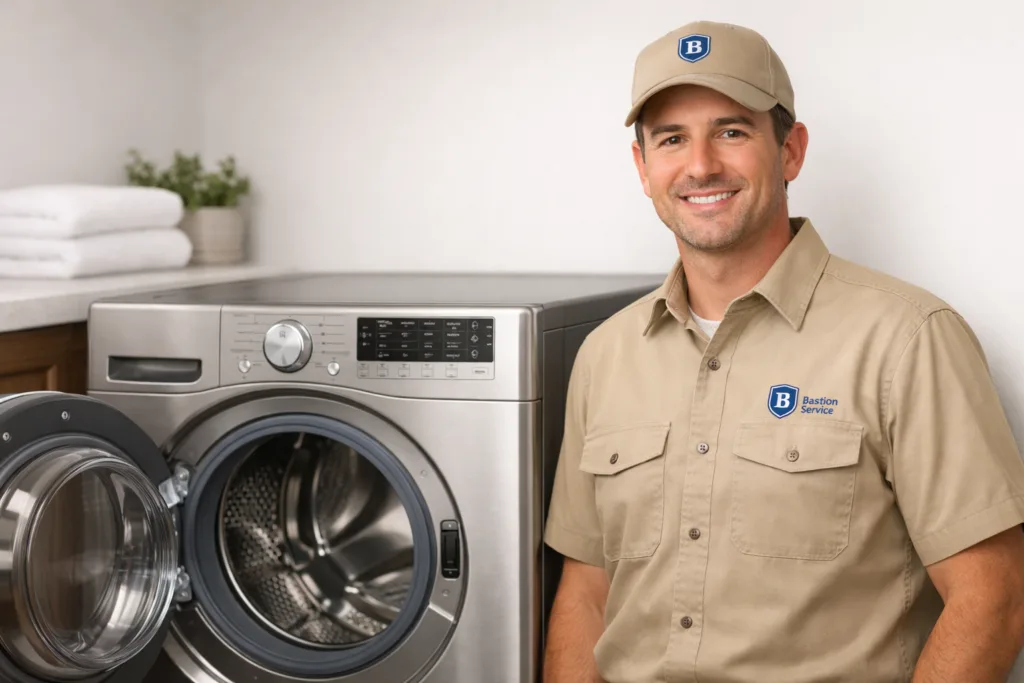




Many Kenmore problems look simple at first but turn out to have more than one possible cause. A refrigerator that feels warm could have an airflow issue, a defrost problem, or trouble in the cooling system. A washer that will not finish spinning might be dealing with drainage, balance, lid-lock, or motor-related faults. Starting with the symptom pattern usually leads to a better repair decision than guessing at a part.
For specific Kenmore appliance paths in Palms, review Kenmore Refrigerator Repair in Palms, Kenmore Freezer Repair in Palms, and Kenmore Washer Repair in Palms.
Start with what the appliance is actually doing
For homeowners in Palms, the most useful details are often the easiest to observe. Did the problem begin suddenly or build up over several weeks? Does it happen every cycle or only sometimes? Is there a new noise, odor, leak, or error code? Those clues help separate a one-component failure from a broader wear issue.
It also helps to notice whether the appliance is still safe to use. A unit that leaks, trips power, smells hot, or shuts down unpredictably should not be pushed through repeated use just to see if it clears up on its own.
Common symptom groups across Kenmore appliances
Won’t start or stops unexpectedly
When a Kenmore appliance does not power on, starts and then quits, or pauses mid-cycle, the cause may involve a switch, latch, fuse, control board, wiring fault, or a component drawing too much current. This can show up in washers, dryers, dishwashers, ovens, and ranges. If the appliance only works after repeated resets, the underlying issue usually still needs attention.
Leaks or unwanted moisture
Water around the appliance often points to a problem that can spread beyond the machine itself. Washers may leak from hoses, pumps, door seals, or internal tub-related parts. Dishwashers can leak from the door area, circulation system, or drainage path. Refrigerators may puddle because of defrost drain issues, condensation, or water line problems tied to the ice maker. Even a small recurring leak can damage flooring and cabinetry if it is ignored.
Heating or temperature problems
Temperature-related complaints can look very different depending on the appliance. A dryer may tumble without producing enough heat. An oven may preheat slowly or bake unevenly. A cooktop burner may cycle incorrectly or not reach normal output. A refrigerator or freezer may cool inconsistently or struggle after the door is opened. In these cases, the real question is whether the appliance is failing to heat, overheating, or simply unable to regulate temperature correctly.
Noise, vibration, and unusual smells
New sounds often give the earliest warning that a component is wearing out. Grinding, squealing, buzzing, thumping, rattling, or clicking can point to fans, pumps, bearings, rollers, suspension parts, or ignition components depending on the appliance. Burning odors, sharp electrical smells, or a sudden increase in noise level are stronger warning signs, especially when performance drops at the same time.
How Kenmore refrigerator and freezer issues usually appear
Cooling problems often become noticeable in everyday routines before a complete breakdown happens. Food spoils sooner, items near the back freeze unexpectedly, frost builds up where it should not, or the machine seems to run constantly without reaching the right temperature. Ice maker inconsistency, water under crisper drawers, and loud evaporator or condenser fan noise are also common clues.
Because refrigerators and freezers depend on airflow, defrost operation, temperature sensing, door sealing, and sealed-system performance, similar symptoms can come from very different faults. If temperatures are drifting or frost is growing, early service planning is usually easier than waiting for a full loss of cooling.
What washer symptoms often mean
Kenmore washers tend to show trouble through poor draining, failed spin cycles, heavy shaking, leaks, or loads that come out much wetter than normal. Some machines start to struggle only during the final spin, which can suggest an issue that appears under heavier mechanical load. Others stop mid-cycle, lock the door, or display an error after trying repeatedly to balance the load.
If the washer is banging hard during spin, smelling hot, or leaving standing water in the tub, it is wise to stop regular use until the cause is checked. Continued operation can turn a manageable repair into added wear on suspension, pump, motor, or control components.
Dryer problems that should not be brushed off
A Kenmore dryer that needs two or three cycles to dry a normal load is not just inconvenient. Long dry times can point to airflow restriction, heating problems, sensor issues, or drive-related trouble that affects overall performance. Other warning signs include a drum that will not turn, scraping or squealing noises, overheating, or a unit that shuts off before clothes are dry.
Dryers combine heat, airflow, and moving parts, so unusual smells or excessive heat around the cabinet deserve prompt attention. Even when the machine still runs, poor airflow and heat-related faults can strain components and reduce reliability quickly.
Dishwasher complaints that point to more than dirty dishes
When a Kenmore dishwasher leaves residue, stops draining, leaks onto the floor, or shuts down mid-cycle, the issue may involve filling, circulation, heating, drainage, or latching. A dishwasher that hums without washing properly may not be moving water as it should. One that finishes with standing water may have a blockage, pump problem, or drain-related fault.
If dishes come out cloudy and wet every time, the machine may be completing the cycle without actually washing or drying effectively. That difference matters because a unit that runs is not always a unit that is working correctly.
Cooktop, oven, and range symptoms to watch closely
Kenmore cooking appliances often show early problems through uneven heating, slow preheat, unreliable burner ignition, inconsistent burner output, or oven temperatures that do not match the setting. Electric cooktops may heat partially or cycle in a way that feels erratic. Gas burners may click repeatedly or fail to ignite cleanly. Ovens may still turn on while struggling to hold a steady cooking temperature.
Range performance can also be affected by door seal wear, sensor issues, igniter failure, damaged switches, or control problems. If there is a strong gas smell, stop using the appliance and address safety before thinking about normal repair scheduling.
When continued use can make the problem worse
Some homeowners keep using an appliance as long as it works part of the time. That can be reasonable for a minor cosmetic issue, but not for active fault patterns. Continued use becomes riskier when:
- The appliance leaks water or forms recurring puddles
- Power cuts out during operation or the breaker trips
- There is overheating, a burning smell, or visible sparking
- Noise or vibration has become noticeably stronger
- Food preservation, laundry results, or safe cooking are already being affected
Partial operation can still put stress on motors, pumps, fans, heating elements, and controls. In many cases, the machine is working harder while delivering worse results.
Repair or replace?
Repair often makes sense when the appliance is otherwise in solid condition and the fault appears limited to one repairable system. Replacement becomes more worth considering when there are multiple performance problems, repeated breakdowns, or signs of broader internal wear that make long-term reliability less likely.
The better question is not only what the current repair costs, but what the diagnosis says about the appliance overall. A single failed component is different from a pattern of age-related deterioration. That distinction is especially important for heavily used household machines like refrigerators, washers, and dryers.
What to note before scheduling service in Palms
Before arranging Kenmore appliance repair in Palms, it helps to write down the model number, any error codes, when the issue started, and whether the symptom is constant or intermittent. If the appliance makes a noise, note when it happens: at startup, during heating, while draining, during spin, or near the end of a cycle. If there is a leak, notice whether it appears immediately or only after the machine has been running for a while.
Those details can make diagnosis faster and help determine whether the problem is likely related to power, water flow, airflow, heating, movement, or electronic control. For most households, the goal is not just getting the appliance running again, but knowing whether the repair path is likely to restore normal daily use with confidence.


