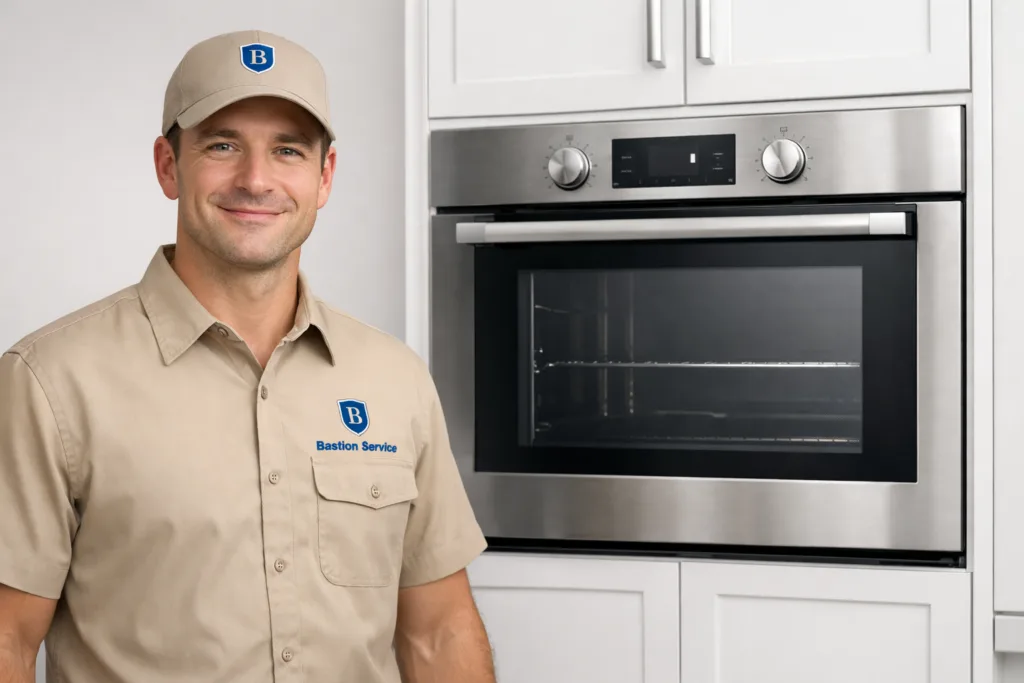
Bosch ovens are designed for precise cooking, so even small faults can show up quickly as undercooked centers, scorched tops, slow preheat, or unpredictable cycle behavior. The most efficient way to approach the problem is to match the symptom to the heating, sensing, door, or control system most likely involved.
How Bosch oven problems usually show up in a home kitchen
Many oven complaints sound similar at first, but they do not always come from the same part. A unit that will not heat at all is a different repair path from one that heats inconsistently, overshoots temperature, or shuts off during baking. Bosch models also rely heavily on electronic controls, so a fault can involve both a heating component and the board that should be activating it.
That is why symptom pattern matters. Knowing whether the oven fails every cycle, only after preheating, only in convection mode, or only after self-cleaning helps narrow the likely cause much faster than replacing parts based on guesswork.
Common Bosch oven symptoms and what they may indicate
Oven will not heat
If the display powers on but the cavity stays cold, the issue may involve a failed bake element, broil element, igniter on gas models, thermal protection component, wiring fault, or control relay problem. In some cases, the oven appears to start normally but never energizes the heating circuit.
This kind of failure is usually straightforward to notice because preheat never completes or food remains raw no matter how long it stays inside. When that happens repeatedly, it is usually time to stop testing recipes and have the heating system checked directly.
Uneven baking
Uneven baking often shows up as one side browning faster than the other, tops cooking too quickly, or baked goods that look done outside but stay soft in the middle. On a Bosch oven, that may point to a weak heating element, temperature sensor drift, fan or convection issue, or poor door sealing.
Homeowners sometimes spend time changing pans, rotating trays, or adjusting rack positions, but if the pattern continues across different meals, the appliance is likely not regulating heat the way it should.
Slow preheating
When preheat takes noticeably longer than it used to, one of the heating components may be weakening. The oven can still seem usable for a while, but slow preheat often becomes a more obvious heating failure over time. Sensor problems and control issues can also delay temperature rise, especially when the oven is misreading actual cavity temperature.
Temperature swings during cooking
If your Bosch oven gets too hot, drops heat unexpectedly, or cannot hold a stable baking temperature, the cause may be a sensor fault, control board issue, relay problem, or intermittent wiring connection. This is especially frustrating for roasting and baking because results become inconsistent even when recipes have worked before.
Wide temperature swings are not just an inconvenience. They can make the appliance unreliable for everyday cooking and may signal a fault that worsens with continued use.
Controls not responding or error messages appearing
Flashing codes, a frozen display, beeping without a clear reason, or buttons that stop responding can all point to a control-side problem. Sometimes power cycling the oven changes the behavior temporarily, but repeated resets rarely solve the underlying issue if the board, sensor circuit, or communication path is failing.
Door problems and self-clean related issues
A Bosch oven door that will not close correctly, will not unlock, or no longer seals tightly can affect both safety and cooking performance. Problems that begin after a self-clean cycle may involve the latch system, heat-stressed wiring, switches, or electronic controls. A poor seal can also mimic a heating problem because heat escapes before the cavity reaches or holds the target temperature.
Signs the issue may be more than a simple heating part
Some repairs involve a single failed component, but others point to a broader control or electrical issue. A few signs that the problem may be more involved include:
- The oven heats sometimes but not every cycle
- Broil works but bake does not, or the reverse
- The display works while temperature remains inaccurate
- The unit shuts off mid-cycle without warning
- Problems started immediately after self-cleaning
- Error codes return after resetting power
Intermittent symptoms are especially important because they can be harder to pin on one obvious part. In those cases, proper testing matters more than assumptions.
When to stop using the oven
Some issues can wait a short time for service, while others call for immediate caution. Stop using the oven if it is tripping the breaker, producing a burning smell, sparking, shutting off unpredictably, or failing to regulate heat well enough to make normal cooking uncertain. If a gas model struggles to ignite repeatedly, avoid repeated restart attempts.
If there is a strong or persistent gas odor, do not treat it as a routine repair situation. Leave the area if needed and contact the gas utility or emergency service first. Appliance repair should come only after the immediate safety concern is addressed.
Repair or replace: what usually makes sense
For many Bosch ovens, repair is still worthwhile when the failure is limited to an igniter, sensor, heating element, latch part, fan motor, or a single control-related component. These are often targeted repairs that can restore normal cooking performance without replacing the whole appliance.
Replacement becomes more likely when the oven has multiple active problems, significant electronic failure, a history of repeated breakdowns, or damage that affects overall reliability. The real question is not just whether the oven can be made to run again, but whether the repair is likely to restore stable daily use for your household in Palms.
What homeowners in Palms should pay attention to before service
If you are scheduling Bosch oven repair in Palms, it helps to note exactly what the oven is doing. Useful details include whether the problem affects bake, broil, or convection; whether preheat completes; whether the display shows an error; and whether the issue began suddenly or got worse gradually.
Even simple observations can help narrow the likely cause. For example, food that consistently browns on top but stays underdone below may point in a different direction than an oven that never gets warm at all. A focused diagnosis based on the actual symptom pattern is the best way to determine whether the fix is minor, electrical, or control-related.
Why accurate diagnosis matters with Bosch ovens
Bosch cooking appliances often combine precision temperature management with electronic safety and control features, which means one failed part can affect how other systems behave. Replacing parts one by one without confirming the fault can lead to unnecessary cost and lost time.
The most useful service guidance should explain what failed, how it was identified, whether continued use could cause more damage, and whether the recommended repair matches the condition of the oven overall. That gives homeowners a solid basis for deciding what to do next instead of simply hoping the symptom goes away.