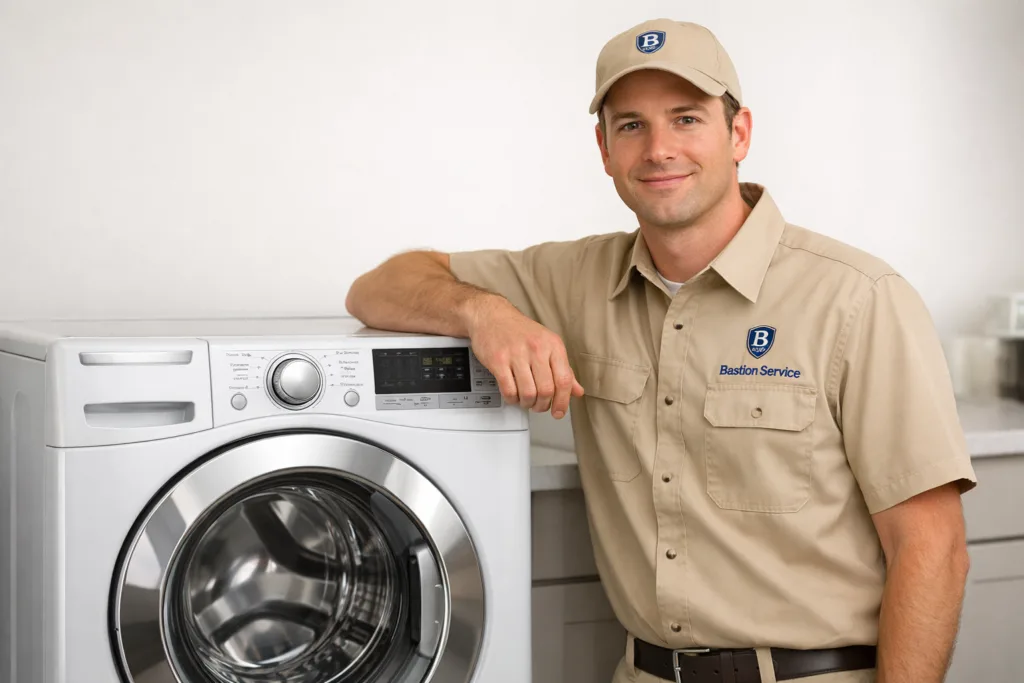
Washer problems usually show up as a pattern rather than a single failure. Clothes come out wetter than usual, the cycle stalls at the same point, the machine gets louder over time, or water appears around the cabinet only during certain parts of the wash. Paying attention to when the symptom happens can help narrow down whether the issue is related to draining, spinning, filling, balance, or controls.
Common Kenmore washer problems in Palms homes
A washer that hesitates, leaks, or struggles to finish loads can quickly disrupt the whole laundry routine. In many Palms households, the most common issues involve draining, spinning, vibration, filling, or cycle completion. The symptom itself matters, but so does the timing. A washer that leaks only while draining points to different causes than one that leaks while filling, and a machine that spins briefly before stopping tells a different story than one that never enters spin at all.
Washer will not start or stops mid-cycle
If the washer appears to have power but will not begin, the problem may involve the lid switch, door lock, user interface, timer, or main control. On some models, the cycle may start and then stop once the machine fails a lock check or cannot move to the next step. A mid-cycle shutdown can also happen when the washer senses a drain problem, an out-of-balance condition, or a fault in the drive system.
Useful clues include whether the lid locks, whether the display changes, and whether you hear any clicking, humming, or brief motor movement before it stops. Those details help separate a control issue from a mechanical one.
Washer fills but does not agitate or spin
When the tub fills normally but the load just sits in water, the likely causes often involve the drive system. Depending on the Kenmore model, that may mean a worn coupling, damaged belt, failed motor component, shift actuator problem, or control fault that prevents agitation or spin from engaging.
This symptom is often mistaken for a simple reset issue, but repeated attempts usually do not solve it. If the washer continues filling and draining without properly moving the load, clothing may come out poorly washed and excessively wet.
Washer will not drain
Standing water in the tub usually points to a drain pump problem, a blockage in the drain path, a kinked hose, or a control issue that keeps the cycle from advancing into drain. If the washer hums without removing water, the pump may be obstructed or failing. If there is no drain response at all, the machine may not be getting the signal to continue because of a lock, wiring, or board issue.
Leaving water inside the machine for long periods can create odor problems and make it harder to remove the load without a mess, so a no-drain condition is worth addressing promptly.
Washer shakes, bangs, or walks during spin
Not every loud spin cycle means something is broken, but repeated pounding, cabinet movement, or severe vibration usually deserves attention. Top-load and front-load Kenmore washers use different support systems, and worn suspension rods, shocks, counterweight issues, or an out-of-level installation can all lead to unstable spinning.
If the machine has gradually become noisier and less stable, worn support parts are more likely than a one-time unbalanced load. Continued use in that condition can add strain to the tub, cabinet, and drive components.
Leaks during fill, wash, or drain
Where and when water appears is one of the most useful clues. A leak during fill may involve inlet hoses, a valve, or the dispenser path. Water appearing under the washer during agitation or wash can suggest internal hose issues, tub problems, or loose connections. A leak that shows up mostly during drain often points toward the pump or drain hose.
Front-load models may also leak from the door boot or from debris preventing a proper seal. Even a small recurring leak should be taken seriously before it affects flooring, trim, or the area around the washer.
Poor wash results, residue, or incomplete rinsing
If clothes are not coming out clean, detergent remains in the load, or the rinse seems weak, the issue may not be the detergent alone. Restricted water flow, a failing inlet valve, load sensing problems, cycle-selection issues, or agitation problems can all reduce wash performance. In some cases, the washer is technically completing the cycle while never moving enough water or mechanical action through the load.
This type of complaint is especially common when the machine still seems to run, making it harder to tell that a repair is needed. If wash quality has clearly dropped without any change in detergent or loading habits, the machine may not be operating as intended.
Burning smell, grinding, or loud noise
Grinding, scraping, roaring, or a hot electrical smell usually means the washer should not keep running until the cause is identified. Noise can come from bearings, the pump, drive parts, loose hardware, or foreign objects trapped in areas they should not be. A burning odor may point to motor strain, friction from worn components, or an electrical fault.
When a washer becomes dramatically louder from one week to the next, that often signals a failing moving part rather than normal age. Catching that early can help prevent a smaller repair from turning into a larger one.
Why model-specific diagnosis matters
Kenmore washers cover a wide range of designs, including traditional top-load units, high-efficiency top-load models, and front-load machines. Two washers with the same brand name can behave very differently because they use different locking systems, drain setups, control platforms, and drive assemblies.
That is why symptom-based testing matters. A no-spin complaint on one model may trace back to suspension or balance sensing, while on another it may be a motor control or latch problem. Matching the symptom to the model design helps avoid unnecessary parts replacement and gives a better sense of whether the repair is straightforward or more involved.
When it makes sense to stop using the washer
Some issues are inconvenient but stable for a short time. Others can worsen quickly or create a mess in the laundry area. It is usually best to pause use if you notice any of the following:
- Water leaking onto the floor
- Strong burning or electrical odors
- Loud grinding, metal-on-metal noise, or repeated banging
- The washer tripping power
- Standing water that will not drain
- The tub failing to spin while the motor hums or strains
Trying to force a result with extra cycles can increase wear on the pump, motor, belt, lock system, or control. If the machine is already showing signs of stress, stopping early often prevents added damage.
Repair or replace?
For many households in Palms, repair is worth considering when the problem is limited to one serviceable component and the rest of the washer is in solid condition. That often includes pumps, inlet valves, door or lid lock parts, hoses, suspension components, and some drive-related repairs.
Replacement becomes more likely when the washer has major tub or bearing damage, severe rust, multiple failing systems, or an expensive control problem combined with age-related wear. The deciding factor is rarely the symptom alone. It is the combination of the exact failure, the machine’s overall condition, and the expected value of the repair.
What to check before scheduling service
A few simple observations can make the problem easier to identify. Note whether the washer fills, locks, agitates, drains, and spins. Pay attention to whether the issue happens on every load or only on certain cycles. If the machine displays an error code, write it down. If there is a leak, notice where the water appears and whether it happens during fill, wash, drain, or spin.
It also helps to avoid oversized loads while troubleshooting. Heavy loads can mimic spin and balance problems or make an existing suspension issue look worse. If the machine is already struggling, repeated attempts with soaked laundry can place even more strain on the system.
Kenmore washer repair focused on the actual symptom
Effective Kenmore washer repair in Palms starts with understanding what the machine is doing, what part of the cycle is affected, and whether the failure is isolated or part of a larger wear pattern. Whether the issue is poor wash results, draining trouble, leaks, fill problems, heating-related cycle issues, or a washer that simply will not finish, the most useful next step is diagnosis tied to the exact symptom and condition of the appliance.
For homeowners in Palms, that approach makes it easier to decide whether repair is the practical choice and what to expect from the next step.