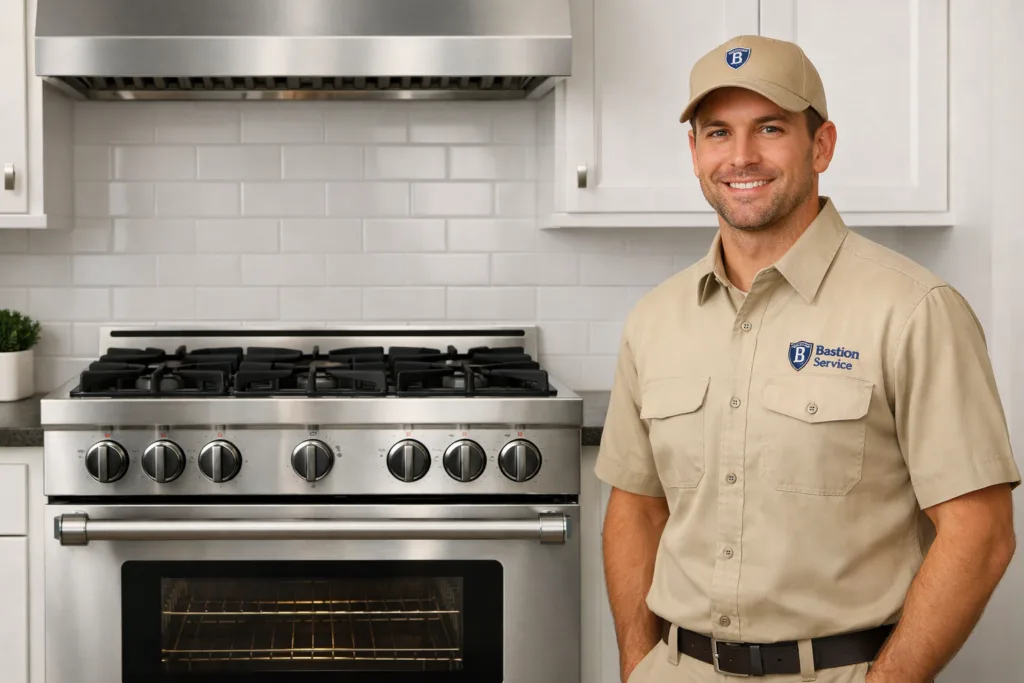
Cooking problems with a Viking oven usually show up in patterns. One meal takes far longer than expected, baked foods brown unevenly, or the oven display responds but the cavity never reaches the selected temperature. Reading those patterns correctly matters because similar symptoms can come from very different parts, including the igniter, bake element, broil element, sensor, control, fan, or door seal.
What the symptom usually points to
A Viking oven is designed to heat consistently, so changes in preheat time, baking results, or control behavior are often a sign that one system is no longer working as it should. The most efficient repair path starts with what the oven is actually doing, not with guessing which part to replace first.
Oven will not heat
If the oven stays cold or only gets slightly warm, the failure is often tied to the ignition or heating circuit. On gas models, a weak igniter may glow but still fail to draw enough current to open the gas valve properly. On electric models, a failed bake element or broil element can leave the oven unable to generate normal cooking heat. A damaged sensor or control issue can also prevent proper heating.
Homeowners in Palms often notice this first when food takes much longer to cook than normal, even though the display appears to be operating correctly.
Slow preheat
A Viking oven that eventually heats but takes too long to get there may have a weak igniter, a partially failing element, poor temperature feedback from the sensor, or a door that is leaking heat. Slow preheat can also point to a convection-related problem if the model relies on air movement to distribute heat efficiently.
This symptom is worth addressing early. An oven that still works but preheats slowly can become less reliable over time, and repeated strain on failing components may lead to a larger repair later.
Uneven baking or temperature swings
If one rack cooks faster than another, the rear of the oven browns too quickly, or the center of a dish stays underdone, the issue may involve temperature regulation rather than complete heat loss. Common causes include a drifting temperature sensor, weak heating output, a convection fan problem, or a control board that is not cycling heat correctly.
- Cookies consistently darker on one side can point to poor circulation or uneven element performance.
- Roasts taking longer than expected may suggest the oven is running cooler than the set temperature.
- Frequent overcooking after normal recipes can mean the oven is overshooting temperature.
Error codes, beeping, or touch controls not responding
When the display flashes an error, resets on its own, or stops accepting commands, the problem may be in the electronic control, keypad, sensor circuit, or appliance wiring. Intermittent behavior matters here. If the oven works sometimes and fails at other times, that usually means the fault is progressing rather than resolving on its own.
Broiler works but baking does not
This is a useful clue. If the broil function still operates but the oven cannot bake normally, the bake circuit is a likely suspect. That can include the bake element, igniter, wiring, relay, or control output tied specifically to the bake function.
Door not closing properly
A worn gasket, bent hinge, or misaligned door can let heat escape during preheat and cooking. That often shows up as long cook times, unstable temperatures, and poor browning. Even when the heating system is otherwise functional, a sealing problem can make the oven perform as if a major internal part is failing.
When to stop using the oven
Some problems are frustrating but manageable for a short time. Others should be addressed before the oven is used again.
- Stop using the oven if it trips the breaker repeatedly.
- Stop using it if the display flickers, shuts off, or shows repeated error codes.
- Pause use if the oven overheats, burns food unusually fast, or cannot regulate temperature.
- On gas models, delayed ignition or failure to light properly should be checked promptly.
If there is a strong or persistent gas smell, do not continue troubleshooting the appliance. Leave the area if needed and contact the gas utility or emergency service first.
Why Viking oven issues can be misleading
Premium ovens often have symptoms that look more severe than they are. An oven that seems completely unreliable may still need only one failed component replaced. The opposite can also happen: a problem that appears minor, such as occasional slow preheat, may be the first visible sign of a part that is close to complete failure.
That is why a proper diagnosis should include more than checking whether the oven powers on. Useful testing looks at heating performance, temperature response, sensor readings, cycling behavior, and whether the failure is isolated to one function or affecting the appliance more broadly.
Repair or replace?
For many households in Palms, repair is still the practical choice when the issue is limited to a defined part such as an igniter, sensor, element, fan motor, thermostat-related component, or door hardware. If the oven is otherwise in solid condition and the cavity, controls, and electrical system have not shown multiple ongoing faults, repair is often worthwhile.
Replacement becomes a more serious consideration when several systems are failing at once, the unit has a long history of repeat problems, or there is substantial wear that makes future reliability uncertain. The decision usually comes down to the condition of the whole appliance, not just the part that failed today.
What to check before scheduling service
A few observations can make service more efficient and help narrow down the likely cause:
- Does the oven fail in bake mode, broil mode, or both?
- Is preheat slow every time or only sometimes?
- Are temperatures consistently too low or too high?
- Does the issue appear with convection on, conventional bake, or all settings?
- Has the oven shown any recent error codes, beeping, or display resets?
- Does the door close tightly and evenly?
Even simple notes like “broiler works but bake does not” or “preheat takes 25 minutes instead of 10” can help identify the most likely failure path faster.
What homeowners in Palms usually want resolved
Most people are not looking for technical detail as much as a straightforward answer to a few practical questions: Is the oven safe to use? Can the temperature be trusted? Is this likely to stay a one-part repair, or is it part of a larger control problem?
When a Viking oven starts disrupting everyday cooking, service is usually most helpful before the problem turns into repeated ruined meals, inconsistent results, or a complete loss of heat. A focused inspection can show whether the issue is contained to one component or whether the oven is developing broader electrical or control-related faults.