
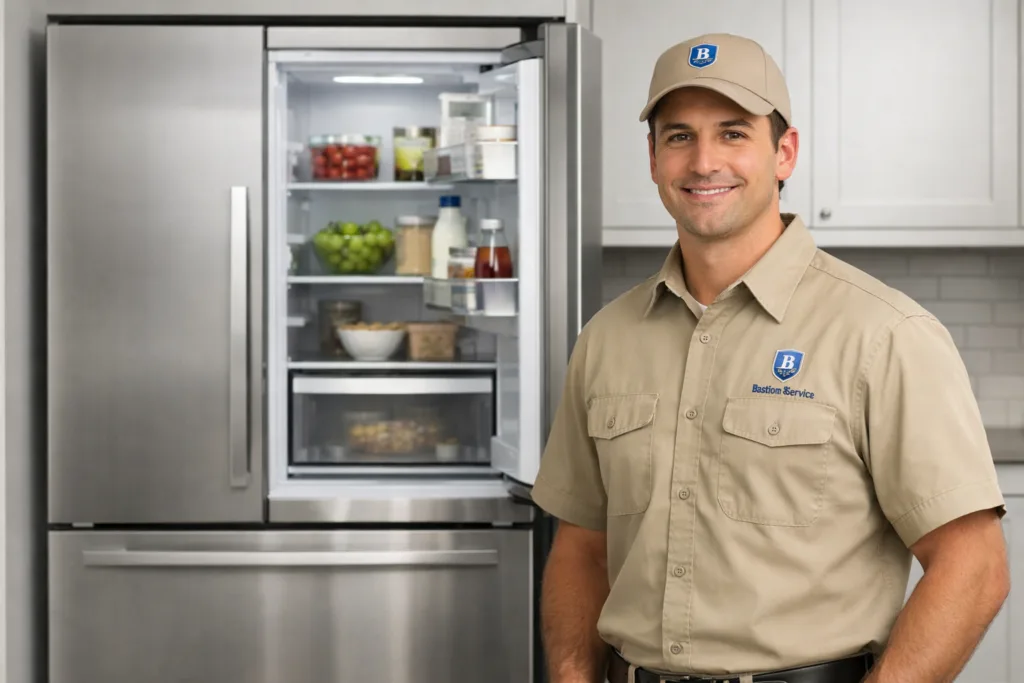




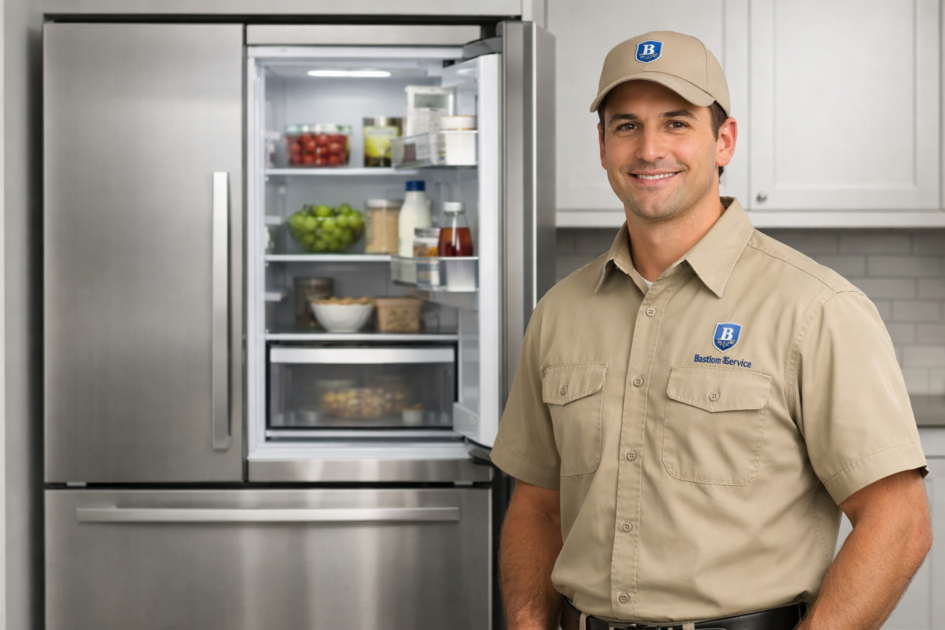
Appliance problems are easier to solve when the symptom is described clearly instead of being treated as a general breakdown. A dishwasher that hums but does not drain, a refrigerator that cools unevenly, or an oven that heats slowly each point to different systems. For Fisher & Paykel units in Inglewood homes, that distinction matters because similar complaints can come from very different causes.
For specific Fisher & Paykel appliance paths in Inglewood, review Fisher & Paykel Refrigerator Repair in Inglewood, Fisher & Paykel Freezer Repair in Inglewood, and Fisher & Paykel Wine Cooler Repair in Inglewood.
Most household appliances fail in recognizable patterns involving power, controls, airflow, drainage, ignition, heating, sealing, or temperature sensing. Paying attention to what the appliance does before it stops, during a cycle, and after it shuts off often reveals whether the issue is likely isolated or part of a larger mechanical or electrical problem.
How Fisher & Paykel appliances usually show early trouble
Many units do not stop all at once. They begin with smaller changes that are easy to dismiss: longer run times, unusual noises, moisture where it did not appear before, inconsistent temperatures, or controls that respond intermittently. Those early signs are often the best warning that service should be scheduled before the fault spreads.
- Cooling appliances may start running longer, building frost, or warming unevenly.
- Dishwashers may leave residue, stop draining fully, or leak near the door.
- Cooktops and ranges may click repeatedly, heat slowly, or fail to regulate flame or temperature.
- Ovens may preheat poorly, bake unevenly, or show a display problem while still appearing to run.
When the symptom changes from occasional to consistent, the repair path usually becomes more urgent. That is especially true when food storage, water containment, or safe heating is involved.
Refrigerator and freezer symptoms that deserve prompt attention
Fisher & Paykel refrigerators and freezers often depend on steady airflow and accurate temperature feedback. When either system is disrupted, the appliance may still seem partly functional while food preservation declines. Homeowners may notice soft frozen food, warm spots in the fresh-food section, heavy frost, condensation, or a unit that never seems to cycle off.
A refrigerator that runs constantly is not always dealing with a major sealed-system failure. It may have dirty coils, a worn gasket, a fan issue, a defrost problem, or a sensor that is no longer reading accurately. On the other hand, a freezer that cannot maintain temperature or a refrigerator that is warm in both sections may indicate a more serious cooling-system concern.
Useful clues include:
- The freezer stays cold but the refrigerator section warms.
- Frost forms on the back wall or around stored items.
- You hear new fan noise, clicking, or buzzing.
- Water collects under drawers or near the door.
- The compressor seems to run almost nonstop.
Wine coolers can show similar patterns on a smaller scale. If bottles are not staying at a stable temperature, the cabinet develops condensation, or the display and actual cooling do not match, the issue may involve sensors, fans, controls, or door sealing.
Dishwasher problems: dirty dishes, standing water, and leaks
Dishwasher complaints often sound simple but can be misleading. “Not cleaning” may actually mean poor water fill, blocked spray arms, circulation trouble, detergent issues, or a heating problem. “Not draining” may point to a filter blockage, drain pump issue, hose restriction, or a problem later in the cycle sequence.
Leaks are especially important to take seriously. Even a slow drip from the door area or underneath the machine can affect nearby flooring and cabinetry. If the dishwasher is leaving water in the tub, stopping mid-cycle, or making a harsh grinding noise, continued use can create secondary damage.
Before service, it helps to note where the cycle fails:
- Does it fill with water?
- Does the wash action begin?
- Does it stop before draining?
- Are dishes wet but not clean, or clean but still cold and poorly dried?
Those details often separate a circulation problem from a drain issue or a control-related fault.
Cooktop and range issues that affect daily use
Cooking appliances usually make their problems known quickly because performance changes are obvious. Gas burners may click repeatedly, ignite late, burn unevenly, or fail to hold a steady flame. Electric elements may heat partially, cycle unpredictably, or stop responding altogether. On ranges, the top may work while the oven does not, or the opposite may happen.
Repeated clicking on a gas cooktop can be caused by moisture, misalignment, ignition component wear, or switch problems. Weak flame quality may indicate burner-head issues, blockage, or gas-flow irregularities. Electric heating problems may come from an element, infinite switch, wiring fault, or main control failure.
If there is a persistent gas odor, the appliance should not remain in normal use until the cause is identified. Even when the issue appears minor, unreliable ignition and unstable burner operation can make routine cooking frustrating and less safe.
Oven performance problems and what they usually mean
Ovens often fail in ways that look like temperature problems first. Food bakes unevenly, preheating takes too long, the broiler works but bake does not, or the display appears normal even though the cavity never reaches the selected temperature. In many cases, the difference between “slow heating” and “no heating” is an important clue.
Common causes include a failing bake element, igniter weakness on gas models, sensor drift, relay issues, door seal problems, or electronic control faults. A unit that still reaches temperature but cooks inconsistently may have a calibration or circulation issue. A unit that never gets hot enough is more likely dealing with a direct heating-component failure.
Watch for signs such as:
- Preheat takes much longer than usual.
- The top of food browns while the center remains undercooked.
- The oven says it is ready before it actually is.
- The broil function works but bake does not.
- The door does not close tightly or heat escapes around the seal.
Why the same symptom can lead to different repairs
One reason appliance troubleshooting can be frustrating is that broad complaints do not always identify the failed part. A refrigerator that is “not cooling” could have an airflow issue, a defrost failure, a bad fan, a sensor problem, or a sealed-system defect. A dishwasher that “won’t start” could be dealing with power supply, door latch, control, or user-interface failure. A range that “won’t heat” may have one failed component or a larger control issue.
That is why a practical repair plan starts with behavior, not assumptions. Knowing whether the unit fails every time or only sometimes, whether other functions still work, and whether the issue appeared suddenly or worsened over time can change the diagnosis completely.
When to stop using the appliance while waiting for service
Some faults are inconvenient but manageable for a short period. Others should move to the top of the list because they can worsen damage or create safety concerns. In most homes, it makes sense to stop regular use when:
- The refrigerator or freezer can no longer hold safe temperatures.
- The dishwasher is actively leaking or backing up water.
- The oven or range shows unstable heating, electrical odor, or ignition failure.
- The appliance trips power, shuts off unexpectedly, or overheats.
- There is visible sparking, repeated fault behavior, or strong gas smell.
Even when the appliance still runs, unstable operation can place extra strain on motors, fans, pumps, controls, and heating components. Catching the problem earlier often prevents a smaller repair from turning into a broader one.
How homeowners in Inglewood can prepare for service
A few simple observations can make service more efficient. Try to note whether the issue is constant or intermittent, whether it began after a power interruption, whether any display code appears, and whether the appliance fails at the same stage each time. If noise is part of the complaint, identify whether it happens at startup, during operation, or near the end of a cycle.
For refrigeration, note which compartment is affected first. For dishwashers, identify whether the machine fills, washes, drains, and dries. For ovens and ranges, describe whether the problem affects one burner, all burners, bake, broil, or temperature consistency. These symptom-based details are often more useful than a general description like “not working right.”
Repair or replace: what usually makes the decision clearer
Most homeowners do not decide based on brand alone. The better question is whether the fault is isolated and repairable, or whether the appliance has multiple active problems affecting major systems. A targeted issue in an otherwise solid appliance can make repair the sensible choice. Replacement becomes more likely when the failure is extensive, repeat problems are stacking up, or restoring reliable operation no longer makes practical sense.
That is especially true with cooling appliances, where the difference between a fan or sensor issue and a sealed-system problem can be significant. With cooking appliances, a single failed igniter or element is very different from widespread control or wiring failure. With dishwashers, a drain or circulation repair is not the same as a machine with chronic leaks and multiple functional issues.
Choosing the next step for a Fisher & Paykel appliance in Inglewood
The most useful approach is to look at the exact symptom, how long it has been happening, and whether continued use risks food loss, water damage, or unreliable heating. Fisher & Paykel refrigerator, dishwasher, cooktop, oven, range, freezer, and wine cooler problems often become easier to sort out once the pattern is clear.
For homeowners in Inglewood, the goal is not just getting an appliance running again for a day or two. It is understanding what failed, whether the issue is isolated or developing, and whether repair is likely to return the unit to stable household use.


