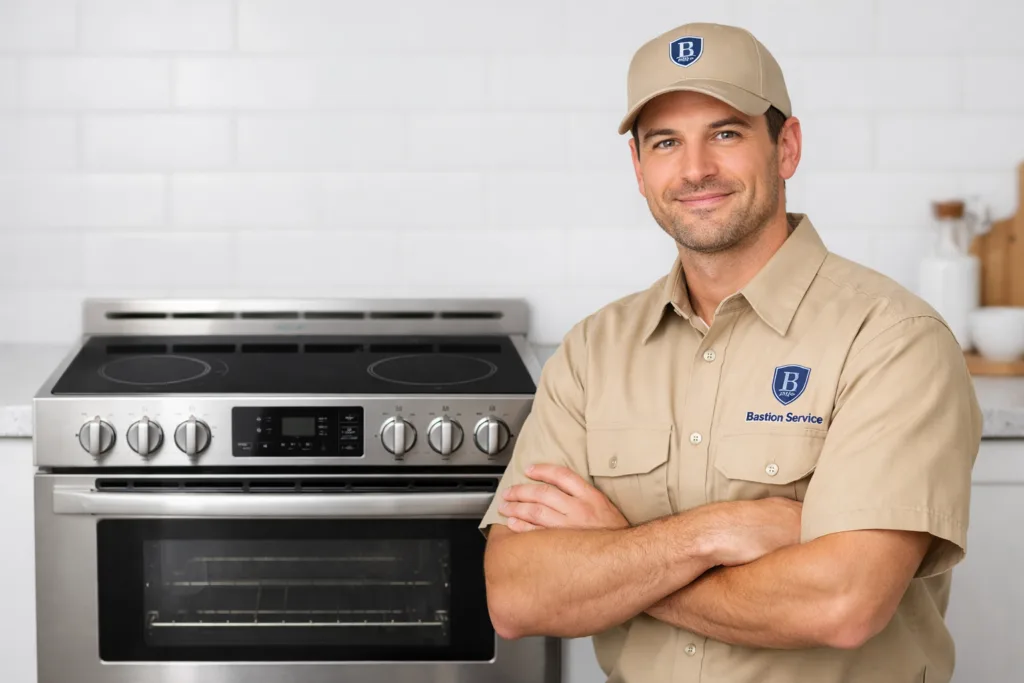
Range problems rarely stay minor for long. A burner that works only some of the time, an oven that preheats slowly, or controls that respond inconsistently can turn ordinary cooking into trial and error. With Electrolux models, the most useful approach is to match the repair plan to the exact symptom instead of assuming every no-heat or ignition issue has the same cause.
What different Electrolux range symptoms usually point to
Ranges combine several systems in one appliance: surface cooking, oven heating, ignition, temperature sensing, wiring, and electronic controls. Because of that, similar complaints can come from very different failures. A burner that clicks constantly is not diagnosed the same way as an oven that overshoots temperature, even if both started around the same time.
Paying attention to how the problem behaves helps narrow the issue faster. Does the failure happen every time or only after the range has been in use for a while? Is one burner affected or several? Does the oven eventually heat, or stay cold from the start? Those details often matter as much as the complaint itself.
Surface burners that will not light, will not heat, or heat unevenly
On gas Electrolux ranges, one common complaint is a burner that clicks but does not ignite. That can happen because of a dirty or blocked burner head, a cap that is out of position, moisture around the ignition area, or a worn ignition component. If the flame is weak or uneven after lighting, the burner ports may be restricted or the flame is not distributing correctly.
On electric models, surface burner trouble may show up as an element that stays cold, cycles incorrectly, or only reaches one temperature no matter where the control is set. In those cases, the problem may involve the element, receptacle, switch, or related wiring.
- One burner fails while the others work normally: often an isolated component problem.
- Burner works intermittently: may point to a loose connection, failing switch, or ignition issue.
- Burner heats too high or too low: often tied to control regulation rather than the cookware itself.
- Repeated clicking after ignition: can indicate ignition parts that need attention, not just a temporary nuisance.
Oven not heating properly or taking too long to preheat
If the oven is slow to preheat, does not reach the selected temperature, or cooks unevenly from rack to rack, the issue may involve the igniter on gas models, the bake or broil element on electric models, the temperature sensor, or the electronic control. What seems like “weak heating” to a homeowner can actually be a timing problem, where one part is functioning but no longer operating within the range needed for normal cooking performance.
In West Los Angeles homes, this often becomes noticeable when familiar meals suddenly need extra time or come out inconsistent. Cookies brown unevenly, casseroles stay cool in the center, or roasted dishes finish too quickly on one side. Those symptoms are useful because they help distinguish between an airflow or temperature-reading issue and a total heating failure.
Oven overheating or shutting off unexpectedly
Not all heating problems mean the oven runs too cool. Some Electrolux ranges overheat, scorch food, or continue climbing past the selected temperature. Others shut off mid-cycle or stop heating after preheat. These patterns can suggest a sensor problem, relay failure, control fault, or another issue affecting temperature regulation.
When overheating starts, it is best not to keep testing the oven repeatedly. Excess heat can stress other parts, damage cookware, and make the appliance less predictable from one use to the next.
Control panel and display problems
A range may still power on while the control side begins to fail. Homeowners sometimes notice buttons that stop responding, a display that flashes or resets, error behavior that comes and goes, or oven settings that do not start correctly. These issues may come from the user interface, wiring connections, or the main control system.
Intermittent electronic faults are especially frustrating because they can look resolved for a day or two, then return during normal cooking. If the display is unstable or settings do not respond consistently, it is usually better to address it before the range becomes completely unusable.
Signs the problem is getting more serious
Some range issues stay limited to convenience. Others signal a condition that should not be ignored. The following warning signs usually mean it is time to stop experimenting and have the appliance evaluated:
- Burners that spark repeatedly or fail to ignite in a normal amount of time
- Oven temperatures that are far off from the setting
- Heating that cuts in and out during cooking
- Controls that lock up, reset, or show erratic behavior
- Visible sparking, breaker trips, or the smell of overheated electrical parts
- Multiple functions failing at once instead of a single isolated symptom
If there is a strong or persistent gas smell, do not continue using the range. Leave the area if necessary and contact the gas utility or emergency service first, then arrange appliance repair after the safety issue has been addressed.
When repair usually makes sense
Many Electrolux range problems are repairable when the failure is limited to a serviceable part such as an igniter, surface element, switch, sensor, burner-related component, or control interface part. If the appliance is otherwise in solid condition and the issue is specific rather than widespread, repair is often the more reasonable path.
Replacement becomes more likely when the range has several major problems at once, has severe wiring damage, has chronic repeat failures, or is showing overall wear beyond a single repair. The right decision depends less on one rule of thumb and more on the condition of the appliance as a whole.
What homeowners can notice before scheduling service
You do not need to disassemble anything to make a service visit more productive. A few simple observations can help define the problem:
- Whether the issue affects the oven, a surface burner, or both
- Whether the failure is constant or intermittent
- If the problem started suddenly or got worse over time
- Whether the display shows unusual behavior or error patterns
- If the appliance trips power or makes unusual sounds while heating
Even small details can help separate an ignition fault from a temperature regulation issue or a control problem. That leads to a more efficient diagnosis and a clearer repair recommendation.
What a service visit should answer
For most households in West Los Angeles, the main questions are straightforward: what part has failed, whether related components were affected, whether the range can be used safely before repair, and whether fixing it is worth the cost. Good diagnosis should answer those points clearly, not leave the homeowner guessing after the appointment.
Electrolux range repair in West Los Angeles is most effective when it focuses on the actual failure pattern rather than broad assumptions. That helps avoid unnecessary parts replacement and gives homeowners a realistic next step for getting the range back to reliable daily use.