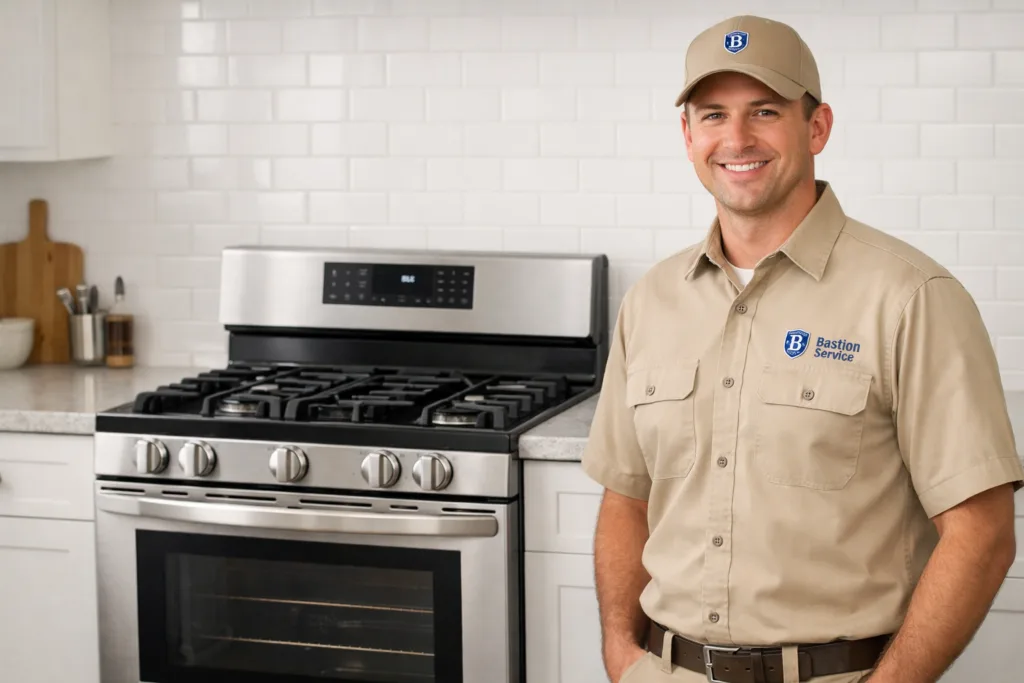
Cooking problems on an LG range often start as small annoyances and then become harder to ignore. A burner may click several times before lighting, the oven may need extra time to preheat, or the control panel may respond inconsistently. In most cases, the symptom itself gives useful clues about whether the issue is related to ignition, heat production, temperature sensing, controls, or the appliance power supply.
Common LG range problems in West Los Angeles homes
Ranges combine several systems in one appliance, so similar complaints can come from very different failures. That is why it helps to look closely at how the problem shows up during normal cooking instead of assuming one part is always to blame.
Surface burners that click, fail to ignite, or heat unevenly
On gas models, one of the most common complaints is repeated clicking without reliable ignition. Sometimes the cause is relatively simple, such as moisture near the igniter or a burner cap that is not seated correctly. In other cases, the issue can involve the spark ignition system, switch harness, or gas flow to the burner.
If the flame is weak, uneven, or only appears around part of the burner, clogged ports or burner assembly issues may be affecting performance. When a burner takes too long to light, many homeowners continue using it for weeks, but delayed ignition can lead to less predictable cooking and more wear on ignition components.
Oven not heating, heating slowly, or baking unevenly
An LG range oven that does not reach temperature can point to different failures depending on the model. Gas ovens may have an igniter that glows but does not draw enough current to open the gas valve properly. Electric models may have a weakened bake or broil element, wiring fault, sensor issue, or control problem.
Uneven baking is another common symptom. If the oven seems warmer on one side, takes too long to cook familiar meals, or browns inconsistently from rack to rack, the issue may involve temperature regulation rather than a total loss of heat. These are often the problems that frustrate households most because the range still appears to work, just not accurately.
Oven overheating or temperature drifting
Overheating is different from slow heating and should be treated differently. When an oven runs hotter than the set temperature, burns food unexpectedly, or swings from too cool to too hot, likely causes can include a faulty temperature sensor, control board problem, or relay issue. Temperature drift can also show up as preheating that seems normal at first but becomes unreliable during longer cooking cycles.
Display issues, error codes, and unresponsive controls
Modern LG ranges may also develop electronic faults that affect both convenience and cooking performance. A flashing display, repeated error code, keypad that stops responding, or clock that resets can indicate problems with the user interface, control board, wiring connections, or incoming power. Because control issues can overlap with heating complaints, it is important to evaluate the full symptom pattern rather than only the code on the screen.
What specific symptoms can tell you
Paying attention to the exact behavior of the range can make the repair path clearer.
- Clicking but no flame: often points to ignition, burner alignment, or gas delivery issues.
- No clicking at all on a gas burner: may suggest a switch, spark module, or electrical problem.
- Oven gets warm but never fully hot: commonly tied to an igniter, element, sensor, or control fault.
- Food suddenly cooks faster than expected: may indicate overheating or inaccurate temperature regulation.
- Only one function fails: for example, stovetop works but oven does not, which helps narrow the fault to a specific system.
- Intermittent operation: often suggests a part that is weakening rather than completely failed.
These details matter because a repair decision is much easier when the problem is defined by behavior, not just by the fact that the appliance is “not working right.”
When to stop using the range and arrange service
Some issues allow limited use while you decide on next steps, but others call for stopping immediately. A persistent or strong gas smell should always be treated as a safety concern. Repeated failed ignition, unusual sparking behavior, or signs that a burner is releasing gas without lighting should not be ignored.
On electric models, breaker trips, visible element damage, or controls that behave erratically during operation are also good reasons to stop using the appliance until it is checked. Even when the issue seems minor, continued use can turn a manageable repair into a more complicated one.
Why oven temperature problems are often misdiagnosed
Temperature complaints are among the easiest range issues to misunderstand. Many homeowners assume the oven sensor is always the cause, but poor temperature performance can also come from an igniter that is too weak, an element that heats inconsistently, a control that cycles incorrectly, or wiring that fails under load.
That is especially true when the oven still produces some heat. Partial function can be misleading. If the appliance preheats slowly, cooks unevenly, or behaves differently from one day to the next, the problem may be developing rather than fully failed. Testing the actual heating system is more useful than replacing parts based on guesswork.
Repair versus replacement for an LG range
Many LG range problems are still practical to repair, especially when the issue is limited to an igniter, element, sensor, switch, or other single component and the rest of the unit is in good condition. Repair becomes a less attractive option when the appliance has multiple major problems at once, has a long history of recurring failures, or needs an expensive control-related repair on top of other wear.
For most homeowners in West Los Angeles, the decision comes down to three things: the failed part, the overall condition of the range, and whether the repair is likely to restore consistent daily use. A proper diagnosis helps answer those questions without overcommitting to a repair that does not make sense.
What to have ready before a service visit
A few details can make troubleshooting more efficient:
- The full model number of the LG range
- Whether the problem affects the oven, cooktop, or both
- If the range is gas or electric
- Any error code shown on the display
- Whether the problem is constant or intermittent
- Any recent changes, such as a power outage, breaker trip, cleaning event, or spill near controls or burners
Even simple observations, like whether the igniter clicks continuously or whether the oven takes twice as long to preheat as it used to, can help narrow the likely cause.
Focused help for household cooking problems
When an LG range starts acting unpredictably, the most useful next step is to match the repair plan to the actual symptom, whether that means ignition trouble, unstable oven temperature, burner heating issues, or control failure. For households in West Los Angeles, that kind of symptom-based evaluation makes it easier to decide whether repair is the right move and what it will likely take to return the range to reliable use.