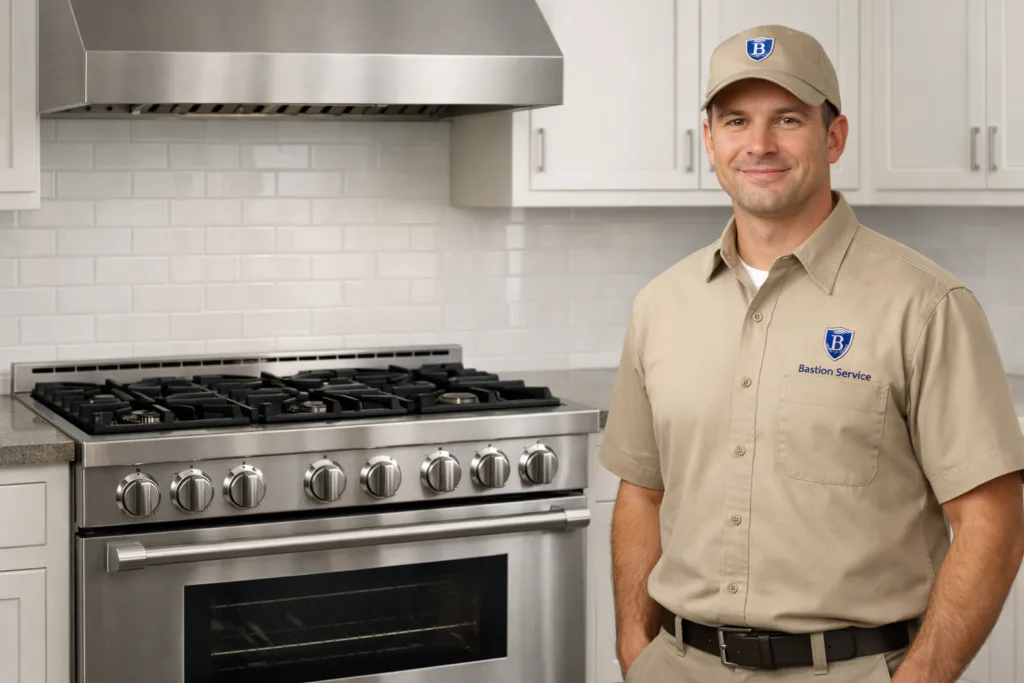
Range problems usually show up in the middle of normal cooking: a burner keeps clicking, the oven takes too long to preheat, or one rack comes out darker than the other. With Wolf units, those symptoms can overlap, so the most useful next step is to identify which system is actually failing before deciding on a repair.
Common Wolf range problems in West Los Angeles homes
Most household range issues fall into a few recognizable patterns. Surface burners may ignite slowly, fail to spark, click after the flame is lit, or produce an uneven flame. The oven may run too hot, too cool, heat inconsistently, or stop before cooking is finished. Some homeowners also notice a display problem, unresponsive controls, or intermittent shutdowns that seem to come and go.
Because a Wolf range combines high-heat cooking components with model-specific controls, one symptom does not always point to one obvious part. What looks like a burner problem may involve the ignition circuit, and what seems like poor oven performance may be tied to sensing or control behavior rather than the heating source itself.
Burners that click, spark, or fail to light
If a burner clicks continuously but does not ignite, several causes are possible. Burner cap misalignment, debris in the burner ports, moisture near the igniter, a worn spark component, or a switch issue can all create similar behavior. If the burner eventually lights after repeated clicking, that delay still matters because ignition should be prompt and consistent.
Weak or uneven flame patterns can also point to different causes. In some cases, the burner ports need attention. In others, the issue may involve gas flow regulation or wear in the burner assembly. A steady blue flame should look even around the burner; obvious gaps, fluttering, or poor heat output usually mean the range should be checked.
Oven heating that feels off from one meal to the next
When baking results become inconsistent, homeowners often describe the problem as “not heating right.” That can mean slow preheat, temperature drift, uneven browning, or food finishing much earlier or later than expected. These symptoms may come from a failing temperature sensor, a bake or broil heating problem, an ignition fault on gas models, or an electronic control issue.
Uneven cooking is especially frustrating because it may not happen every time. A range can appear normal during one use and still miss temperature targets during the next. If you find yourself rotating pans more often, adjusting recipes to compensate, or relying on guesswork instead of the set temperature, the oven likely needs service.
Displays, knobs, and controls that stop responding normally
Not every range problem starts with heat. Some begin with the controls. A display may flicker, fail to respond, reset unexpectedly, or show erratic behavior. In other cases, the oven selection works intermittently, or the unit powers on but does not carry out the chosen function.
These symptoms can stem from switch wear, wiring faults, failing control components, or heat-related stress inside the unit. Intermittent problems deserve attention because they tend to worsen over time and can be harder to sort out once multiple functions begin failing together.
Signs the range should be serviced sooner rather than later
It is usually time to schedule Wolf range repair when normal cooking becomes unreliable or the appliance starts behaving differently in a consistent way. Common warning signs include:
- Burners that repeatedly click or fail to ignite
- Flames that look uneven or weaker than usual
- Oven preheat times that have become noticeably longer
- Food that is undercooked on one shelf and overcooked on another
- Controls that respond inconsistently
- Unexpected shutdowns during baking or roasting
- Error behavior, flickering displays, or functions that stop mid-cycle
Putting off service can make diagnosis harder if the original symptom changes or begins affecting other functions. A small ignition issue can turn into a recurring usability problem, and an oven temperature issue can waste time, food, and energy long before the range stops working completely.
Safety concerns that should not wait
If you notice a strong or persistent gas smell, stop using the range immediately. Leave the area if needed and contact the gas utility or emergency services before arranging appliance repair. Appliance service should come after the immediate safety issue has been addressed.
Electrical concerns also matter. If the range trips power, sparks, shuts off abruptly, or shows signs of overheating around controls, discontinue use until it can be evaluated. Continuing to test the appliance after those symptoms appear can increase the risk of further damage.
Repair or replace a Wolf range?
Many Wolf range issues are worth repairing, especially when the problem is limited to one system such as ignition, sensing, heating, or a specific control function. If the appliance is otherwise in good condition and the fault is identifiable, repair is often the more sensible path.
Replacement becomes more likely when the range has multiple major issues at once, a long pattern of recent breakdowns, or broader wear that suggests reliability will remain poor even after the current repair. The decision depends on the age and condition of the unit, the failed components involved, and whether one repair is likely to restore stable everyday performance.
What helps homeowners make the right repair decision
For households in West Los Angeles, the best repair decisions are usually based on symptom pattern rather than assumption. A range that clicks nonstop may need a different solution than one that lights but burns unevenly. An oven that runs cool all the time is different from one that reaches temperature and then drifts. Those distinctions matter because they affect both the repair approach and the long-term outcome.
That is why a clear diagnosis and a practical repair plan are more useful than jumping straight to parts replacement. Once the actual cause is identified, it becomes much easier to decide whether the fix is straightforward, whether additional wear is involved, and whether the range is a good candidate for repair.
Focused help for Wolf cooking problems
Some homeowners start with the range because that is where the symptom is most obvious, but related cooking issues may overlap with nearby appliances or with how the oven portion of the unit is performing. If the problem appears isolated to the oven cavity or heating behavior, Wolf Oven Repair may be the more accurate service path. If the issue centers on the full cooking unit with burners and oven functions together, Wolf Range Repair is the appropriate choice.
For homeowners in West Los Angeles, matching the service to the exact symptom helps avoid delays and keeps the repair process more straightforward from the start.