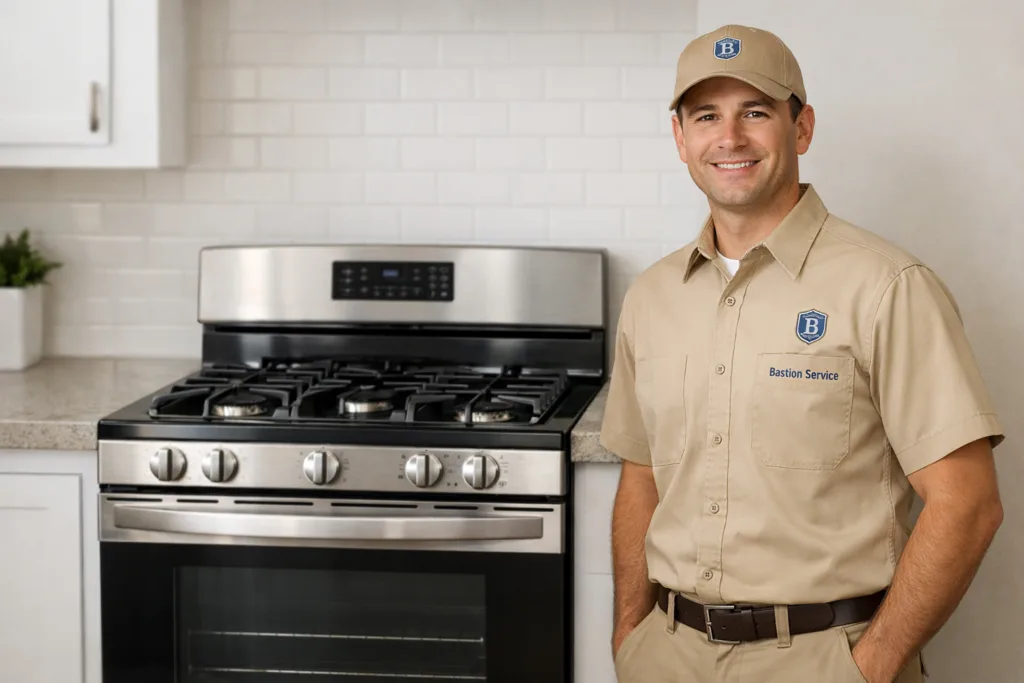
Small changes in cooking performance are often the first sign that a Kenmore range needs attention. A burner that lights on the second try, an oven that suddenly needs extra preheat time, or a temperature that seems slightly off can all point to parts that are wearing out or controls that are no longer reading accurately. Catching those issues early can help prevent more frustrating breakdowns during everyday meal prep.
How Kenmore range problems usually show up at home
Most homeowners notice symptoms before they see a complete failure. The range may still turn on, but it no longer works the way it should. That can make the problem easy to put off, especially if only one burner is affected or the oven still heats eventually. The trouble is that partial function often masks a deeper issue in the ignition, heating, sensor, or control system.
In West Los Angeles homes, the most useful approach is to match the exact symptom to the most likely failure area. That helps avoid replacing parts based on guesswork and gives a better sense of whether the repair is straightforward or more involved.
Common symptoms and what they may mean
Burner clicks but does not light
For gas ranges, repeated clicking without ignition can come from several different causes. Moisture around the burner, a misaligned burner cap, a dirty ignition area, or a faulty spark component can all create similar behavior. If the burner eventually lights but keeps clicking afterward, the problem may be tied to the switch or ignition circuit rather than the flame itself.
This is one of the most common complaints because it disrupts daily use quickly. It also tends to get worse over time rather than improve on its own.
Burner lights, but the flame is weak or uneven
A weak flame can make boiling slow and pan heating inconsistent. In many cases, the issue involves clogged burner ports, poor burner seating, or a problem affecting gas delivery to that burner. Uneven flame patterns can also cause hot spots in cookware, which makes stovetop cooking harder to control.
Oven will not heat or takes too long to preheat
When the oven stays cool, struggles to reach temperature, or needs much longer than usual to preheat, the cause may be a failed igniter, heating element, temperature sensor, or electronic control issue. Sometimes the oven appears to warm up normally but never gets hot enough to cook reliably. That usually points to a component that is still working, but no longer performing within the right range.
Uneven baking or unreliable temperature
If cookies brown more on one side, casseroles cook unevenly, or food is frequently underdone in the center, the range may have a temperature regulation problem. A weak bake element, inconsistent sensor readings, or cycling issues within the control system can all lead to results that feel unpredictable. This is especially frustrating because the oven may look functional while producing poor cooking results.
Display, keypad, or settings act erratically
Electronic symptoms often show up as delayed button response, flashing displays, random beeping, or temperature settings that do not match real oven performance. These problems can involve the control board, user interface, wiring, or the sensor information being sent back to the control. When controls become unreliable, it is harder to trust the range even if it still powers on.
Signs the problem is getting worse
Some range issues stay stable for a short time, but many gradually become more disruptive. Scheduling service makes sense when you notice any of the following:
- Ignition takes multiple attempts
- Clicking happens more often or continues after lighting
- Preheat times keep increasing
- One or more burners heat noticeably differently than before
- Food quality changes even when you use the same settings
- The control panel responds inconsistently
- The oven overheats, underheats, or shuts off unexpectedly
These patterns usually indicate that the problem is no longer isolated to normal wear and tear. Continued use can add strain to related parts and make the eventual repair broader than it needed to be.
Why the same symptom can have different causes
Range repairs can be deceptive because one symptom does not always point to one part. For example, an oven that is not heating properly could involve the igniter, bake element, broil support, sensor accuracy, wiring, or control function. A clicking burner could be caused by something simple like moisture or something more persistent in the ignition system.
That is why symptom-based diagnosis matters. It helps determine whether the issue is confined to one component, whether there are multiple failures, and whether the repair path makes sense for the condition of the appliance.
Repair or replace: what usually makes the decision easier
Many Kenmore range issues are worth repairing when the problem is limited to a burner component, heating part, igniter, sensor, or specific control-related failure. Repair is often the better choice when the appliance fits the kitchen well, the rest of the range is in solid condition, and the failure is clearly defined.
Replacement becomes more reasonable when several systems are failing at once, the range has recurring electronic trouble, or the cost of repair approaches the value of the appliance. Age and overall condition matter, but so does the nature of the current problem. A single failed part is very different from a pattern of multiple ongoing issues.
What homeowners can check before service
There are a few basic observations that can help clarify the problem without taking the range apart:
- Note whether the issue affects one burner or several
- Pay attention to whether the oven is slow to start or simply never gets hot enough
- Watch for error displays, unusual beeping, or inconsistent panel response
- Notice whether uneven cooking happens on every use or only at certain temperatures
- For gas burners, check whether the burner cap appears seated correctly after cleaning
These details can make the symptom pattern clearer and help narrow down the source of the failure.
What practical service looks like in West Los Angeles
For a household range, useful service means more than changing a part and hoping the symptom disappears. It means identifying whether the trouble is in ignition, heat production, temperature feedback, or controls, then judging whether the repair is likely to restore normal daily use. That kind of evaluation is especially important when the range still works part of the time, because partial operation can hide the real failure.
If your Kenmore range is no longer heating evenly, burners are misfiring, or the oven temperature cannot be trusted, getting the issue checked before it worsens is often the smartest next step for a West Los Angeles household.