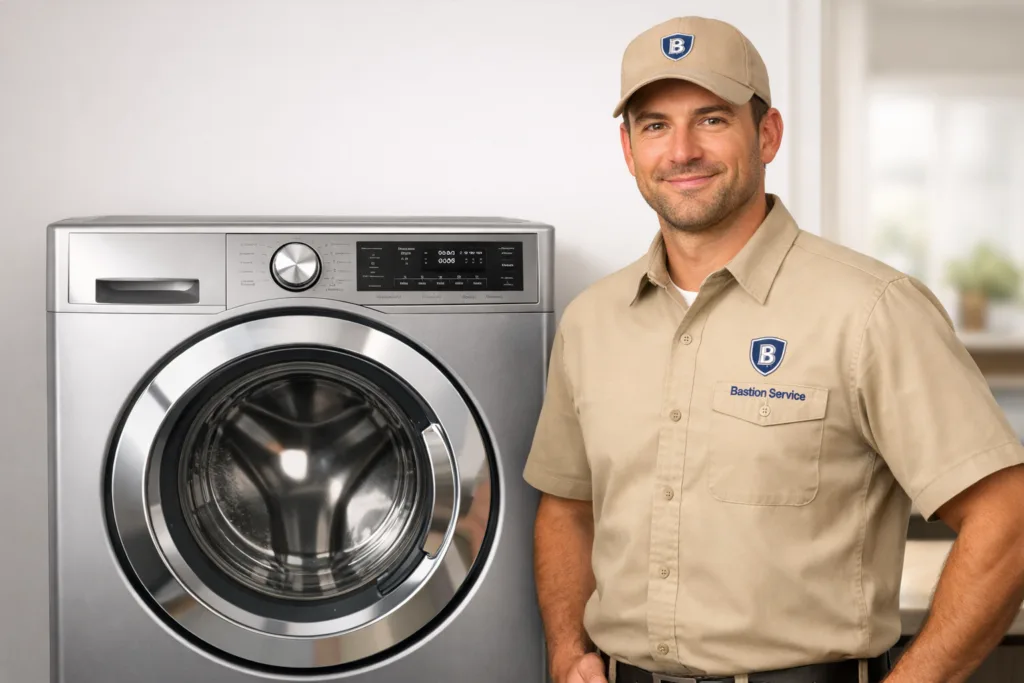
Electrolux washers can fail in ways that look similar on the surface but come from very different parts of the machine. A tub full of water, a locked door, damp clothes at the end of the cycle, or a sudden stop mid-wash may involve the drain system, door latch, control response, pressure sensing, or the drive components. For homeowners in West Los Angeles, the most effective repair path starts with identifying what the washer is actually failing to do.
Common Electrolux washer symptoms and what they may mean
Washer will not start
If the washer powers on but does not begin the cycle, the issue may be tied to the door lock assembly, control board response, touch panel input, or a condition the machine reads as unsafe for operation. In some cases, the machine appears dead even though the real problem is that it cannot confirm the door is secured.
When this happens consistently, it is usually more than a one-time interruption. Repeated attempts to restart the cycle rarely solve the underlying fault.
Washer stops in the middle of the cycle
A cycle that pauses, shuts down, or never advances to rinse or spin often points to a problem with draining, water-level sensing, lid or door confirmation, or control logic. Some Electrolux models will halt the cycle to protect the machine if they detect a condition that prevents the next step from running normally.
This is especially frustrating because the washer may seem to work part of the time, making the problem easy to misread as random. Intermittent behavior is still a real fault and usually becomes more frequent over time.
Not draining or leaving clothes soaked
One of the most common complaints is a washer that finishes with standing water or clothing that is still very wet. That symptom can come from a weak or blocked drain pump, a restriction in the drain path, a pressure switch problem, or a spin issue that starts after a drain failure.
If the drum is not reaching full spin speed, the clothing may come out heavy even when most of the water has left the tub. That is why a drain complaint and a spin complaint often need to be evaluated together.
Leaking water onto the floor
Leaks are easier to see than to trace. Water at the front of the washer may suggest a door boot or door-related seal issue, but it can also come from an internal hose, dispenser path, pump housing, or drain connection. A leak that appears only during fill may point in one direction, while a leak during drain or high-speed spin points in another.
Because water can travel inside the cabinet before it reaches the floor, the visible puddle is not always the source. That matters when deciding whether the problem is a hose connection, a pump issue, or a larger internal failure.
Loud noise, shaking, or banging in spin
Unusual sound during spin can come from worn suspension parts, an out-of-balance condition, a foreign object caught where it should not be, drive wear, pulley issues, or bearing trouble. If the washer begins moving excessively, knocks against surrounding surfaces, or sounds much harsher than normal, it is best to stop use until the cause is checked.
Continuing to run a washer that is banging hard in spin can worsen the damage and sometimes affects more than one component.
Odor, residue, or poor wash performance
If detergent is left behind, clothes do not rinse well, or the washer develops a persistent musty smell, the problem may involve drainage, water flow, dispenser performance, buildup, or incorrect water-level sensing. These symptoms are not always just maintenance issues. In some cases, they signal that the washer is not moving water through the cycle properly.
Why similar symptoms can have different causes
Modern Electrolux washers rely on several systems working together. A drain problem can cause a spin complaint. A door lock issue can make the machine look unresponsive. A control problem can interrupt a cycle in a way that feels mechanical. That overlap is why symptom-based diagnosis matters more than replacing the first part that seems related.
For example, a washer that will not spin might have a drive problem, but it could also be refusing to spin because it has not drained correctly. A leak seen near the front panel may not start there at all. Looking at the full symptom pattern usually gives a better answer than reacting to one visible sign.
Signs the washer should not keep running
Some washer problems can wait a short time for service, but others should be treated as stop-use issues. You should avoid normal operation if you notice any of the following:
- Water leaking onto the floor during any part of the cycle
- Grinding, scraping, or heavy banging sounds
- The drum not spinning correctly or not spinning at all
- A hot or electrical smell
- The washer repeatedly stopping with water left inside
- Frequent tripping of power during operation
Using the machine in these conditions can turn a single failed part into a more expensive repair, especially when water, vibration, or motor strain are involved.
Repair or replace: what usually makes the difference
Many Electrolux washer issues are still worth repairing when the problem is isolated and the rest of the machine is in solid condition. Drain pump failures, certain door-lock problems, hose leaks, and some control-related faults can often be sensible repairs for a household unit that has otherwise been performing well.
Replacement becomes more likely when the washer has multiple problems at once, major mechanical wear, bearing or tub damage, repeat control failures, or a repair estimate that no longer fits the age and condition of the machine. The decision is usually clearest after the failed system is identified rather than guessed from the symptom alone.
What a service visit should accomplish
A useful service visit should do more than confirm that the washer is acting up. It should narrow the failure to the system involved, explain why the symptom is happening, and clarify whether the repair is targeted or part of a broader decline in the machine. That helps homeowners in West Los Angeles make a better decision about moving forward.
This matters with laundry appliances because one problem can affect several parts of the cycle at once. A single fault may interfere with filling, tumbling, draining, spinning, door release, or cycle timing, so the repair recommendation should match the exact behavior of the washer in your home.
When to schedule Electrolux washer repair in West Los Angeles
It is time to schedule service when the washer is no longer completing cycles, leaves water in the tub, leaks, produces harsh mechanical noise, shows persistent errors, or stops spinning clothes dry. These issues rarely correct themselves, and they tend to disrupt household routines quickly once laundry starts piling up.
If your Electrolux washer is stopping mid-cycle, leaking, or leaving clothing wetter than normal, prompt diagnosis is usually the fastest way to decide whether the problem is a straightforward repair or a sign that the machine is reaching the point where replacement should be considered.