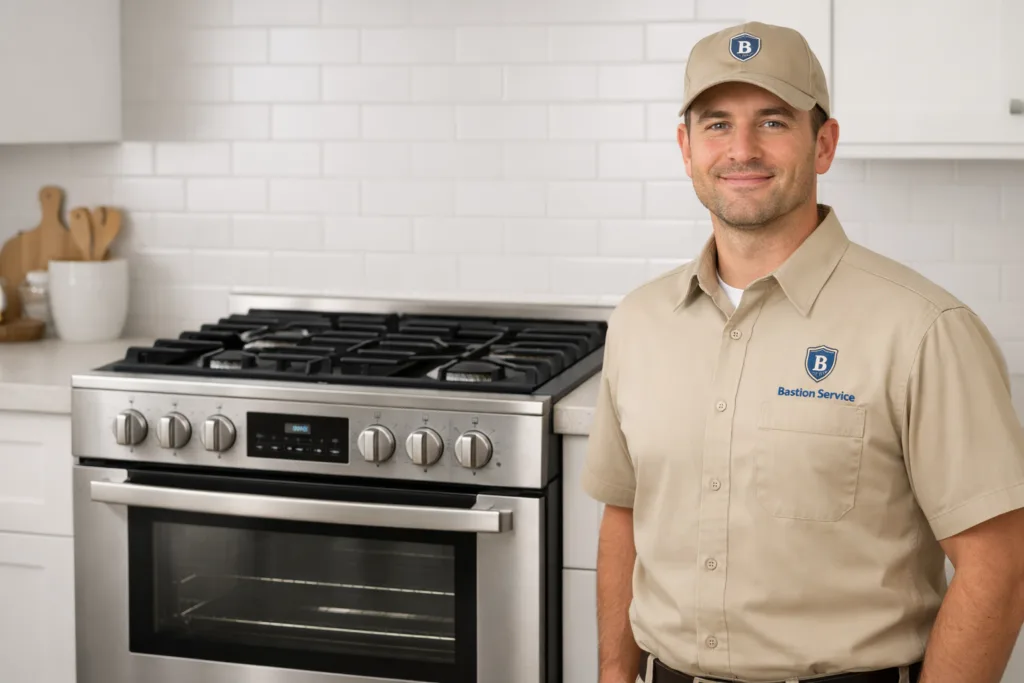
Range problems tend to show up in ways that disrupt everyday cooking fast: a burner that keeps clicking, an oven that takes too long to preheat, or controls that suddenly stop responding the way they should. With Blomberg models, the useful starting point is to match the symptom to the system involved rather than assume one failed part is always to blame.
How Blomberg range issues usually show up in the kitchen
Many homeowners first notice a performance change before a full breakdown. You may see longer cook times, uneven browning, a burner that lights only after several tries, or an oven temperature that feels inconsistent from one meal to the next. These early signs matter because they often point to wear in ignition components, heating elements, sensors, switches, or the control system.
In West Los Angeles homes, these symptoms can be easy to brush off at first, especially if the range still works part of the time. But intermittent operation is often the stage where repair is most straightforward, before a minor failure turns into a larger one.
Common Blomberg range problems and what they may mean
Burner clicks repeatedly or will not ignite
Continuous clicking usually means the ignition system is trying to light the burner but something is interrupting normal ignition. That can come from burner cap misalignment, residue around the burner head, moisture near the igniter, a faulty spark switch, or a spark module problem. If one burner acts up while others work normally, the issue may be more localized. If several burners behave the same way, the fault may involve shared ignition components.
If there is a strong or persistent gas smell, stop using the range until the issue is checked. A burner that does not ignite reliably should not be treated as a minor inconvenience.
Oven will not heat or heats too slowly
When the oven stays cold, struggles to preheat, or needs extra time to cook familiar dishes, the cause may involve the bake element, igniter, temperature sensor, wiring, or control board. Electric and gas ranges can present similar symptoms even though the failed parts are different, which is why symptom-based testing matters.
A slow preheat is not just annoying. It often signals a heating system that is weakening rather than working at full output, and that usually leads to more noticeable cooking problems over time.
Food cooks unevenly
Uneven results can mean the oven is cycling outside its normal temperature range, the bake system is not distributing heat correctly, or the sensor is feeding inaccurate information to the control. Homeowners often describe this as one side browning faster, the center staying underdone, or recipes that suddenly need adjustment even though nothing else has changed.
Before assuming the appliance is simply “running hot” or “running cold,” it helps to look at the heating pattern itself. Uneven baking often reveals more than a single temperature number on the display.
Temperature does not match the setting
If the oven reaches a set temperature on paper but actual cooking results say otherwise, calibration, sensor drift, relay trouble, or control failure may be involved. Some fluctuation is normal in any oven, but wide swings that affect everyday cooking are not. This is especially noticeable with baking, roasting, and any recipe that depends on consistent heat.
Burner flame looks weak or uneven
A weak flame, patchy flame pattern, or inconsistent heat on the cooktop may point to clogged burner ports, burner assembly alignment issues, or faults affecting ignition and gas delivery. Even when the burner does light, poor flame quality can make simmering unreliable and lengthen cook times.
Display works but the range does not respond correctly
Sometimes the control panel lights up normally while oven modes, burner functions, or touch inputs behave unpredictably. That can indicate a failing interface, wiring issue, selector problem, or electronic control fault. Intermittent control behavior is worth addressing early because it can become harder to trace once the failure becomes constant.
Signs the range should stop being used until it is inspected
Some issues allow limited short-term use of one function while another has failed, but certain symptoms call for stopping regular use until the appliance is checked. Service is the safer next step when you notice:
- Repeated ignition failure
- Clicking that continues longer than normal
- An oven that will not reach temperature
- Unexpected shutdowns during use
- Controls that change settings or fail to respond
- Tripped power related to range operation
- A noticeable gas odor
Continuing to use a range with these symptoms can turn a repairable problem into a more expensive one, especially when repeated ignition attempts, unstable heating, or electrical faults are involved.
Why the exact symptom pattern matters
Two ranges can appear to have the same problem while needing very different repairs. For example, an oven that will not heat may have a failed heating component, but it could also have a sensing or control issue preventing normal operation. A burner that clicks nonstop may need cleaning and realignment, or it may have an electrical fault in the ignition circuit.
That is why a good service approach starts with what the appliance is doing, when it happens, whether the problem is constant or intermittent, and whether one function fails while others still work. Those details help narrow the fault quickly and avoid replacing the wrong part.
Repair or replace: what usually makes sense
Most homeowners in West Los Angeles want to know whether fixing the range is worth it before going too far. In many cases, repair is sensible when the problem is isolated to a defined component such as an igniter, element, switch, sensor, or control-related part and the rest of the appliance is in good condition.
Replacement becomes more likely when the range has multiple major issues at once, has a history of recurring failures, or needs repairs that approach the practical value of the appliance. Age matters, but condition matters just as much. A well-kept range with one clear failure can still be a solid repair candidate.
What to note before scheduling service
A few details can make diagnosis easier and faster. It helps to note:
- Whether the problem affects the oven, cooktop, or both
- Whether the issue is constant or intermittent
- If one burner is affected or several
- Whether the display shows errors or unusual behavior
- How the range behaves during preheat or ignition
- Any recent power interruption, cleaning event, or spill near burners or controls
These observations can help separate a simple burner assembly issue from a deeper electrical or control fault.
Blomberg range service for West Los Angeles households
Blomberg cooking appliances can develop faults in the ignition system, oven heating system, sensors, controls, or power path, and the symptoms do not always point neatly to one cause. For homeowners in West Los Angeles, the most useful next step is an evaluation based on the actual behavior of the range, the condition of the appliance, and whether the repair path makes sense for normal household use.
If your range is no longer heating evenly, igniting reliably, or responding as expected, a focused inspection can clarify whether the issue is minor, urgent, or a sign that broader repair decisions need to be made.