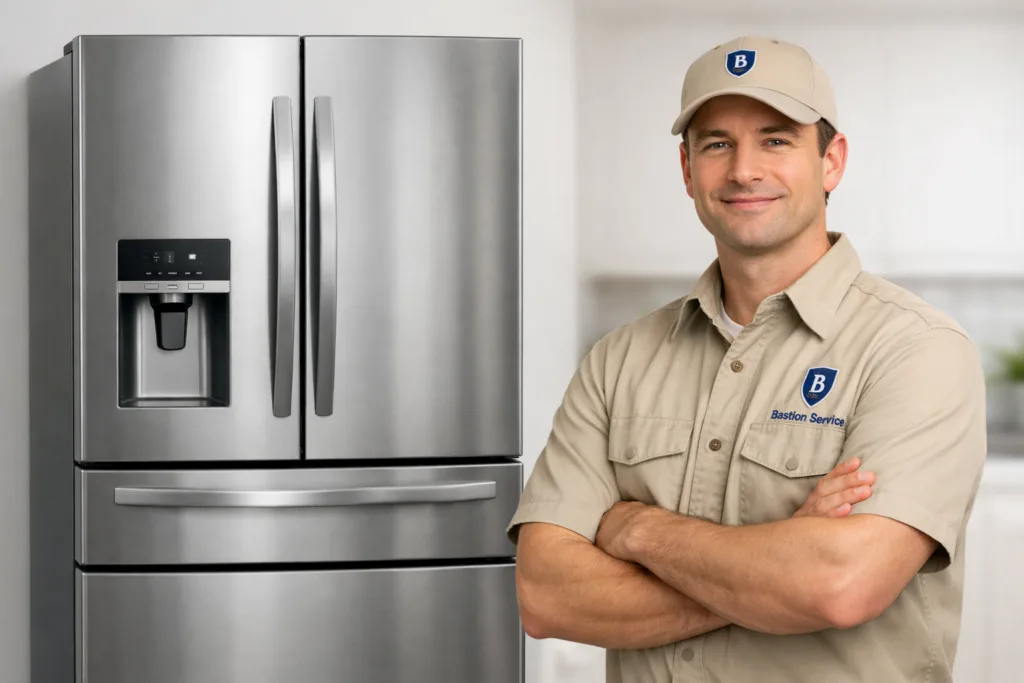
Food spoilage, floor leaks, and nonstop cycling usually start with a small change in refrigerator behavior. When an Electrolux unit begins showing those signs, the fastest path to a useful repair decision is understanding which symptom came first and how the appliance has been performing since then.
What tends to go wrong in an Electrolux refrigerator
Many refrigerator complaints look similar from the outside, but the underlying causes can be very different. A warm fresh-food section may be caused by an airflow restriction, while a freezer losing temperature may point to a defrost problem, fan failure, sensor issue, or a more serious cooling-system fault. Water on the floor can come from the drain side or the water supply side, which is why symptom details matter.
In West Los Angeles homes, the most useful approach is to look at the full pattern: whether one compartment is affected or both, whether the issue is constant or intermittent, and whether the refrigerator is also making new sounds, building frost, or showing moisture where it did not before.
Common symptoms and what they often indicate
Refrigerator section is warm but freezer still seems cold
This is one of the most common complaint patterns. In many cases, the freezer is still producing some cold air, but that air is not circulating properly into the fresh-food section. Possible causes include an evaporator fan problem, blocked airflow passages, frost buildup behind interior panels, or a control issue affecting temperature regulation.
If food on upper shelves is warming faster than expected, or some items are cold while others are not, uneven airflow is often part of the problem.
Freezer is not holding a normal temperature
A freezer that leaves ice cream soft or allows frost-covered items to thaw slightly should be checked sooner rather than later. This symptom can relate to the defrost system, temperature sensors, condenser airflow, compressor performance, or electronic controls.
If both the freezer and refrigerator compartments are warming, the diagnosis may involve a broader cooling failure rather than a simple circulation issue.
Water leaking under or inside the unit
Leaks are often traced to a clogged defrost drain, a damaged or loose water line, excess condensation from a sealing problem, or an ice maker fill issue. Even a small recurring puddle can lead to flooring damage or moisture around the appliance base.
If the leak appears after a defrost cycle, after ice production, or near the lower drawers, that timing can help narrow the source.
Frost buildup on walls, drawers, or vents
Heavy frost usually means moisture is getting where it should not, or the refrigerator is not completing its normal defrost process. A worn gasket, door alignment issue, control fault, or failed defrost component can all create this symptom.
Frost near vents is especially important because it can restrict airflow and create a chain reaction of poor cooling, temperature swings, and longer run times.
Refrigerator runs constantly or makes new noises
Some refrigerator noise is normal, especially during cooling cycles and ice production. A noticeable change is different. Clicking, rattling, humming that becomes louder, or a unit that seems to run without much rest may indicate fan motor wear, compressor strain, loose hardware, or poor heat exchange.
If the refrigerator is running hard but temperatures are still drifting, it is usually compensating for a fault rather than working normally.
Ice maker or dispenser problems
Electrolux refrigerator ice maker issues often show up as no ice, slow ice production, tiny cubes, clumping, overfilling, or dispenser inconsistency. Causes may include a frozen fill tube, restricted water flow, faulty valve behavior, sensor trouble, or ice maker component wear.
Because these symptoms can overlap with temperature problems in the freezer, they should be evaluated as part of the whole refrigerator system rather than as a separate annoyance.
Why symptom timing matters
Two refrigerators can have the same complaint and need completely different repairs. For example, “not cooling” means something different if the unit first began making loud fan noise, versus a case where it first started building frost, versus a case where the display became erratic.
Helpful details include:
- Whether the issue started suddenly or gradually
- Whether one compartment failed before the other
- Whether the doors have been harder to close
- Whether the leak is constant or only appears at certain times
- Whether unusual sounds began before the temperature changed
- Whether frost returns quickly after being cleared
That sequence often points the repair in the right direction much faster than guessing based on one symptom alone.
When the problem is likely more urgent
Some refrigerator issues can wait a short time for scheduled service, but others should be treated as time-sensitive because they can lead to food loss or added component stress.
Do not wait long if you notice:
- Milk, leftovers, or produce warming before normal storage time
- Frozen foods becoming soft
- Repeated clicking without proper cooling
- Water collecting under the appliance
- Burning smells or sharp electrical odors
- Heavy frost spreading across the interior
- The refrigerator running nearly nonstop
Those symptoms usually do not resolve on their own, and delay can turn a manageable repair into a more expensive one.
Repair or replace: how the decision is usually made
Many Electrolux refrigerator problems are worth repairing when the issue is tied to a fan motor, drain blockage, door gasket, sensor, water valve, ice maker component, or a defrost-related part. These are often isolated faults that can restore normal performance without replacing the appliance.
Replacement becomes a more realistic discussion when testing points to a major sealed-system failure, a compressor-related repair with high cost, or multiple major problems in an older refrigerator. Age alone does not decide the answer. The better questions are how severe the failure is, how the refrigerator has been performing overall, and whether the repair cost makes sense compared with the remaining useful life of the unit.
What to check before service
Homeowners in West Los Angeles can make a service visit more productive by noting a few simple details before the appointment. There is no need to disassemble anything, but basic observations are helpful.
- Check whether both sections are affected or only one
- Notice whether interior lights and display are working normally
- Look for visible frost, standing water, or dripping
- See whether door gaskets are sealing evenly all the way around
- Listen for repeated clicking, buzzing, or fan noise changes
- Make note of any error indicators or unusual temperature swings
If the refrigerator is still cooling somewhat, avoid repeatedly changing settings or unplugging it over and over, since that can make symptom tracking harder.
Household impact of waiting too long
Refrigerator problems affect more than convenience. A small airflow issue can become a frost problem. A defrost problem can lead to blocked circulation and unstable temperatures. A minor leak can damage flooring or cabinets. When the unit keeps running under strain, wear on other components can increase.
For households in West Los Angeles, early attention is often the difference between a targeted repair and a larger interruption involving food disposal, cleanup, and more extensive parts replacement.
Choosing service based on the actual symptom pattern
The best repair path comes from matching the complaint to the appliance’s behavior, not from assuming every cooling issue has the same cause. Electrolux refrigerator repair in West Los Angeles is most effective when the diagnosis considers temperature stability, airflow, frost, leaks, noise, and ice maker performance together.
When those details are evaluated carefully, homeowners can make a more confident decision about whether the refrigerator needs a straightforward repair, further testing, or replacement planning.