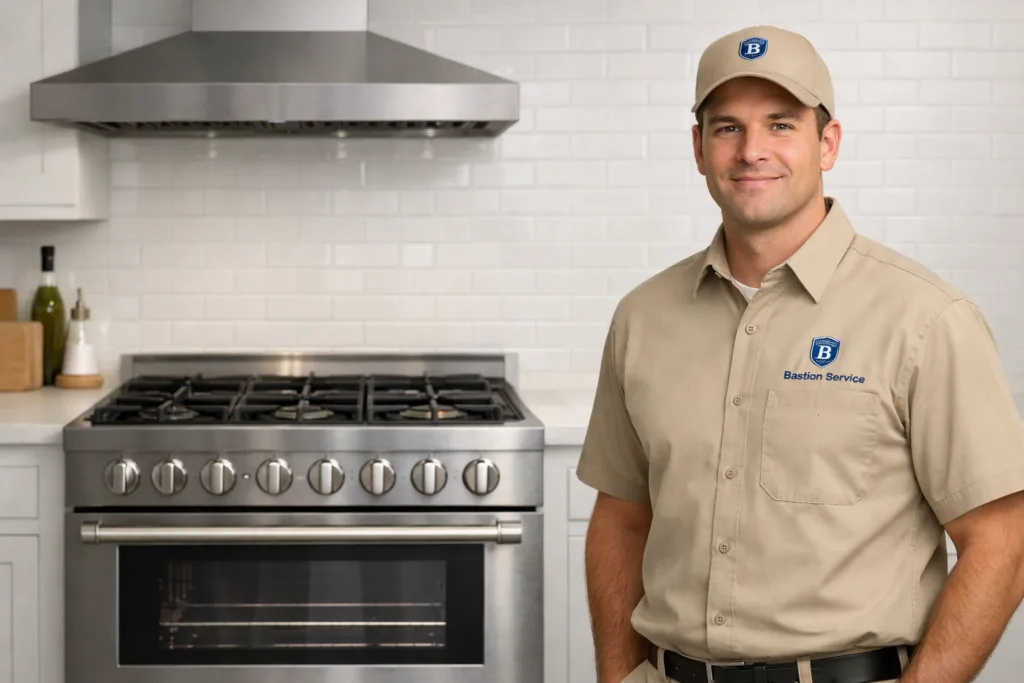
Cooking problems rarely start the same way twice. One Dacor range may begin with a single burner that clicks longer than usual, while another starts missing temperature targets in the oven or develops a display that responds only part of the time. Looking at the exact symptom pattern first helps narrow the issue to the right system instead of treating every heating problem like the same repair.
Start by separating burner issues from oven issues
A range combines several functions in one appliance, so the most useful first question is where the failure shows up. Surface burner trouble, oven heating trouble, and control-panel trouble often involve different parts and different repair paths. That distinction matters because a top burner that will not ignite points toward a very different diagnosis than an oven that preheats slowly or a control panel that goes blank.
In many Inglewood homes, the range is used for both quick weekday cooking and longer oven cycles, so smaller symptoms can become disruptive fast. A burner that lights inconsistently may still work sometimes, but the issue can spread into unreliable ignition, uneven flame, or repeated clicking that interrupts normal use.
Signs of a surface burner problem
Common burner-related complaints include:
- Clicking without ignition
- Delayed ignition
- Weak or uneven flame
- Burners that do not heat at the expected level
- Burners that keep sparking after lighting
These symptoms can come from misaligned burner caps, blocked ports, worn ignition components, moisture around the burner area, switch problems, or faults in the spark system. On some models, what looks like a simple ignition failure may actually be tied to a control or wiring issue. If the burner works intermittently, that inconsistency is often a clue that the problem is developing rather than fully failed.
Signs of an oven heating problem
Oven complaints usually show up in cooking results before the range stops working altogether. Food may take much longer to bake, browning may be uneven, or the oven may seem hot one day and noticeably cool the next. In a Dacor range, those symptoms can point to problems with the igniter, bake or broil heating system, sensor, convection components, relays, or the electronic control that manages temperature.
Typical oven-related symptoms include:
- Slow preheating
- Oven not reaching the set temperature
- Hot spots or uneven baking
- Oven shutting off during a cycle
- Broiler not working correctly
Because temperature problems can mimic one another, replacing parts based on guesswork often leads to extra cost without solving the original complaint. A sensor problem, for example, can look similar to a control issue, while a weak igniter can create heat complaints that seem like a thermostat failure.
What repeated clicking usually means
One of the most common complaints with a gas range is constant or repeated clicking. Sometimes the burner lights but the clicking continues. Other times the clicking starts with no flame at all. This can happen because of moisture after cleaning, food debris affecting ignition, a burner cap sitting slightly out of place, or a problem with the spark module or switch.
If the clicking stops after drying and proper burner reassembly, the issue may have been temporary. If it keeps returning, especially on the same burner or across multiple burners, it usually deserves inspection. Persistent clicking is not just annoying; it can signal an ignition system fault that leads to more frequent startup problems over time.
Control panel and display problems can affect the whole range
When the display is blank, buttons do not respond, or the oven starts acting unpredictably, the issue may be larger than a single heating component. Control failures can affect timing, temperature regulation, ignition behavior, and overall responsiveness. Some homeowners notice this first as intermittent operation, such as a range that works normally one evening and refuses to start the next morning.
Symptoms that often point to a control-related issue include:
- Error codes on the display
- Random beeping
- Touch controls not responding
- Oven cycles that cancel unexpectedly
- Settings that do not match actual cooking performance
Intermittent control issues are worth addressing early because they tend to become more disruptive with time. What begins as an occasional reset or unresponsive keypad can eventually prevent the range from operating at all.
When to stop using the range
Some symptoms are inconvenient. Others are a sign to stop using the appliance until it is checked. If a burner will not regulate properly, the oven temperature is far off, the unit trips power, or ignition becomes unreliable, continued use can increase wear and create avoidable risk.
Stop using the range right away if you notice:
- A persistent gas smell
- Sparking that does not stop
- Electrical tripping or signs of overheating
- An oven door that does not close securely during operation
- Controls behaving erratically during active cooking
Not every issue is urgent, but safety-related symptoms should not be treated as routine wear. If the problem is tied to gas odor, address that safety concern first before moving forward with appliance repair.
Repair decisions depend on the exact failure
Many Dacor range problems are repairable when the failure is isolated to a specific part or system. Igniters, sensors, elements, switches, door components, and some control-related issues can often be handled without replacing the whole appliance. The better question is not simply whether the range can be repaired, but whether the repair makes sense based on overall condition.
Repair is often the better path when:
- The issue is limited to one function
- The rest of the range is performing well
- The repair addresses a defined failed component
- There is no broader pattern of repeated breakdowns
Replacement becomes more likely when multiple systems are failing at once, the control side has become unreliable in several ways, or the overall condition of the appliance suggests additional repairs are likely soon after the first one.
Why symptom-based diagnosis matters in an Inglewood home
Household cooking routines depend on predictability. When a range starts acting inconsistently, the biggest frustration is often not the single failure but the uncertainty around whether dinner can be finished as planned. A symptom-based evaluation helps clarify whether the problem is isolated, developing, or part of a wider control or heating issue.
For Dacor range repair in Inglewood, the most helpful next step is understanding what the appliance is actually doing: whether the problem is limited to ignition, surface heat, oven temperature, or electronic response. Once that is identified, it becomes much easier to judge whether a targeted repair is the sensible solution for the kitchen you use every day.