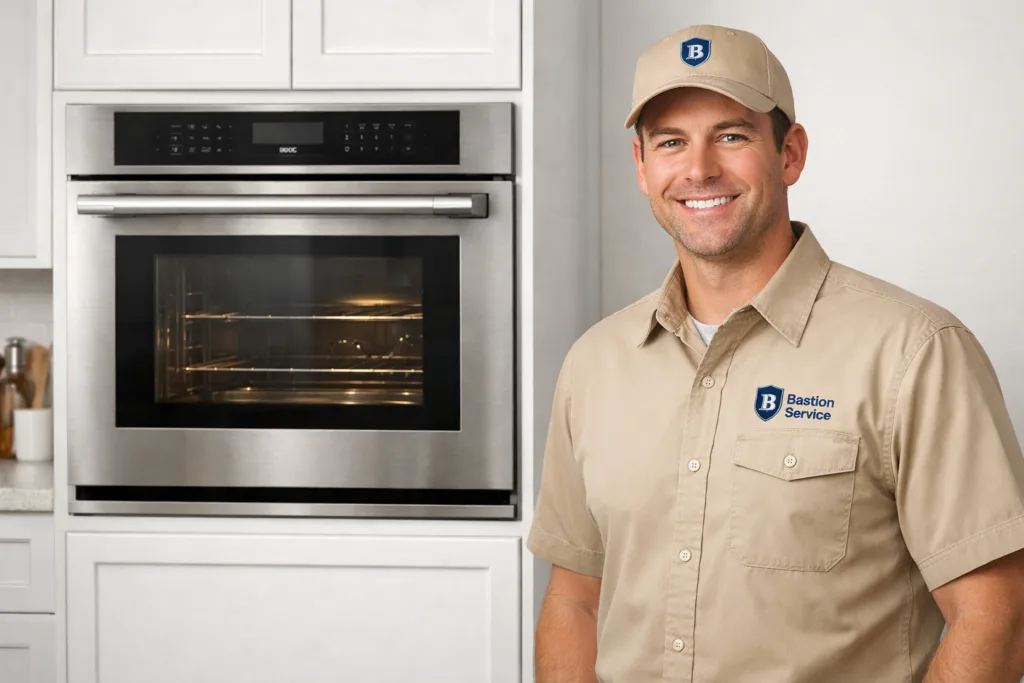
Dacor ovens are designed for precise cooking, so even a small fault can show up quickly as undercooked centers, scorched edges, long preheat times, or temperature swings that make recipes unreliable. In many homes, the first useful clue is the pattern itself: whether the issue happens during bake, broil, convection, or only after the oven has been running for a while.
Because similar symptoms can come from different components, the most effective repair path starts with testing the actual failure instead of assuming the cause. A weak igniter, bad temperature sensor, failing element, stuck relay, damaged wiring connection, or door seal problem can all affect performance in different ways.
What Dacor oven problems usually look like in real use
Oven problems are often easier to describe by cooking results than by technical terms. Homeowners in Inglewood commonly notice issues such as:
- Food taking much longer than normal to finish
- Cookies or casseroles browning unevenly
- The oven displaying a temperature but not cooking correctly
- Preheat starting normally and then stalling
- Broil working while bake does not, or the reverse
- An oven door that does not close tightly
- Intermittent shutdowns or repeated error messages
These details matter because they help narrow down whether the problem is with heat generation, temperature sensing, airflow, controls, or the door and latch system.
Common symptoms and what they may indicate
Oven will not heat at all
If the display turns on but the cavity never gets hot, the fault may be in the bake element, broil element, igniter, sensor circuit, control relay, or incoming power path. On some units, one failed component can stop the oven from heating even though the rest of the appliance appears normal.
For electric models, a damaged or burned-out element is a common cause. For gas models, an igniter may glow yet still be too weak to open the gas valve properly. That is why a glowing igniter should not automatically be considered good.
Slow preheat
A Dacor oven that eventually reaches temperature but takes too long often points to weak heat output rather than a complete no-heat condition. This can happen when an element is partially failing, an igniter is weakening, or the control is not cycling heat correctly.
Slow preheat often shows up first in daily routines: weeknight meals taking longer, baked goods rising unevenly, or the oven seeming “off” even though it still works.
Uneven baking
If the top rack cooks differently from the bottom rack, or one side consistently browns faster, the issue may involve sensor accuracy, convection airflow, element cycling, rack placement sensitivity, or heat escaping around the door. In some cases, the oven is technically heating but not distributing that heat as intended.
This kind of symptom is especially frustrating because it can feel inconsistent from one meal to the next. A repair visit usually focuses on whether the oven is maintaining temperature correctly and whether all heating functions are operating as they should.
Temperature too high or too low
When the set temperature does not match real cooking performance, several components may be involved. A faulty sensor can send the wrong reading to the control. A relay may stick and overheat the cavity. A calibration issue may also be part of the problem, though calibration alone does not fix a failing part.
If multiple dishes are coming out overdone or underdone despite using familiar settings, it is usually a sign that the oven is no longer regulating heat accurately.
Error codes or intermittent shutdowns
Error codes can be useful, but they are only the starting point. Many codes identify a system or operating condition rather than a single bad part. A control fault, sensor problem, overheating condition, latch issue, or wiring failure may all trigger similar behavior.
If the oven shuts off mid-cycle, resets itself, or refuses to start certain functions, the problem should not be ignored. Intermittent electrical issues can become more disruptive over time.
Door or self-clean problems
A door that will not close fully can affect temperature stability and cooking results. A latch that will not lock or unlock properly can interfere with normal use and may also trigger control errors. If the problem appeared during or after self-clean, heat-related stress on components is often part of the diagnosis.
It is best not to force a stuck latch or repeatedly run cycles hoping the issue clears on its own. That can lead to added strain on the door mechanism or control system.
How electric and gas Dacor oven issues differ
The symptom may look similar from the outside, but the repair approach often depends on the oven type.
- Electric ovens: common faults include failed bake or broil elements, sensor issues, damaged terminals, relay failures, and power supply problems.
- Gas ovens: common faults include weak igniters, gas valve related issues, sensor problems, and control failures that interrupt ignition or temperature regulation.
This is one reason part-guessing often leads to wasted time and expense. The same complaint, such as “not heating,” can have very different causes depending on the model and fuel type.
Signs the problem is getting worse
Some oven issues start small and then become harder to ignore. It is usually wise to schedule service when you notice symptoms such as:
- Preheat times continuing to get longer
- Temperature performance changing from one use to the next
- The oven only heating on certain settings
- Repeated tripped breakers or lost power during cooking
- New clicking, buzzing, or relay sounds that were not there before
- A door that needs pressure to stay shut
Continuing to use the oven in this condition can lead to poor cooking results, wasted food, and in some cases added stress on related components.
When repair is usually worth considering
Many Dacor oven problems are still practical to repair when the fault is limited to a specific component such as an igniter, heating element, sensor, latch assembly, or a clearly identified control-related issue. That is especially true when the oven is otherwise in good condition and the rest of the functions remain stable.
Replacement becomes a more serious consideration when there are multiple failures at once, major control damage, recurring electrical issues, or part availability concerns on an older unit. For homeowners in Inglewood, the decision usually comes down to overall condition, not just the immediate symptom.
What to note before a service appointment
A few observations can make troubleshooting more efficient. Try to note:
- Whether the issue affects bake, broil, convection, or all cooking modes
- If the oven fails before preheat, during preheat, or after reaching temperature
- Any error code shown on the display
- Whether the problem started suddenly or worsened gradually
- If the door, latch, or self-clean cycle seems related
- Any recent power outage or electrical interruption
If available, having the model information ready is also helpful, especially for built-in or wall oven configurations.
Safety concerns that should not wait
Stop using the oven and prioritize service if you notice signs of overheating, burning insulation smells, visible sparking, repeated breaker trips, or a door that will not secure properly during operation. If a gas model has a strong or persistent gas odor, do not continue testing it. Leave the area if needed and contact the gas utility or emergency service before arranging appliance repair.
Choosing the right next step
When a Dacor oven starts missing temperature, baking unevenly, or failing to heat reliably, the best next step is to match the repair plan to the actual symptom pattern. That gives you a realistic sense of whether the issue is isolated and repairable or whether the appliance is moving toward larger replacement decisions.
For households in Inglewood, that often means paying attention to how the oven behaves in everyday cooking, not just whether it turns on. Consistent symptoms usually tell the story more clearly than a display light or a single error message.