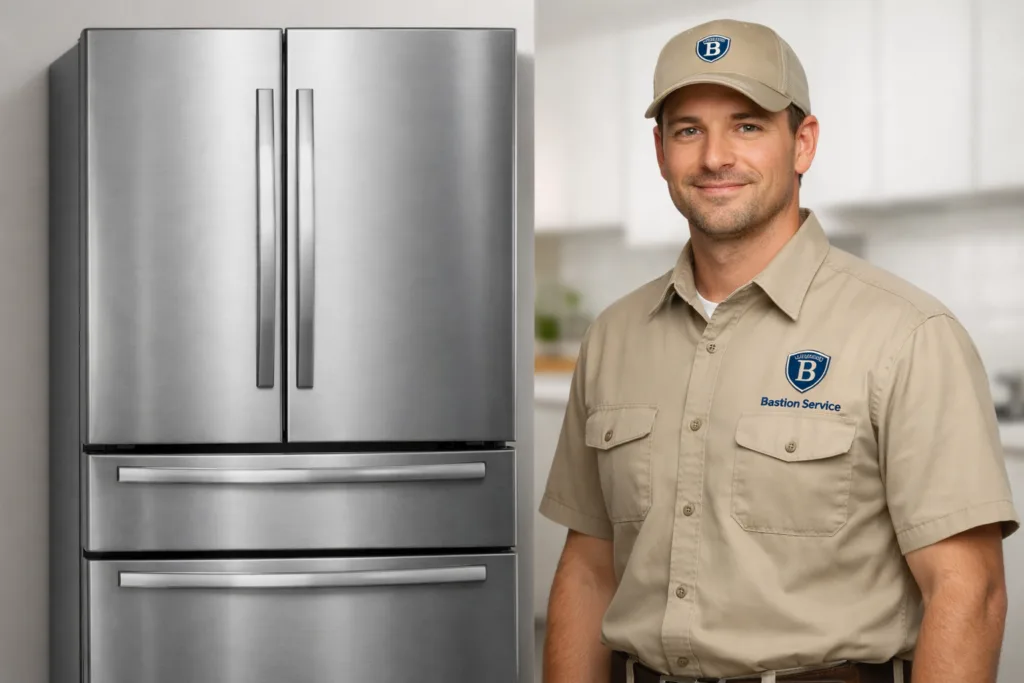
Temperature problems in a Bosch refrigerator rarely stay minor for long. A small airflow issue can turn into spoiled groceries, frost can spread behind panels, and a slow leak can damage nearby flooring before the source is obvious. The most useful first step is matching the symptom pattern to the system most likely involved.
How Bosch refrigerator problems usually show up in the home
Many homeowners first notice the problem indirectly. Milk spoils sooner than expected, produce freezes in the crisper, leftovers feel warmer than usual, or the appliance seems to run much longer than normal. In other cases, the warning sign is visual, such as condensation, water under drawers, or frost collecting around vents.
Bosch refrigerators depend on several systems working together: temperature sensing, fan-driven airflow, defrost operation, door sealing, drainage, and electronic control response. When one area starts falling out of range, the symptom may appear somewhere else in the unit. That is why the same complaint, such as “not cooling,” can come from very different causes.
Common symptom patterns and what they may mean
Fresh food section is warm but the freezer seems normal
This often points to an airflow problem rather than a complete loss of cooling. Cold air may not be moving properly into the refrigerator section because of frost buildup, a weak evaporator fan, blocked vents, or a sensor issue that is affecting how the unit regulates temperature.
Homeowners may notice that frozen items stay solid while drinks, dairy, and leftovers in the refrigerator section become too warm. If that pattern continues, food loss can happen even though the freezer creates the impression that the appliance is still working.
Both sections are not cooling well
When the refrigerator and freezer are both warming up, the issue may be more central to the cooling process. Condenser airflow restrictions, compressor start problems, control faults, or sealed system concerns are all possible. This type of symptom usually deserves quicker attention because the appliance may be losing its ability to recover temperature at all.
Frost building up on back panels or around vents
Heavy frost usually means moisture is entering where it should not, or the refrigerator is not completing defrost cycles correctly. A worn gasket, a door not closing fully, defrost component failure, or restricted airflow can all contribute. Clearing visible frost without addressing the cause typically brings only short-lived improvement.
If drawers become hard to open or airflow sounds change, frost may be spreading behind interior covers where it interferes with fans and circulation.
Water leaking inside the refrigerator or onto the floor
Leaks often trace back to a clogged defrost drain, excess condensation, a water line connection issue, or an ice maker-related supply problem on equipped models. Water under crisper drawers can point in a different direction than water near the front of the appliance, so the exact location matters.
Repeated leaking should not be ignored. Even when cooling still seems acceptable, ongoing moisture can lead to odors, warped shelving areas, or damage around the appliance footprint.
Noise changes that were not there before
Not every refrigerator sound indicates failure, but new buzzing, clicking, rattling, knocking, or louder humming deserves attention when it appears alongside cooling or frost issues. Fan blades can strike ice, mounting points can vibrate, and start components can click repeatedly when the compressor struggles to begin a cycle.
The most helpful detail is when the noise happens:
- right after the doors close
- during longer cooling cycles
- intermittently throughout the day
- together with warming temperatures or leaks
Ice maker or dispenser performance problems
On Bosch refrigerators with water features, low ice production, no ice, slow water dispensing, or inconsistent fill can be tied to temperature conditions, inlet valve issues, restrictions in the water path, switch faults, or freezing in the wrong part of the system. These symptoms often overlap, so replacing parts by guesswork can become expensive quickly.
Signs the problem is getting worse
Even before the refrigerator stops cooling entirely, several warning signs suggest the condition is progressing:
- food spoils faster than it did a week ago
- the compressor seems to run almost constantly
- frost returns soon after being cleared
- interior temperatures swing between too warm and too cold
- water leaks appear more than once
- the unit makes repeated clicking sounds without stable cooling
These patterns matter because they often indicate a system that is struggling rather than a one-time interruption. Continued operation in that condition can put extra stress on fans, controls, and the cooling system.
What to check before scheduling service
A few basic observations can help narrow down the issue and speed up the repair process:
- Check whether one section is warmer than the other.
- Look for frost around vents, drawers, or rear interior panels.
- Inspect the door gasket for gaps, tears, or debris that prevents a full seal.
- Notice whether the unit is running constantly or cycling normally.
- Identify where any water is collecting.
- Listen for fan noise, clicking, or changes in compressor sound.
These observations do not replace testing, but they do help separate a minor sealing or drain issue from a more involved cooling fault.
When repair is usually worthwhile
Repair is often a sensible option when the problem is tied to components such as fans, defrost parts, sensors, seals, drains, valves, or control-related faults and the refrigerator cabinet remains in otherwise good condition. For many households in Inglewood, that kind of repair restores normal use without the disruption of replacing a built-in or carefully sized kitchen appliance.
Replacement becomes a more serious consideration when the unit has multiple major failures, a costly sealed system issue, or ongoing age-related problems that suggest future breakdowns are likely. The right decision depends on the failed system, the repair scope, and how stable the refrigerator is likely to be afterward.
Why symptom-based diagnosis matters
Two Bosch refrigerators can show the same outward problem for completely different reasons. A warm refrigerator section could come from a fan issue, frost blockage, sensor error, or control problem. Water on the floor could be a drain issue, a supply issue, or moisture entering through a sealing problem. Without narrowing down the actual cause, part replacement can solve nothing while the food storage problem continues.
For homeowners in Inglewood, a service visit should clarify more than whether the unit is “broken.” It should identify which system is failing, whether continued use risks more damage, and whether the repair path makes sense for the condition of the appliance.
Choosing the right time to act
If the refrigerator is only slightly off temperature, it can be tempting to wait. That usually becomes harder to justify once groceries are at risk, frost is spreading, or leaking returns after cleanup. Acting earlier often means a smaller repair scope and less chance of added damage inside the appliance.
Bastion Service helps homeowners in Inglewood evaluate Bosch refrigerator symptoms, understand the likely repair path, and decide whether service is the practical next step for the appliance they have now.