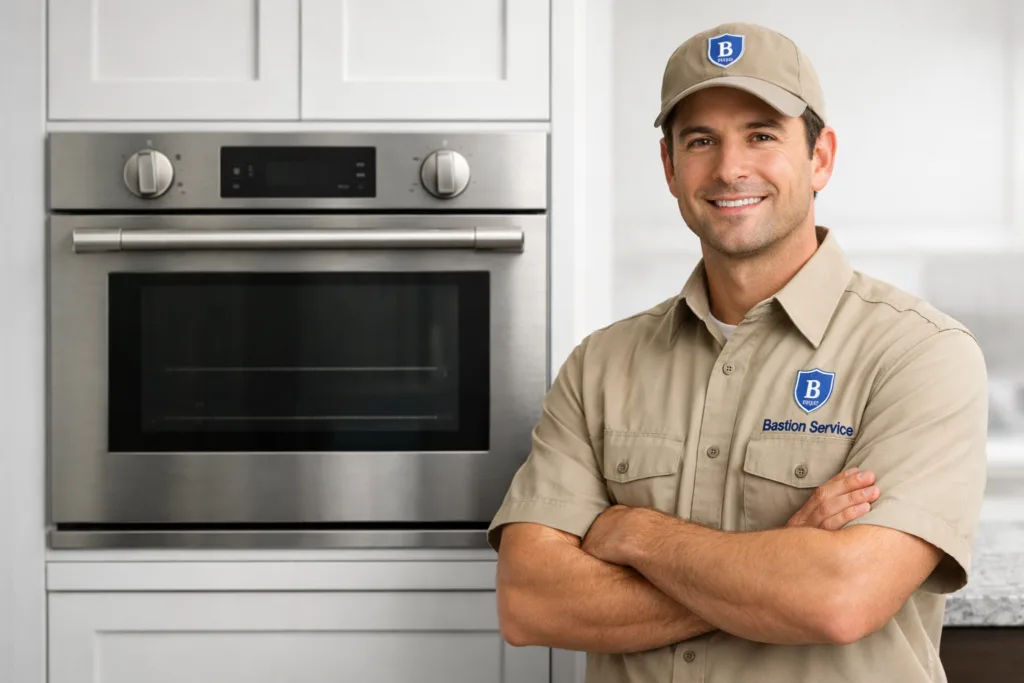
Built-in wall ovens tend to become urgent as soon as they stop behaving normally. A Wolf unit that underheats, overcooks, stalls during preheat, or flashes faults can throw off everything from weeknight meals to planned gatherings at home. Because several different components can create similar symptoms, the most useful starting point is to match the repair path to the exact way the oven is failing.
What symptom patterns usually reveal
With a wall oven, the display does not always tell the full story. Two ovens can show the same complaint on the surface, yet need very different repairs. An oven that reaches temperature slowly may have a weak heating circuit, while one that appears to preheat but never cooks correctly may be dealing with inaccurate sensing or poor temperature regulation.
That is why it helps to notice details such as whether bake and broil both work, whether the issue affects one cavity or both, whether the cooling fan sounds normal, and whether the problem happens every time or only once the oven has been running for a while. Those clues often narrow the problem much faster than guessing based on one general symptom.
Common Wolf wall oven problems in Rancho Park homes
Oven will not heat
If the control panel powers on but the oven cavity stays cool, the issue may involve a failed bake element, broil element, thermal protection component, relay, wiring fault, or electronic control problem. In some cases, the oven may appear to start a cycle normally but never send proper heat into the cavity.
This type of failure is especially important to diagnose correctly because “not heating” can describe anything from a single bad component to a control issue affecting the heating circuit as a whole.
Slow preheat
Slow preheating often starts as a subtle annoyance. Meals take longer, the preheat signal seems delayed, and cooking times stop matching what used to work. That can point to a weak element, sensor drift, or a control problem that is not managing heat output correctly.
When slow preheat continues, the oven may still turn on and seem usable, but performance usually keeps slipping. Homeowners in Rancho Park often notice it first with baking, where timing and temperature consistency matter most.
Uneven baking or roasting
If one side of a dish browns faster, cookies bake differently between racks, or casseroles need extra time in the center, the oven may not be distributing or regulating heat the way it should. Possible causes include temperature sensor issues, convection-related airflow problems, weak heating performance, or calibration drift.
Uneven cooking is not always a recipe issue. When patterns repeat across different dishes, the appliance itself is often the reason.
Temperature running too hot or too cold
An oven that overshoots the set temperature can burn food quickly, while one that runs cool can leave meals underdone even when the timer says they should be finished. These complaints commonly point toward sensor faults, control board issues, or relays that are not cycling heat correctly.
Temperature swings matter because they make the oven unreliable. Even if it still works “most of the time,” inconsistent heat is a sign the unit is no longer operating as intended.
Error codes or unresponsive controls
Electronic control faults can appear as flashing codes, frozen buttons, intermittent shutdowns, or cycles that will not start. Some faults appear after a self-clean cycle or a power interruption, while others show up during ordinary use with no obvious trigger.
An error code can be helpful, but it is only a starting point. The code may point to a sensor, latch, communication fault, or board problem, and the actual failed part still has to be confirmed.
Door and latch problems
If the door will not unlock, the latch keeps cycling, or the oven refuses to begin certain modes, the problem may involve the latch assembly, switches, motor, or related control logic. These issues are especially common when symptoms begin around self-clean use or after the oven has been exposed to extended high heat.
Forcing the door or retrying the cycle repeatedly can make things worse, so it is usually better to stop and have the cause checked properly.
Signs you should stop using the oven
Some oven problems are mostly about convenience, but others should not be ignored. It is smart to stop using the unit if you notice:
- burning smells or signs of overheating
- persistent fault codes that return after a reset
- the oven heating uncontrollably or failing to shut off properly
- power loss, tripped breakers, or intermittent display failure
- sudden temperature instability that affects every meal
- abnormally loud or nonstop fan operation
Built-in ovens are harder to monitor casually than countertop appliances. If operation has become unpredictable, continued use can increase part damage and complicate the eventual repair.
Repair or replacement: what usually matters most
For many households in Rancho Park, the real question is not just whether the oven can be repaired, but whether the repair makes sense for the condition of the appliance overall. A single failed sensor, latch part, fan motor, or heating component is very different from repeated electrical faults or multiple heat-related failures occurring together.
Repair is often worthwhile when the problem is isolated and the oven is otherwise in solid condition. Replacement becomes a more serious consideration when the unit has broader control issues, extensive wear, or more than one major system failing at the same time. The goal is reliable cooking, not just getting the display to turn back on.
Helpful checks before service
You do not need to disassemble anything to make a service visit more productive. A few observations can help identify the issue faster:
- note whether bake, broil, convection, or all cooking modes are affected
- write down any error code exactly as shown
- pay attention to whether the problem started suddenly or developed gradually
- remember if symptoms began after self-clean or a power interruption
- track whether the issue affects one oven cavity or both, if applicable
- note real cooking results, such as underbrowning, scorched tops, or long cook times
It also helps to avoid repeated test cycles once the symptom is clear. If the oven is overheating, shutting down, or failing to regulate temperature, more use may create additional problems that were not there at the start.
What focused service should address
Effective Wolf Wall Oven Repair in Rancho Park should answer a few practical questions clearly: what failed, whether the issue is isolated or part of a larger pattern, and whether the unit can be restored to dependable everyday use. On a built-in appliance, the difference between a quick part replacement and a more involved repair often comes down to understanding the symptom pattern early.
When the problem is approached systematically, it becomes easier to determine whether the fault is in the heating system, sensor circuit, control assembly, fan operation, or door-latch function. That gives homeowners a practical repair plan based on the actual condition of the oven in their kitchen.