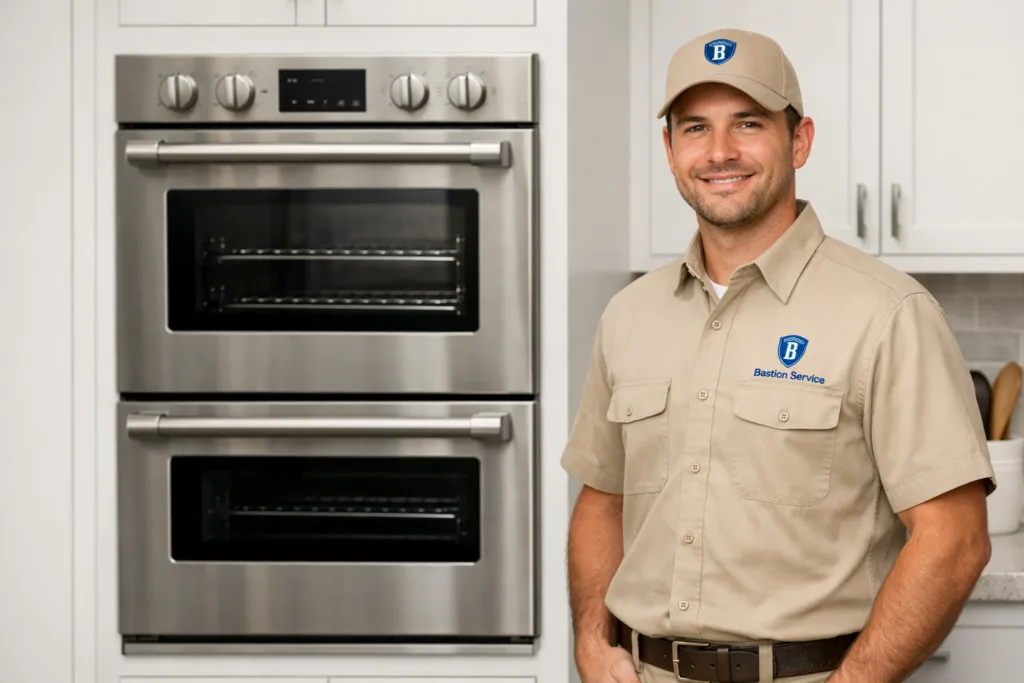
Built-in wall ovens can show the same symptom for very different reasons, so the most useful first step is to match the behavior you see with the likely system involved. On a Viking wall oven, heating performance, sensor readings, controls, door sealing, and electrical supply all affect cooking results. In Rancho Park homes, that usually means looking beyond “it is not working right” and narrowing the issue down to exactly when the problem happens and how consistently it repeats.
Common Viking wall oven problems homeowners notice first
Most service calls start with one of a few patterns. Paying attention to whether the issue happens during preheat, only on bake, only on broil, after the oven has been running awhile, or after a self-clean cycle can help identify the source more quickly.
Oven will not heat at all
If the display turns on but the oven cavity stays cold, the problem may involve a failed bake element, broil element, temperature sensor, relay, electronic control, or a power-related issue. In some cases the oven appears to start normally but never actually begins producing usable heat. That difference matters because a control problem and a heating component failure can look similar from the outside.
Slow preheat
An oven that eventually gets hot but takes far too long often points to a weak heating element, sensor inaccuracy, control trouble, or airflow problems in convection operation. Slow preheat is easy to tolerate for a while, but it usually signals a part that is no longer performing correctly rather than a harmless quirk.
Uneven baking or roasting
If one rack browns faster than another, the back of the oven cooks differently than the front, or results vary from one meal to the next, the issue may involve temperature calibration, sensor drift, convection fan performance, or door seal wear. Uneven heat is especially frustrating because the oven still seems usable, yet the cooking results become unreliable.
Temperature swings
Some cycling is normal, but large temperature swings are not. Food that comes out overdone on the outside and underdone inside can mean the oven is overshooting the set point, failing to recover heat properly, or reading temperature incorrectly. When this happens repeatedly, the sensor and control system are usually worth checking closely.
Control panel or display issues
Unresponsive buttons, flashing displays, random resets, and error messages can indicate trouble with the user interface, main control, wiring connections, or moisture and heat damage around the console area. If the oven starts only sometimes or cancels cycles unexpectedly, the fault may not be in the heating system at all.
Door and latch problems
A door that will not close tightly can let heat escape and create long preheat times or uneven baking. A stuck latch can also interrupt operation, especially after self-cleaning. If the door feels misaligned, does not seal well, or the lock remains engaged, performance and safety can both be affected.
How specific symptoms point to different repair paths
Symptom-based troubleshooting saves time because it helps separate similar-looking failures. For example, an oven that underheats steadily is different from one that overheats occasionally, and both are different from an oven that shuts off in the middle of cooking.
- Consistent underheating often suggests an element, sensor, or calibration problem.
- Intermittent shutoffs can point to control faults, overheating protection, or unstable electrical connections.
- Only broil failing may isolate the issue to one heating circuit rather than the full oven system.
- Problems after self-clean often involve heat-stressed controls, sensors, or lock components.
- Error codes with normal heat loss may indicate the control is detecting a fault even before complete failure occurs.
That is why replacing parts based on guesswork often leads to extra cost. A wall oven can have one failed component, or it can have one obvious symptom caused by a less obvious fault elsewhere in the system.
Signs the problem is getting worse
Some Viking wall oven issues stay mild for a short time, but many progress. A slow preheat can become no heat. Inconsistent temperatures can become overheating. A control that occasionally resets can stop starting cycles altogether.
You should stop routine use and have the oven checked sooner if you notice any of the following:
- burning odors that continue after the oven is fully warmed
- visible sparking or arcing
- a breaker that trips during preheat or cooking
- the oven shutting off mid-cycle
- a door that will not close securely
- a locked door that will not release normally
- repeated error codes tied to temperature or control faults
These symptoms can move beyond cooking inconvenience and become a risk to other components inside the appliance.
Why built-in oven problems should not be ignored
Wall ovens are installed into cabinetry and depend on proper airflow, stable power, and intact insulation to operate correctly. When a heating or control issue is left alone, the strain can spread. A weak element can lengthen cooking cycles, a bad sensor can drive overheating, and a loose connection can create intermittent faults that are harder to diagnose later.
For households in Rancho Park that use the oven frequently, delays usually mean more than missed meals. They can also mean additional wear on parts that were still functioning normally when the original symptom first appeared.
Repair versus replacement for a Viking wall oven
Many wall oven problems are repairable, especially when the issue is limited to serviceable parts such as sensors, heating elements, fans, latches, or controls. Repair often makes sense when the oven is otherwise in solid condition, fits the kitchen well, and has a single identifiable fault.
Replacement becomes a more serious consideration when several major systems are failing at once, the unit has a long history of repeat issues, or the cost of restoring it approaches the value of keeping it in service. The useful question is not just how old the oven is, but whether the present problem is isolated or part of broader wear.
What to note before scheduling service
A few details can make diagnosis easier and help determine whether the issue appears mechanical, electrical, or temperature-related. Before service, it helps to note:
- whether the oven fails on bake, broil, convection, or every mode
- how long preheat takes compared with normal
- whether the display shows an error code
- if the problem began after self-cleaning or a power interruption
- whether the door closes and seals normally
- if the oven shuts off only after it gets hot
Those details often reveal patterns that are not obvious at first. A practical repair guidance approach is usually most helpful when the symptom history is clear enough to separate a control fault from a heating fault or an airflow issue.
What homeowners in Rancho Park usually want from service
Most people are not looking for technical theory. They want to know what failed, whether the oven can be repaired sensibly, and whether the fix should restore normal daily use. That means evaluating the heating system, sensor response, control behavior, and door function together rather than treating each symptom in isolation.
For Viking wall oven repair in Rancho Park, the best outcome is a repair decision based on the actual fault pattern, not trial-and-error part replacement. When the cause is identified accurately, it is much easier to decide whether moving forward with repair is the right call for the appliance and the household.